
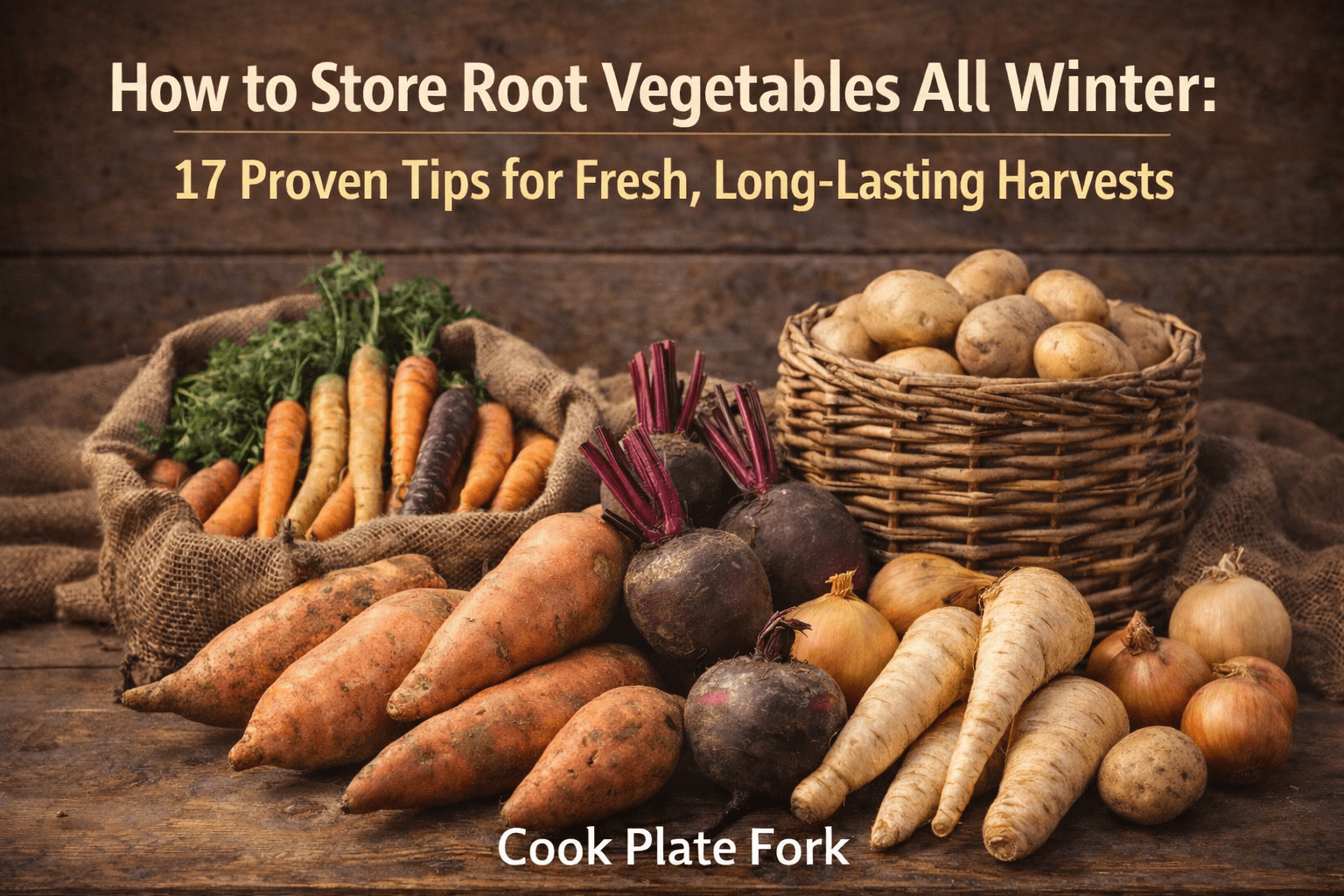

Storing food at home is a smart and timeless skill. If you’ve ever wondered How to Store Root Vegetables All Winter, you’re in the right place.
With the right techniques, you can enjoy homegrown or market-fresh root vegetables long after the harvest season ends—saving money, reducing waste, and eating healthier all winter long.
This complete guide explains everything you need to know, from preparation and ideal conditions to crop-specific storage methods and common mistakes to avoid.
Understanding Root Vegetables
What Are Root Vegetables
Root vegetables are edible plant parts that grow underground and store nutrients for the plant.
This category includes true roots such as carrots and beets, tubers like potatoes and yams, bulbs including onions and garlic, corms such as celery root and taro, and rhizomes like ginger and turmeric.

Common Root Vegetables – Tubers, Bulbs, Corms, And Rhizomes Used In Everyday Cooking
These vegetables are naturally hardy and nutrient-dense, providing fiber, vitamins, and essential minerals.
Their dense structure and protective skins help them retain freshness. This is why they are ideal candidates when learning How to Store Root Vegetables All Winter.
Because of their versatility, root vegetables are in cuisines around the world.
They can be roasted, boiled, mashed, sautéed, or eaten raw. These techniques make them reliable staples throughout the colder months when fresh produce options are limited.

Roasted Root Vegetables With Brussels Sprouts And Bacon
Dishes like Roasted Root Vegetables With Brussels Sprouts And Bacon show how oven-roasting enhances natural flavors. This method brings out the inherent sweetness in hearty root vegetables. Mastering techniques like Caramelizing Onions: A Delicious Culinary Skill adds depth and richness to countless winter meals.

Caramelizing Onions: A Delicious Culinary Skill
Why Proper Storage Matters
Knowing How to Store Root Vegetables All Winter preserves flavor, texture, and nutrients.
Improper storage can lead to rot, sprouting, mold, or dehydration, wasting both food and money.
Preparing Root Vegetables for Storage
Harvesting at the Right Time
Harvest root vegetables after they fully mature but before the ground freezes. Frost can damage cell walls, shortening storage life.
Tips:
- Harvest on a dry day
- Avoid bruising or cutting roots
- Handle gently to prevent damage
Cleaning and Curing Basics
- Do not wash vegetables before storage unless necessary.
- Brush off excess soil instead.
- Some vegetables, like potatoes and sweet potatoes, benefit from curing—resting in warm, humid conditions for 1–2 weeks to toughen skins.
Ideal Storage Conditions
Temperature Requirements
Most root vegetables store best between 32°F and 40°F (0°C–4°C). Too warm leads to sprouting; too cold causes freezing damage.
Humidity Levels Explained
High humidity (85–95%) prevents drying, while low humidity works better for onions and garlic.
Matching the vegetable to the right humidity is key when learning How to Store Root Vegetables All Winter.

Humidity Levels & Best Storage For Root Vegetables
Best Storage Locations
Root Cellars
Root cellars are the gold standard. They provide natural darkness, cool temperatures, and high humidity—perfect for long-term storage.
Basements and Garages
Cool basements work well if temperatures remain stable. Unheated garages may work in mild climates but need insulation.
Refrigerators
Refrigerators are an excellent option for storing smaller quantities of root vegetables, especially for those without access to a root cellar.
Crisper drawers are designed to maintain higher humidity levels, closely mimicking traditional root storage conditions.
Vegetables like carrots, beets, radishes, and turnips stay firm and fresh for weeks when stored properly in the fridge.
However, not every root vegetable truly needs refrigeration.

Foods That Don’t Need Refrigeration: A Complete Guide
Understanding which foods benefit from cold storage—and which are better kept elsewhere—can prevent premature spoilage and loss of flavor. For a deeper breakdown, refer to Foods That Don’t Need Refrigeration: A Complete Guide,
which complements learning How to Store Root Vegetables All Winter by helping you choose the most effective storage method for each crop.
Storage Methods That Work
Sand and Saw Dust Method
Layer vegetables in boxes filled with damp sand or sawdust. This prevents moisture loss and keeps vegetables separated.

Traditional root vegetable storage methods using sand, paper, and mesh bags to keep produce fresh all winter
Paper and Mesh Storage
Wrap individual roots in newspaper or store onions in mesh bags for airflow.
Plastic Bags (When to Use Them)
Perforated plastic bags can work for carrots and beets when humidity is too low, but never seal bags completely.
Crop-Specific Storage Tips
Potatoes
- Store in darkness
- Ideal temp: 38–40°F
- Keep away from onions
Potatoes are one of the most rewarding crops to store long-term, provided they’re kept cool, dark, and separate from onions. Their ability to hold texture and flavor makes them indispensable in winter meals.

Cooking With Potatoes
Once your potatoes are properly stored, you’ll have endless meal options. A great next step is Cooking With Potatoes, a practical resource that turns well-preserved potatoes into comforting, satisfying dishes throughout the colder months.
Carrots
- Remove green tops
- Store in sand or sealed containers
- High humidity is essential
When stored correctly, carrots retain their sweetness and crunch for months, making them incredibly versatile in winter cooking.
Once you’ve mastered How to Store Root Vegetables All Winter, carrots can move seamlessly from cold storage to your kitchen.

From Salads to Desserts: 13 Carrot Recipes to Satisfy Every Craving
For inspiration beyond soups and sides, explore From Salads to Desserts: 13 Carrot Recipes to Satisfy Every Craving, which showcases how well-stored carrots can shine in both savory and sweet dishes all season long.
Beets and Turnips
- Trim tops to 1 inch
- Store like carrots
- Check monthly for rot
Beets store exceptionally well due to their dense structure and natural sugars. When kept in high-humidity conditions, they maintain their earthy flavor and firm texture for months.

Gnocchi With Pesto, Smoked Bacon And Roasted Golden Beets
A perfect example of how stored beets can elevate winter meals is Gnocchi With Pesto, Smoked Bacon And Roasted Golden Beets, a recipe that highlights just how valuable proper storage is when learning How to Store Root Vegetables All Winter.
Onions and Garlic
- Cure thoroughly
- Store dry at 32–50°F
- Low humidity is best
Onions and garlic require drier storage conditions than most root vegetables, but when cured and stored properly, they last well into spring. Their long shelf life makes them pantry staples during winter months.

The Onion Family Explained: 6 Powerful Vegetables That Transform Everyday Cooking
To better understand how these vegetables are related—and why their storage needs differ—read The Onion Family Explained: 6 Powerful Vegetables That Transform Everyday Cooking.
This guide pairs perfectly with learning How to Store Root Vegetables All Winter, especially for home cooks focused on flavor-building basics.
Common Storage Mistakes
- Washing vegetables before storage
- Mixing incompatible crops
- Ignoring airflow
- Storing damaged produce
Avoiding these errors makes mastering How to Store Root Vegetables All Winter much easier.
Signs of Spoilage

Check stored vegetables every few weeks. Remove any that show:
- Soft spots
- Mold
- Strong odors
- Excessive sprouting
One bad vegetable can spoil the rest.
Frequently Asked Questions (FAQs)
1. How long can root vegetables last in storage?
Most last 3–6 months, while potatoes and carrots can last up to 8 months under ideal conditions.
2. Can I store different root vegetables together?
Some yes, some no. Keep onions and potatoes separate to prevent spoilage.
3. Do I need a root cellar to store vegetables all winter?
No. A refrigerator, basement, or insulated garage can work well.
4. Should I wash root vegetables before storage?
No. Washing adds moisture and encourages rot.
5. What is the best humidity for storing root vegetables?
Most prefer 85–95% humidity, except onions and garlic.
6. How do I prevent sprouting?
Keep vegetables cool, dark, and dry, and avoid temperature fluctuations.
Learning How to Store Root Vegetables All Winter is a valuable skill that connects modern living with traditional wisdom.
With proper preparation, ideal conditions, and regular monitoring, you can enjoy fresh, nutritious vegetables throughout the cold months.
Whether you use a root cellar or a refrigerator drawer, these proven techniques ensure your harvest lasts until spring.
Still hungry? These recent recipes are ready when you are.
More Deliciously Yummy Recipes
- Authentic Thai Emerald Green Curry Chicken Recipe – Creamy Coconut Basil Curry
- Fried Tortellini with Dipping Velvet Tuscan Marinara Sauce
- 5 Easy Ways to Fix Salty Soup Fast (Without Ruining Flavor)
- Velvet Tuscan Marinara – The Ultimate Thick Dipping Sauce for Fried Appetizers
- Wild Rice with Cherry-Glazed Pork & Pistachios
Please Share With Your Social Network:

Discover more from Cook Plate Fork
Subscribe to get the latest posts sent to your email.