
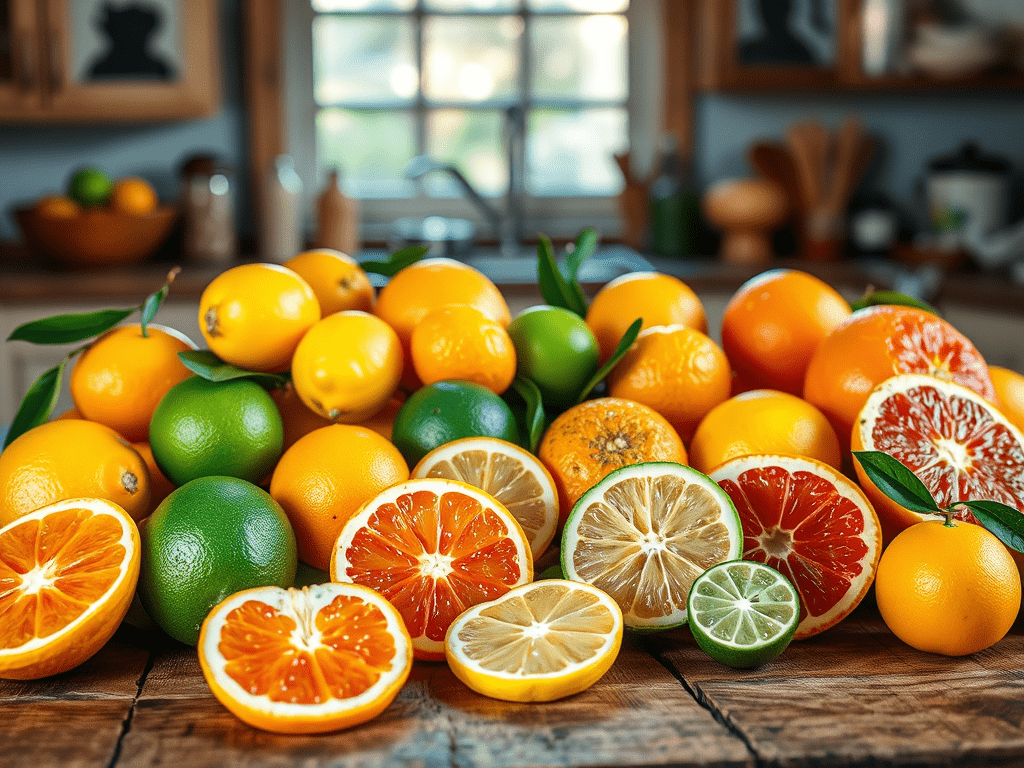

Citrus fruits, such as lemons, limes, oranges, and grapefruits, have long been treasured in culinary traditions worldwide.
Their vibrant flavors and refreshing aromas can elevate a dish from ordinary to extraordinary.
You can enhance your meals by cooking with citrus. It doesn’t matter if you’re a seasoned chef or a home cook looking to experiment. It’s a versatile way to add flavor.
The Citrus Family: A Brief Overview
Citrus fruits belong to the Rutaceae family and are renowned for their juicy segments and tangy zest. The most common varieties include:
Lemons
Lemon juice is used for its tart flavor and acidity. Lemon zest provides a concentrated citrus flavor without adding liquid.
Known for their sharp, acidic flavor, lemons are often used to add brightness to both savory and sweet dishes.

Lebanese-Style Spicy Potatoes With Lemon And Cilantro – Batata Harra


The most common types of lemons are Eureka and Lisbon, which are similar in appearance and taste. Meyer lemons are another variety, known for being sweeter and less acidic, with a slightly orange hue.
Limes
Lime juice is commonly used in marinades, salsas, and dressings. It pairs well with seafood, poultry, and Mexican or Thai cuisines.


The two most common types of limes are Persian limes. They are also known as Tahiti limes. The other type are Key limes, also known as Mexican limes.
Persian limes are larger. They have a more subtle flavor. Key limes are smaller. They have a more intense and aromatic taste.
Cook’s Notes
To get the most juice out of a lime or lemon, roll it on the countertop with your hand. Do this before cutting. This helps to break down the internal membranes, making it easier to extract the juice.
Oranges
Orange juice is sweet and tangy. It is perfect for marinading meat, like this Orange Pomegranate Za’atar Chicken Marinade. It is also great for making salad dressings or vinaigrettes, like this Lavender Infused Orange Vinaigrette.

Orange zest adds a fragrant citrus note enhancing flavor without adding orange juice.
Orange zest is used for making desserts, salads, and even savory glazes. Like this Orange Chicken & Peppers with a savory orange glaze.


The variety of common oranges sold at the supermarket includes the Navel, Valencia, Cara Cara, Mandarin, and Blood Oranges.
Seville is another variety, but is mainly used in making orange marmalade, which in turn you can make this Orange Marmalade Salad Dressing.

You can even use the whole orange (peel and flesh, seeds removed) to make sweet desserts, like this Orange Cranberry Quick Bread With Orange Cream Frosting.

Grapefruits
Offering a balance of sweetness and bitterness, grapefruits add a unique twist to salads and cocktails.
The most common grapefruits found at the supermarket include: the Ruby Red, Pink, and White.

Ruby reds are often eaten fresh, added to fruit salads, or juiced. Its sweetness makes it a favorite for breakfast and snacks.

The Pink grapefruit is commonly consumed fresh or juiced. They are also used in salads and desserts for their appealing color.
The White grapefruit is often used in cooking and baking, and for making grapefruit marmalade and cocktails. Its tangy flavor pairs well with savory dishes.
Benefits of Cooking with Citrus
Apart from their delicious taste, incorporating citrus into your cooking can reduce the need for excessive salt. They can also reduce the need for sugar, making your meals healthier.
Techniques for Cooking with Citrus
Zesting
The zest of citrus fruits contains essential oils that are packed with flavor. Use a microplane or grater to add zest to marinades, baked goods, or salads.

Zesting limes makes their flavor more complex. In the zest or the peel of a lime resides abundant herbal, piney, and floral terpenes, including limonene, terpinene and pinene.

Juicing
Fresh citrus juice can be a game-changer in recipes. A squeeze of lemon or lime added after cooking can enhance the flavor of soups, stews, and sauces.


Juicing citrus can also be used in desserts, vinaigrettes, dressings and mixed in with fruit salads.

Segmenting
Segmenting is a technique known as “supreming.” The technique used to segment citrus fruits, such as oranges, grapefruits, or lemons, to remove their membranes and pith, leaving only the flesh.
This method is particularly useful for creating visually appealing dishes and ensuring a pleasant texture without the bitterness of the pith.
Here’s a basic outline of how to supreme a citrus fruit:
Prepare the Fruit: Cut off the top and bottom ends of the fruit so it can stand upright on a flat surface.
Remove the Peel and Pith: Use a sharp knife. Cut away the peel and white pith by following the curve of the fruit. Ensure all the white pith is removed, as it can be bitter.
Segment the Fruit: Hold the fruit over a bowl to catch any juice. Slice down along the membrane on either side of each segment to release the flesh. The segments should come away easily, leaving the membranes behind.
Use the Segments: The supremed citrus segments can be used in salads, desserts, or as a garnish to add a burst of flavor and color.

Infusing
Citrus can be infused into oils, vinegars, syrups and sugar to add depth to desserts, dressings and beverages.

Infusing Citrus Flavor Into Sugar By Mixing With Orange Zest – To Be Used In A Dessert Cake
Cooking with citrus is not only about adding flavor – it’s about exploring the balance between sweet, sour, and bitter notes.
Citrus fruits provide a variety of options in the kitchen. Use the zest for a burst of aroma. Use the juice for a tangy punch. They offer endless possibilities for creativity.

Next time you plan a meal, think about reaching for that lemon or lime. This simple addition can transform your dish into a culinary masterpiece.
Try These Recipes Using Citrus


More Deliciously Yummy Recipes
- A behind-the-scenes look at what I’ve been building lately 🍽️
- Ultimate Sheet Pan Teriyaki Chicken & Charred Brussels Sprouts
- How the Cooking Method of Using an Instant Pot Benefits the Preparation of Soups: 9 Powerful Advantages You Should Know
- Harvest Grain Bowl with Crispy Sausage, Chorizo & Aleppo-Lime Butter – A Bold, Cozy Dinner You’ll Crave
- Crispy Baked Buttermilk Popcorn Chicken
Please Share With Your Social Network:

Discover more from Cook Plate Fork
Subscribe to get the latest posts sent to your email.