
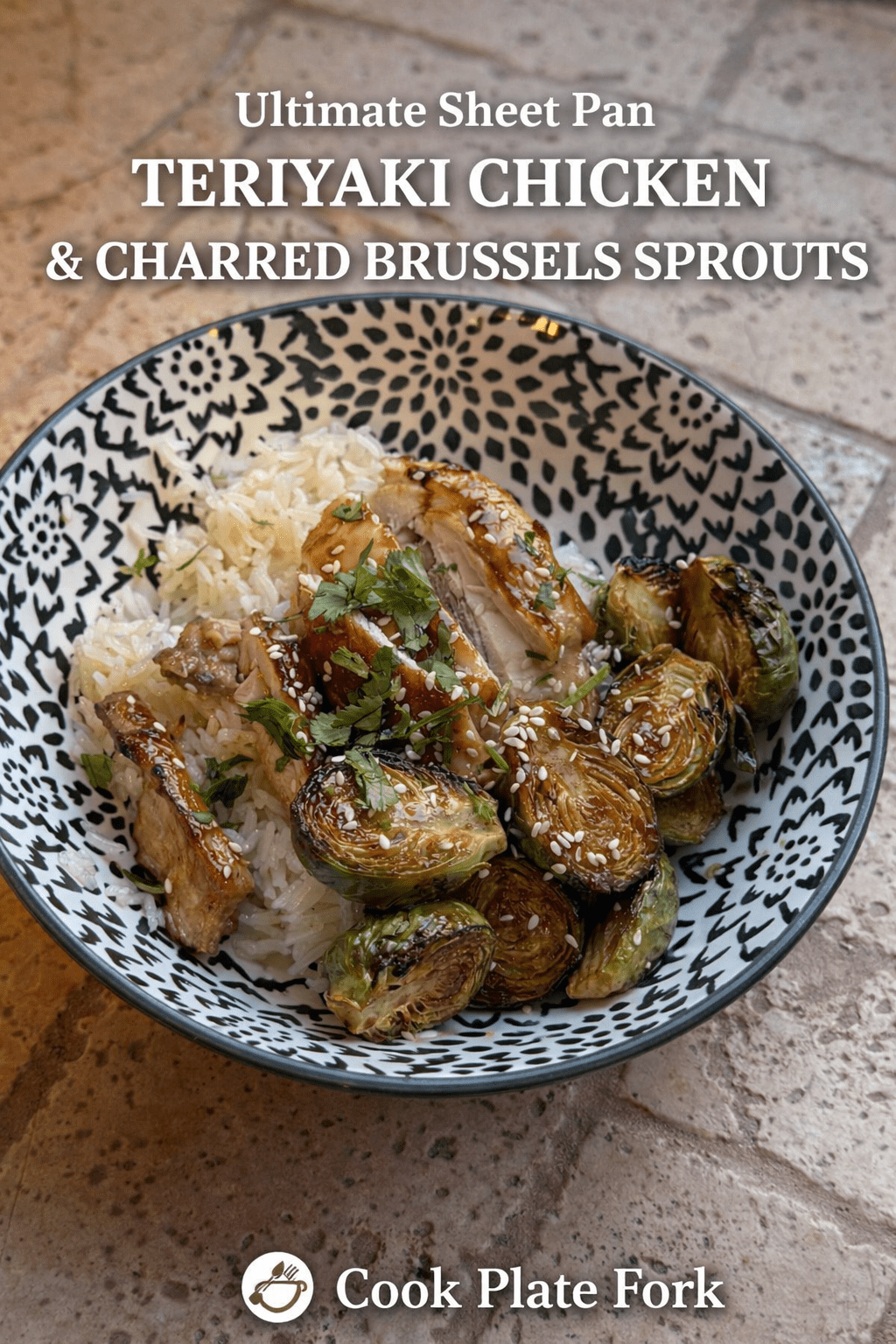

The Ultimate Sheet Pan Teriyaki Chicken & Charred Brussels Sprouts is more than a quick dinner—it’s a technique-driven teriyaki masterclass built for maximum flavor with minimal cleanup.
By using one deeply balanced sauce as both a marinade and glaze, this dish delivers sticky, smoky, umami-rich results that rival takeout and restaurant plates.

Asian Style Sticky Chicken
If you enjoy bold teriyaki flavors like those found in Asian Style Sticky Chicken – all glaze, all flavor, this recipe expands that concept into a complete, well-rounded meal with vegetables and rice that matter just as much as the protein.
Why This Teriyaki Sheet Pan Recipe Delivers Restaurant-Level Results
This recipe follows the same core principles used in standout teriyaki dishes such as the Teriyaki Cheesesteak Sandwich – bold fusion comfort food, where sweetness, salt, fat, and heat are carefully layered instead of dumped in all at once.

Teriyaki Cheesesteak Sandwich
What makes this dish work:
- Shared marination between chicken and vegetables for flavor cohesion
- High-heat roasting (425°F) to promote browning without drying

How To Use The Broiler To Cook Food
- Broiler caramelization to activate sugars and deepen umami — a critical finishing step explained in detail in How To Use The Broiler To Cook Food, which breaks down temperature control, rack placement, and safety for sugar-based glazes
- Vegetables treated as equal players, not afterthoughts, similar to the approach used in Asian-Style Roasted Brussels Sprouts with Red Peppers and Shallots – vegetable-forward and vibrant
Using the broiler intentionally—not aggressively—is what transforms this dish from “sheet pan dinner” into a restaurant-style glazed entrée, with sticky edges, light char, and layered depth.
This is the same logic behind vegetable-forward dishes like Asian-Style Roasted Brussels Sprouts with Red Peppers and Shallots – vegetable-forward and vibrant, where roasting transforms simple produce into crave-worthy bites.
Ingredients That Build Sweet, Smoky, Balanced Teriyaki Flavor
Marinade & Glaze (One Sauce, Two Purposes)
3/4 cup soy sauce
1/4 cup mirin
1/4 cup brown sugar
1 tablespoon grated ginger
2 cloves garlic, minced
Optional: 1 teaspoon sesame oil
This sauce is designed for rich flavor, shine, and just the right thickness. When exposed to high heat, the sugars gently caramelize while the garlic and ginger release their aroma, creating a glossy, deeply savory glaze.
Main Components
2 lbs boneless skinless chicken thighs
1.5 lbs Brussels sprouts, halved
Chicken thighs stay juicy under aggressive heat, while Brussels sprouts absorb marinade and roast beautifully—especially when placed cut-side down, a method also used in Asian-Style Roasted Brussels Sprouts with Red Peppers and Shallots – vegetable-forward and vibrant.
Rice That Deserves the Spotlight
2 cups jasmine rice
3 cups homemade chicken broth
Optional: bay leaf or 1 tbsp butter
Cooking rice in broth instead of water gives it savory body, making it worthy of being on the plate—not just underneath it—especially when paired with bold, glaze-driven mains.

Need a substitution? View our kitchen swaps reference guide for smart, flavor-forward ingredient swaps — covering aromatics, pantry staples, dairy, proteins, and more.
Signature Cooking Method (Where the Magic Happens)
1. Marinate Together for Unified Flavor
Mix all marinade ingredients until fully dissolved. Reserve 1/3 cup for glazing.
Toss chicken and Brussels sprouts in the remaining marinade. Marinate for at least 1 hour, or overnight for deeper penetration.

Teriyaki Bacon Wrapped Green Beans
This shared marination is the same strategy used in Teriyaki Bacon Wrapped Green Beans – sweet, smoky, and crisp, where vegetables and protein speak the same flavor language.
2. High-Heat Sheet Pan Roast
Preheat oven to 425°F (218°C). Line a sheet pan.

Arrange chicken and Brussels sprouts evenly, sprouts cut-side down. Roast 25–30 minutes, until chicken hits 165°F (74°C) and vegetables show deep golden edges.
3. Glaze, Then Broil for Sticky Char
Simmer reserved marinade. Whisk 1 tsp cornstarch + 2 tbsp water, then add to thicken.
Brush glaze generously over chicken and sprouts. Broil on high 2–4 minutes, watching closely.
This step creates the same glossy, bubbling finish that defines Asian Style Sticky Chicken – all glaze, all flavor.
Broiler Tip: Door cracked, eyes on the pan—sugar moves fast.
4. Broth-Cooked Rice
Bring rice, broth, and optional bay leaf to a boil. Cover and simmer 15 minutes. Rest 10 minutes, then fluff.
Cooking rice in broth instead of water gives it savory body, making it worthy of being on the plate—not just underneath it—especially when paired with bold, glaze-driven mains.
How to Serve for Maximum Impact
Plate rice first, top with sticky chicken and charred Brussels sprouts. Finish with sesame seeds, cilantro, and lime.
This balanced plating mirrors vegetable-forward teriyaki plates, ensuring freshness cuts through glaze and richness.
Chef Notes & Flavor Logic
- Shared marinade = layered umami, allowing chicken and vegetables to absorb flavor evenly rather than competing on the plate—a principle explained in detail in Crafting The Perfect Marinade, which breaks down balance, timing, and ingredient synergy

Crafting The Perfect Marinade
- Broiler caramelization = Maillard depth, creating sticky edges and light char without overcooking
- Vegetables treated with intention elevate the dish beyond a standard sheet pan meal
- Rice cooked in broth anchors bold flavors and rounds out sweetness with savory depth
Frequently Asked Questions
1. Is this good for meal prep?
Absolutely. Store rice separately for best texture. Explore more, What You Should Know About The Rice You Plate.

What You Should Know About The Rice You Plate
2. Can I make it spicier?
Absolutely. You can increase heat by adding chili crisp, sambal oelek, crushed red pepper flakes, or a drizzle of sriracha during the glazing stage.

For a deeper breakdown of heat levels, spice pairings, and how to balance heat with sweetness in teriyaki-style dishes, refer to the Spices & Flavors Guide, which explains how to layer spice without overpowering umami.
3. Why thighs over breasts?
Chicken thighs are often favored over breasts because their higher fat content keeps them moist during cooking.
They’re more forgiving under high heat and offer a fuller, more savory flavor than leaner chicken breasts.
4. Does this scale well for guests?
Yes—use two pans, rotate halfway.
5. What pairs well with this dish?
Other bold, glaze-forward teriyaki mains work beautifully alongside this meal, especially dishes that emphasize sticky finishes, deep umami, and balanced sweetness—an approach explored in detail in Cooking With The Flavor Umami, which breaks down how savory depth enhances sweet-and-salty sauces like teriyaki.
Final Thoughts
The Ultimate Sheet Pan Teriyaki Chicken & Charred Brussels Sprouts proves that great teriyaki isn’t about shortcuts—it’s about smart sequencing, high heat, and intentional balance.
With one sauce, one pan, and chef-driven technique, you get a sticky, smoky, deeply satisfying dinner that fits perfectly into a broader teriyaki-focused kitchen.
Still hungry? These recent recipes are ready when you are.
More Deliciously Yummy Recipes
- Moist Gluten-Free Almond Flour Strawberry Banana Muffins
- 3 Flavorful and Easy Persian Recipes for Beginners
- Instant Pot Ash Reshteh (Persian Herb, Bean and Noodle Soup)
- Blueberry Lavender White Chocolate Bread Pudding
- Sweet Potato Kale and Farro Salad With A Orange Tahini Dressing
Please Share With Your Social Network:

Discover more from Cook Plate Fork
Subscribe to get the latest posts sent to your email.