
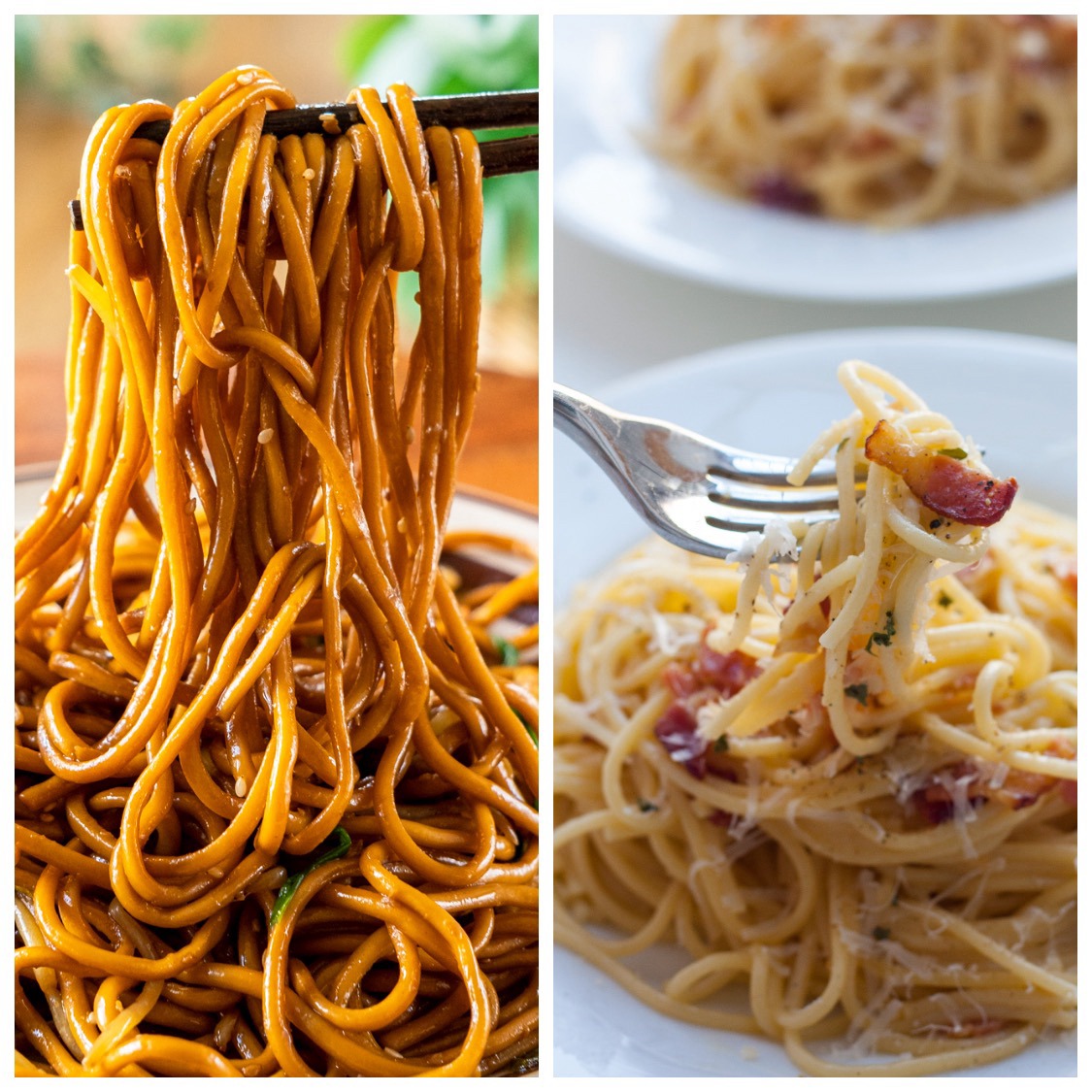

Noodles and pasta such as spaghetti, fettuccine, and linguine, are beloved by people worldwide for several reasons.
Their versatility allows for a wide range of dishes. This adaptability suits various tastes and preferences. As a result, they are a favorite among individuals of all ages.
Noodles like, ramen, udon and lo mein are often referenced interchangeably with spaghetti, fettuccine, and linguine.
But, they are not exactly the same. Read on and let’s learn why?
Asian Noodles and Italian Pasta: What Sets Them Apart?
Wheat entered Asia around 2000 B.C.E and over time became a staple crop, along side rice and millet.
Wheat has contributed to the diverse cuisines and food traditions of the Asian continent. And of these food traditions is wheat noodles, such as ramen, udon and lo mein.

- Left: Lo Mein Noodles & Beef Stir-Fry
- Right Top: Chicken Yaki Udon Noodles Stir-Fry
- Right Bottom: Ramen Noodles Sheet Pan Baked With Broccoli And Sweet Peppers
Today, wheat remains an essential crop in Asia. Countries like China, India, and Pakistan are among the top producers of wheat globally.
What’s more, Asian noodles are broadly divided into three types: wheat noodles, rice noodles, and glass or cellophane noodles.

The sauces typically used to go with noodles in a recipe are soy based sauces. These sauces can also include miso, tonkotsu broth, peanut sauce, bang bang sauce, hoisin sauce, oyster sauce, and fish sauce among others.


Buckwheat and sweet potato starch is also used to make noodles. Like with this Japchae – Korean Stir-Fried Beef Vegetables and Sweet Potato Noodles.

Semolina is a byproduct of durum wheat which originated in the Mediterranean region (which includes Italy) thousands of years ago.
Pasta is made using semolina, as it contains higher levels of gluten. This high gluten level is what helps pastas like spaghetti, fettuccine, and linguine keep their shape when being cooked.
The typical sauces used with spaghetti, fettuccine, and linguine include marinara sauce and Carbonara. Alfredo sauce, Pesto sauce, and Bolognese are also popular, among many others.


Instant Pot – Linguine With Goat Cheese Mint And Peas

Ramen, udon, and lo mein noodles may look similar to spaghetti, fettuccine, and linguine. However, the fact is, they are not the same.
It’s important to recognize that noodles are made differently than pasta. And are used differently, based on the sauce’s used.
Enjoy experimenting with different noodle and pasta varieties to elevate your culinary experience.
Enjoy Reading These Culinary Informative Articles
- The History Of Pasta
- The Three Italian Cuisines And Their Differences
- Cooking Asian Inspired Food
- Making An International Buffet
- Cooking With The Flavor Umami
More Deliciously Yummy Recipes
- Creamy Caramelized Onion Tortellini
- Moist Gluten-Free Almond Flour Strawberry Banana Muffins
- 3 Flavorful and Easy Persian Recipes for Beginners
- Instant Pot Ash Reshteh (Persian Herb, Bean and Noodle Soup)
- Blueberry Lavender White Chocolate Bread Pudding
Please Share With Your Social Network:

Discover more from Cook Plate Fork
Subscribe to get the latest posts sent to your email.
Good to know. Thanks. 🙂
You’re welcome ☺️
I had no idea ramen, udon and lo mein are made with wheat. Very informative post Randy!
Thank you. I learned some as well reading up on the subject. In the past I would refer to spaghetti as noodles.