
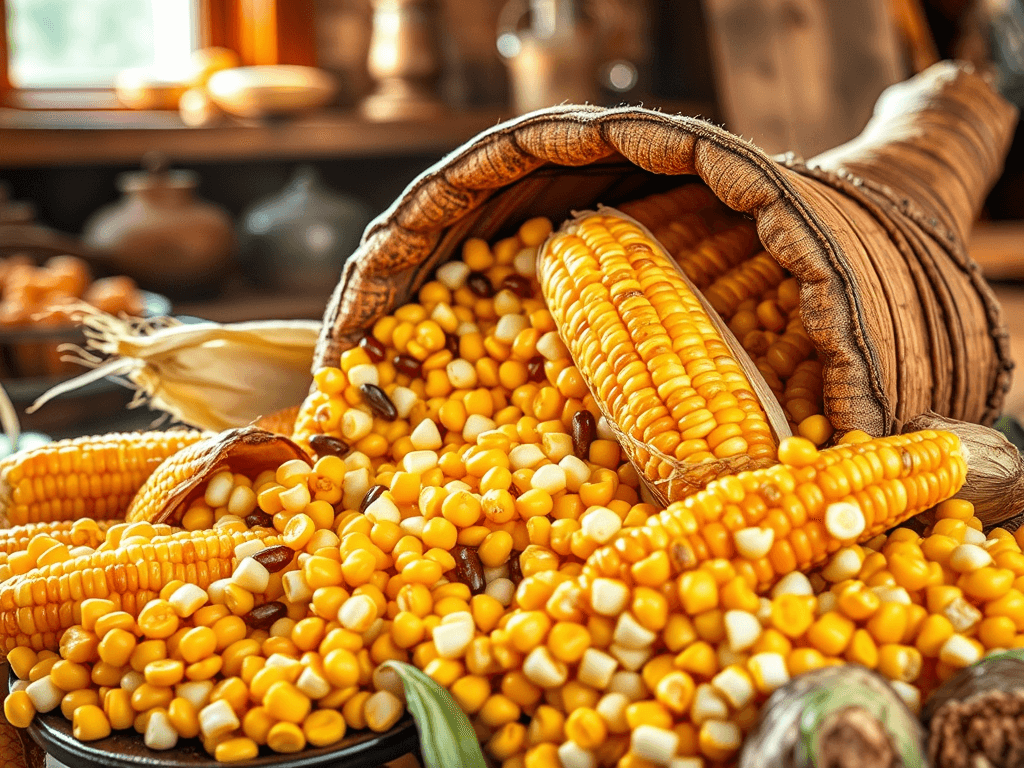

Corn, with its golden hue and sweet, succulent kernels, has been a staple in kitchens around the world for centuries.
This versatile grain has been valued since the ancient civilizations of the Americas. It has transcended its humble origins. Today, it is a beloved ingredient in countless dishes across modern culinary landscapes.

Corn can be grilled, boiled, or ground into flour. It offers a delightful range of flavors and textures. These qualities can elevate any meal.
In this article, we explore the rich history of corn. We also examine its diverse culinary uses. Innovative recipes make corn an indispensable part of global cuisine.
Join us and explore the cornucopia of possibilities that this remarkable grain provides. Discover new ways to bring its vibrant taste to your table.
First let’s take a look at the history of corn.
The History Of Corn
Origins: Domesticated in southern Mexico about 10,000 years ago from teosinte, a wild grass.
Spread Across Americas: Became a staple for the Maya, Aztec, and Inca civilizations.

Aztec Women Milling Corn Into Flour
Cultural Significance: Held spiritual importance and was central to rituals and myths in Native American cultures.
European Introduction: Brought to Europe by explorers like Columbus, later spreading to Africa and Asia.
Industrialization: 19th and 20th centuries saw increased production and use in processed foods.
Modern Uses: Utilized in a wide range of products, including biofuels and sweeteners, maintaining its role as a global staple.
Now let’s explore the versatility of corn in your kitchen.
Cornucopia of Flavors: Exploring the Versatility of Corn in Your Kitchen
Cooking with corn is a versatile and flavorful experience. The vegetable can be used in a variety of dishes, ranging from sweet to savory.
Here’s some culinary information to enhance your cooking with corn.
Types of Corn
Sweet Corn
Sweet corn is commonly eaten as a vegetable rather than a grain. It’s popular in a variety of dishes, including boiled or grilled corn on the cob, salads, soups, and salsas.
Beyond being eaten fresh, sweet corn can be canned or frozen, preserving its sweet flavor for use in a variety of dishes year-round.


Field/Dent Corn
Typically used for animal feed or processed into cornmeal or cornstarch. It is less sweet and more starchy than sweet corn.

Flint Corn
Also known as Indian corn or sometimes calico corn. Flint corn is known for its hard outer layer.
Flint corn has a lower sugar content than sweet corn making it ideal for savory dishes.
Like cornbread, porridge, pozole, polenta, corn pudding, corn muffins, and grits among others.

There are only two ways to Flint corn. One way is to grind it dry into a meal. The other way is to remove the skin with a lye and eat it as hominy.
Popcorn
A specific variety of corn that pops when heated.
A popcorn kernel has a strong hull. It holds the seed’s hard, starchy shell endosperm with 14–20% moisture. This moisture turns to steam as the kernel is heated.

Pressure from the steam continues to build until the hull ruptures. This rupture allows the kernel to forcefully expand. It increases to 20 to 50 times its original size.
Cooking Methods
Boiling
Common for corn on the cob. Typically takes 5-7 minutes.
Grilling
Adds a smoky flavor. Grill with husks on or off.

Grilling Corn With Husks On Or Off
Here’s a guide for grilling corn on the cob with husks off or on.
Remove husks and silks, or leave husks on for a smoky flavor.
- Soak husked corn in water for 15-30 minutes if grilling with husks on (optional).
- Preheat your grill to medium-high heat.
- Brush corn with olive oil or melted butter.
- Season with salt, pepper, or other spices and herbs as desired
- Place corn on the grill.
Grilling Corn On The Cob
- Grill for about 10-15 minutes, turning every few minutes, until kernels are tender and charred in spots
- Remove from the grill and let cool slightly before serving.
Roasting
Enhances sweetness. Roast in the oven or over an open flame.
Here’s a guide for oven roasting corn on the cob.
- Preheat your oven to 400°F (200°C).
- Remove husks and silks, or leave husks on for a different flavor.
- For husk-on method: Pull husks back without removing, remove silks, then pull husks back over the corn.
- For husk-off method: Wrap each ear in aluminum foil for extra moisture.
- Place corn directly on the oven rack or on a baking sheet.
- Roast for about 20-25 minutes, turning occasionally, until kernels are tender and lightly browned.
Steaming
Preserves nutrients and flavor.
Here’s a guide for steaming corn on the cob.
- Remove husks and silks from the corn cobs.
- Fill a pot with about an inch of water.
- Place a steamer basket inside the pot, ensuring water doesn’t touch the basket.
- Bring the water to a boil.
- Place corn cobs in the steamer basket.
- Cover the pot with a lid.
- Steam for 5 to 7 minutes until kernels are tender and bright yellow.
Pairings
Sweet corn kernels are typically used in recipes. Sweet corn pairs well with ingredients like butter, lime, chili, cheese, black beans, tomatoes, and avocados.

Plate Of Shrimp With Corn On The Cob And Butter
Complements proteins like chicken, turkey, shrimp, and pork.


Cooking with corn allows for creativity in the kitchen. Its natural sweetness and versatility make it a favorite ingredient in many cuisines worldwide.
🧑🍳 What would you like to cook?
Popular Searches
More Deliciously Yummy Recipes
- Moist Gluten-Free Almond Flour Strawberry Banana Muffins
- 3 Flavorful and Easy Persian Recipes for Beginners
- Instant Pot Ash Reshteh (Persian Herb, Bean and Noodle Soup)
- Blueberry Lavender White Chocolate Bread Pudding
- Sweet Potato Kale and Farro Salad With A Orange Tahini Dressing
Please Share With Your Social Network:

Discover more from Cook Plate Fork
Subscribe to get the latest posts sent to your email.
I never really thought about all the different ways corn was used. Very informative Randy!
Thank you 😊