
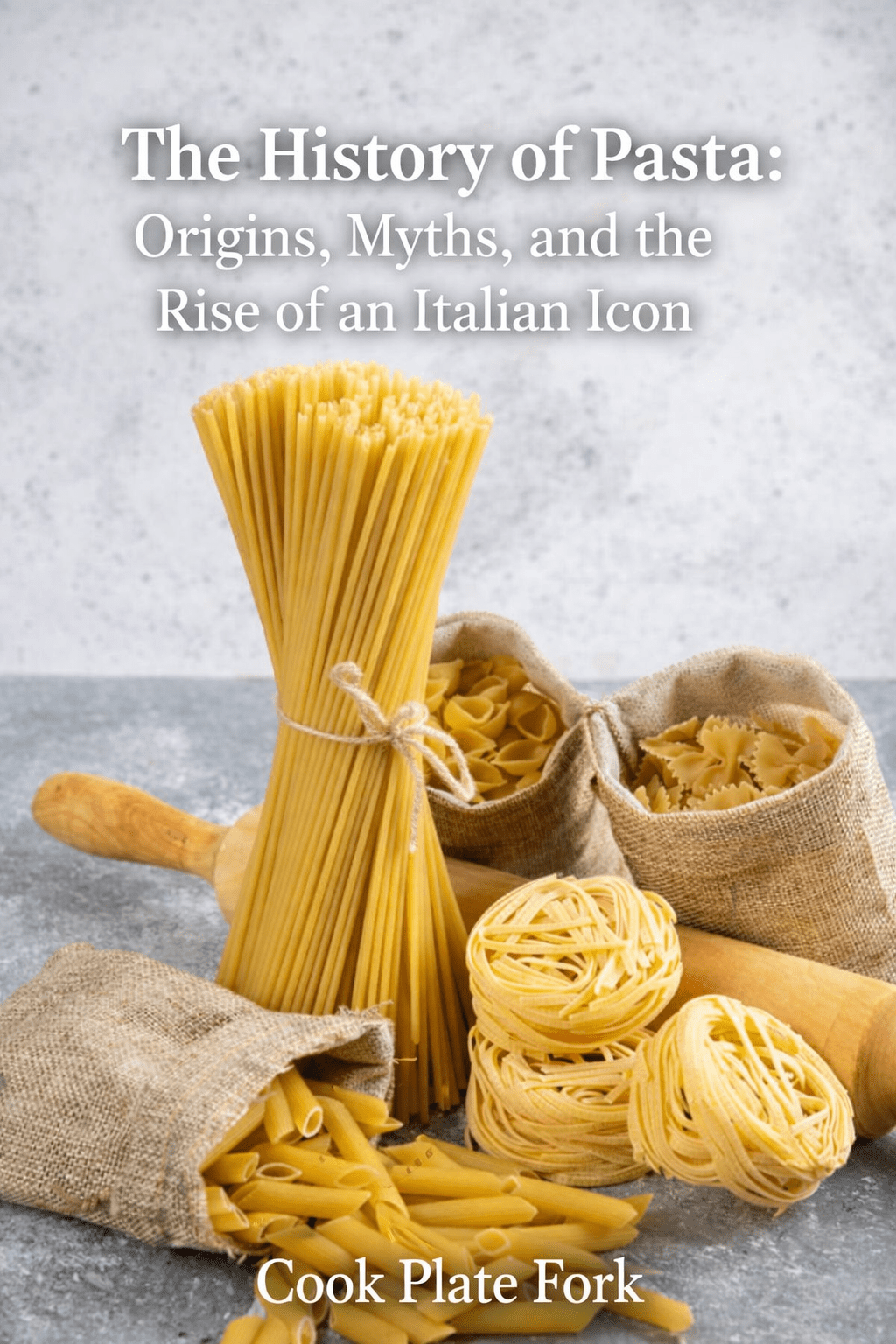

Pasta is one of the world’s most recognizable foods, yet its story is often misunderstood.
While pasta is now inseparable from Italian cuisine, its origins span multiple civilizations, trade routes, and technological innovations.
The history of pasta is not a single invention story, but a gradual evolution shaped by agriculture, geography, and culture.


Understanding pasta’s past helps explain why it appears in both traditional Italian dishes and modern recipes such as One Skillet Tortellini With Pizza Sauce & Fontina and Instant Pot Bacon Alfredo Mac & Cheese.
Ancient Grain Cultures and Early Dough Foods
Long before pasta existed in recognizable form, ancient societies across the Mediterranean processed grains into dough-based foods.
Archaeological findings from the Etruscan civilization (c. 800–300 BCE) reveal tools used for grinding grain and shaping dough. Wall carvings and tomb reliefs depict rollers and cutting instruments, suggesting an advanced understanding of cereal processing.
However, historians emphasize caution: these early foods were likely flat doughs or baked sheets, not boiled pasta as we know it today.

Hand-rolled pasta dough demonstrates techniques rooted in ancient Mediterranean grain preparation
The Arab Influence and the Birth of Dried Pasta
One of the most significant turning points in pasta history occurred during the Arab presence in Sicily between the 9th and 11th centuries.
Arab geographer Al-Idrisi documented the production of itriyya, a dried, strand-like pasta manufactured near Palermo.
Unlike fresh dough foods, dried pasta could be stored for long periods and transported easily—an essential advantage for trade and travel.
This innovation made pasta a practical staple and allowed it to spread throughout Italy and beyond.
Scholarly consensus:
The Arab introduction of dried pasta represents the true foundation of modern pasta production.
Debunking the Marco Polo Myth
A long-standing legend claims that Marco Polo brought pasta to Italy from China in the 13th century.
Modern historians widely reject this claim.
Italian records confirm the existence of pasta at least a century before Marco Polo returned from Asia. The myth originated from a 20th-century promotional article rather than medieval documentation.
Conclusion:
Marco Polo encountered noodles in China, but pasta was already well-established in Italy.
From Regional Specialties to National Identity
By the late Middle Ages, pasta had become a defining element of Italian regional cooking. Each area developed shapes suited to local ingredients, sauces, and climate.

Map Of Italy Showing Regional Pasta Dishes
Industrialization and the Pasta Revolution
The transformation of pasta from regional food to national symbol occurred in the late 18th century.
In 1785, the first industrial pasta factories were established in Naples. Mechanization allowed pasta to be produced consistently, affordably, and at scale.
This period also gave rise to the explosion of pasta shapes available today.

Fusilli Pasta Spiral Shape Close-Up
Why Pasta Has So Many Shapes
Pasta shapes are not decorative—they are functional.
Ridged, hollow, and curved designs were engineered to pair with specific sauces.

This principle remains relevant today in dishes like Bacon & Vegetable Tortellini and One Skillet Tortellini With Pizza Sauce & Fontina.

Ridged Pasta Shapes Such As Rigatoni Are Designed To Hold Robust Sauces
Orzo, Ditalini, and Pasta in Soups
Certain pasta shapes are specifically designed for soups and broths.

Ditalini Pasta, Traditionally Used In Soups, Highlights Pasta’s Versatility
Orzo pasta resembles rice but is made from durum wheat semolina and is culinary classified as a pasta.
Its small, uniform shape allows it to absorb liquid and flavor efficiently, making it especially well suited for soups and brothy dishes.

This makes orzo ideal for dishes like Turkish Inspired Chicken And Orzo Soup With Garlic And Paprika, where pasta bridges Mediterranean and Middle Eastern culinary traditions.

Orecchiette and Southern Italian Tradition
Southern Italy contributed some of the most distinctive pasta shapes, including orecchiette.

Orecchiette, Meaning “Little Ears” Originated In Southern Italy
Today, this historic shape appears in modern interpretations such as Orecchiette With Andouille Sausage & Pesto Chipotle Sauce, blending tradition with innovation.

Frequently Asked Questions
Did pasta originate in Italy?
No. Pasta evolved from ancient grain cultures, though Italy refined and popularized it.
Is the Marco Polo pasta story true?
No. Pasta existed in Italy before Marco Polo’s travels.
Why is durum wheat important?
It produces firm pasta that holds shape when boiled.
Is orzo pasta or rice?
Orzo is pasta made from durum wheat.
When did pasta become widely available?
After industrial production began in the late 18th century.
Why are there so many pasta shapes?
Each shape is designed for specific sauces and cooking methods.
Conclusion: A Living Culinary History
The history of pasta reflects human ingenuity, trade, and adaptation. From ancient grain processing to Arab innovation and Italian industrial mastery, pasta has evolved into one of the world’s most enduring foods.
Its continued reinvention—through both classic preparations and modern recipes—ensures pasta remains historically significant and endlessly relevant.
Are Noodles and Pasta the Same Thing?
Some of our readers have asked whether noodles and pasta are actually the same thing. While they may look similar, their ingredients, traditions, and culinary roles differ significantly. We explore this topic in depth in our guide, Asian Noodles and Italian Pasta: What Sets Them Apart?

Craving Something New – Find Your Next Favorite Breakfast, Lunch, Brunch, Side Dish, Soup , Salad, Sandwich, Dinner And Dessert Recipes Here 👉🏽 Explore Our Recipe Index
More Deliciously Yummy Recipes
- Moist Gluten-Free Almond Flour Strawberry Banana Muffins
- 3 Flavorful and Easy Persian Recipes for Beginners
- Instant Pot Ash Reshteh (Persian Herb, Bean and Noodle Soup)
- Blueberry Lavender White Chocolate Bread Pudding
- Sweet Potato Kale and Farro Salad With A Orange Tahini Dressing
Please Share With Your Social Network:

Discover more from Cook Plate Fork
Subscribe to get the latest posts sent to your email.
Great information, I never knew there was a difference from pasta and noodles!
Me neither until I looked it up.