
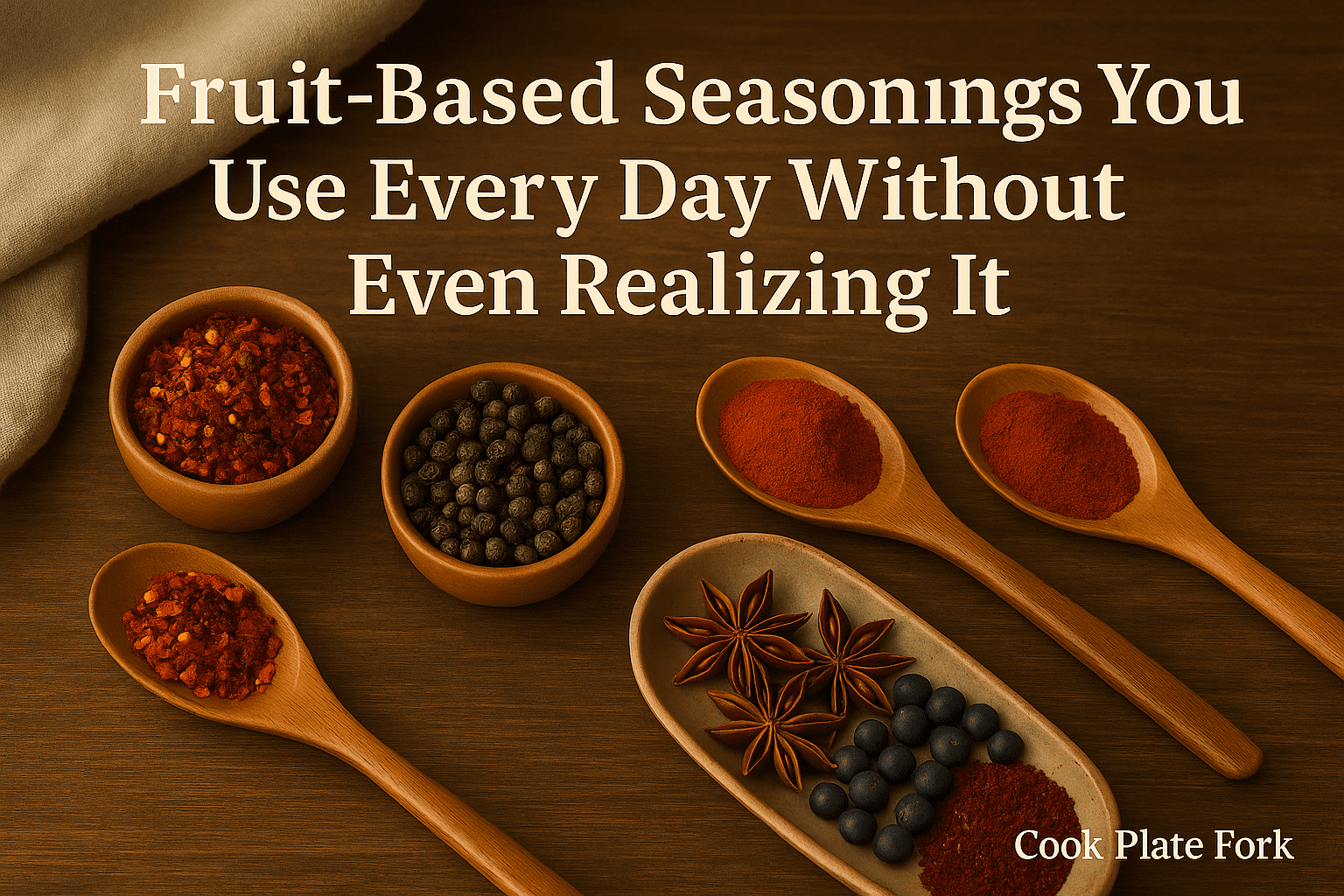

If you cook often, you probably sprinkle pepper over eggs, whisk paprika into marinades, or crumble chili flakes onto pizza without giving them a second thought.
But here’s a fun kitchen twist: many of the spices and seasonings we rely on every single day are actually fruits in disguise.
Yep — not stems, not roots, not leaves… fruits.
Tiny, dried, ground, or whole fruits that add flavor, heat, aroma, and color to everything we make.
Let’s take a closer look at some of the most common “not-so-spicy” fruits in your spice drawer.
Black Pepper: The Classic Fruit You Never Thought About
Black pepper is one of those ingredients we shake over everything without a second thought — eggs, pasta, grilled meats, soups, salads, even chocolate desserts.
But behind that tiny grinder’s click is something most home cooks never realize: Black pepper isn’t a seed. It’s a berry. A real fruit.
That’s why freshly cracked pepper is so complex and aromatic. When you crack whole peppercorns, you release the fruit’s natural essential oils, giving dishes that bright, sharp, slightly citrusy aroma no pre-ground pepper can match.
Whole pepper berries (not pre-ground) keep their fruity oils locked in.
Grinding fresh releases those natural fruity oils right at the moment you use them.

Black pepper has played a powerful role in shaping how we cook and season food today.
If you’re curious how this everyday ingredient became a global staple, explore its story in Seasoned with History: How Salt and Black Pepper Became Culinary Essentials.
Allspice: A Single Berry, Big Flavor
Allspice is one of the most magical seasonings in the kitchen. Most of us might assume it’s a mix of cinnamon, nutmeg, and cloves, but the truth is, it’s not a blend but rather one spice.
Allspice berries contain natural aromatic compounds that are also found in cinnamon, nutmeg, and cloves.
Why Allspice Tastes Like So Many Spices at Once
The Allspice berries contain natural aromatic compounds that are also found in cinnamon, nutmeg, and cloves.
This explains why allspice’s flavor feels so layered and familiar — one fruit delivers the cozy warmth of an entire spice blend. You can taste that effect clearly in recipes like Spicy Sweet Potato Cupcakes, where allspice and cinnamon work together to create deep, comforting flavor.
Allspice is incredibly versatile, it makes recipes, both savory and sweet, taste more complete with just a pinch.
And once you realize you’re cooking with a dried fruit, its rich, complex flavor starts to make perfect sense.

Allspice plays a starring role in Jamaican jerk seasoning, where its fruity warmth balances chili heat, garlic, and thyme. Like this Jerk-Spiced Chicken And Pineapple Tray Bake.

It’s also common in meat rubs, marinades, and stews throughout the Caribbean, where cooks understand just how much flavor a single berry can deliver.
Chili Peppers & Paprika: Yep… All Fruits
Most people think of chili peppers, from poblanos to jalapeños to serrano peppers, as vegetables or spices, but botanically speaking, they’re fruits — true fruits — bursting with seeds, natural sugars, and fruity compounds that shape their flavor.
A fruit is defined as the mature ovary of a flower that contains seeds. Chili peppers fit this perfectly.
They grow from flowers, contain seeds and come in fleshy pods and therefore they are not — herbs or vegetables.
How Chili Peppers Become Seasonings
Chili peppers can be transformed into several fruit-based spices:
- Chili flakes: dried, crushed chili fruit
- Chili powder: ground dried chilies (sometimes blended with other spices)
- Paprika: ground sweet chili fruits, sometimes smoked
- Cayenne: specific dried chili fruit ground into powder
Even when dried and powdered, the fruity compounds remain, which is why these seasonings taste layered, not flat.
So next time to add a little chili flakes, chili powder, and paprika to your recipe, know that you are seasoning with dried, flacked or ground fruit.

See our chili breakdown with our Spices & Flavors Guide for more details on using spices in your cooking
You’ll find these fruit-based seasonings all over my kitchen — from Turkish Inspired Chicken And Orzo Soup With Garlic And Paprika to Spanish Chicken Salad and not to forget my families favorite, Gluten-Free Mexican Chocolate Pumpkin Pie.
For more flavor-building ideas using chili peppers, check out my guide to Cooking With Chilies.
And one of the newest chili fruits to find a home in Western cooking is Aleppo pepper — a mild, fruity, dried-and-flaked chili with gentle heat and a subtle tang.
Traditionally used in Middle Eastern cooking, it’s now popular on eggs, roasted vegetables, pizzas, pastas, and even sprinkled over salads for a sweet, savory pop of flavor.
For more flavor-building ideas using this versatile chili, explore my guide to Aleppo Pepper: A Culinary Delight From The Middle East.

Coriander & Cumin: Seeds? Not Quite
These two often fool home cooks.
Coriander “seeds” are actually the dried fruit of the cilantro plant. Cumin “seeds” are also tiny dried fruits.
Both add warm, citrusy, earthy flavor — and both are quiet little fruit seasonings hiding in plain sight.

You’ll find coriander’s bright, citrusy notes shining in Skillet-Charred Brussels Sprouts with Coriander and Cashews, while cumin brings depth and warmth to dishes like Lentil and Eggplant Stew with Pomegranate Molasses.
For more flavor-building ideas using cumin, check out my guide to Cooking With Cumin.
Vanilla: A Fruit From an Orchid
Vanilla pods — often called “beans” — are the long, glossy fruit of a type of orchid.
Inside? All those tiny black seeds we use in baking.
No wonder vanilla tastes floral and sweet… it literally comes from a flower’s fruit.

Vanilla isn’t just for sweets. You’ll find it in desserts like Southern-Inspired Peach Pecan Bourbon Bread with a Peach Vanilla Bourbon Glaze, in breakfast dishes such as Brioche French Toast Stuffed with Berries and Vanilla Pudding, and even in savory recipes like Leafy Greens with Oranges, Strawberries & Vanilla Vinaigrette.
For more ways to use vanilla intentionally, explore my guide How to Flavor with Vanilla.
Star Anise: The Star-Shaped Fruit With Deep Warmth
Star anise is instantly recognizable by its beautiful star shape, but it’s more than just decorative — it’s a true fruit, harvested from an evergreen tree and dried whole.
Each point of the star holds seeds, and together they deliver a bold, sweet-savory flavor often compared to licorice or fennel.
Because star anise is a fruit, its flavor is naturally aromatic and warming, releasing slowly when simmered in broths, sauces, and baked goods.

While it has been used for centuries in Asian cooking, star anise has become more familiar in Western kitchens through spice blends, mulled drinks, and slow-cooked dishes that benefit from its deep, cozy complexity.
Because star anise releases its flavor slowly, it works especially well in braises, poached dishes, and spice blends.
You’ll see it used in classic combinations like Chinese five-spice, as in Chinese Inspired Crispy 5-Spice Chicken Drumsticks, and in gently infused dishes such as Asian Spicy Poached Chicken, where its deep, aromatic warmth quietly flavors the broth.

Sumac: The Bright, Tangy Berry Gaining Western Attention
Sumac comes from small red berries that are dried and ground into a vibrant, tart seasoning — making it another fruit-based spice hiding in plain sight.
Its flavor is bright and citrusy, often described as lemony without the sharp acidity of juice or vinegar.
Long prized in Middle Eastern and Mediterranean cooking, sumac is a newer discovery for many Western cooks, where it’s increasingly used to finish roasted vegetables, meats, salads, and dips.
We even used it to spice up our holiday spatchcocked turkey — a perfect example of how this bright, tangy fruit can transform familiar dishes. You can see how we use it in Spatchcocked Turkey with Bold Middle Eastern Flavors.

Because it’s made from berries, sumac adds freshness and lift rather than heat, making it an easy way to wake up a dish without overpowering it.

Cardamom: The Aromatic Fruit That Feels Like a Spice
Cardamom is one of the most aromatic seasonings in the kitchen, but those small green pods are actually dried fruits, not seeds.
Inside each pod are tiny seeds packed with natural oils, which is where cardamom’s signature flavor comes from.
That’s why cardamom tastes so complex — floral, citrusy, warm, and slightly sweet all at once.

Cardamom may be subtle, but it brings elegance and lift to both sweet and savory dishes — proof that some of the most powerful flavors come from this tiny fruit.
You can see that balance at work in Instant Pot Chicken Biryani, where cardamom adds warmth and aroma without overpowering the dish, as well as in Cardamom Spiced Pistachio and Apricot Cupcakes, where its floral notes shine in baking.
For more flavor-building ideas using cardamom, check out my guide From Pod to Plate: The Journey and Uses of Cardamom.

Why It Matters — A Final Thought for Home Cooks
Seeing spices as fruits changes how you taste and season your food.
It helps explain why certain flavors feel warm, bright, or complex — and why they work so beautifully across sweet and savory dishes.
It’s a simple shift that can make everyday cooking more intentional and rewarding.
Once you understand how individual fruit-based seasonings behave, it becomes easier to build layers of flavor.
If you enjoy combining spices intentionally, you might also like Unlocking Flavor: Must-Have Spice Blends for Your Kitchen, where I break down how classic blends come together.

Craving Something New – Find Your Next Favorite Breakfast, Lunch, Brunch, Side Dish, Soup , Salad, Sandwich, Dinner And Dessert Recipes Here 👉🏽 Recipe Index
More Deliciously Yummy Recipes
- Creamy Caramelized Onion Tortellini
- Moist Gluten-Free Almond Flour Strawberry Banana Muffins
- 3 Flavorful and Easy Persian Recipes for Beginners
- Instant Pot Ash Reshteh (Persian Herb, Bean and Noodle Soup)
- Blueberry Lavender White Chocolate Bread Pudding
Please Share With Your Social Network:

Discover more from Cook Plate Fork
Subscribe to get the latest posts sent to your email.