
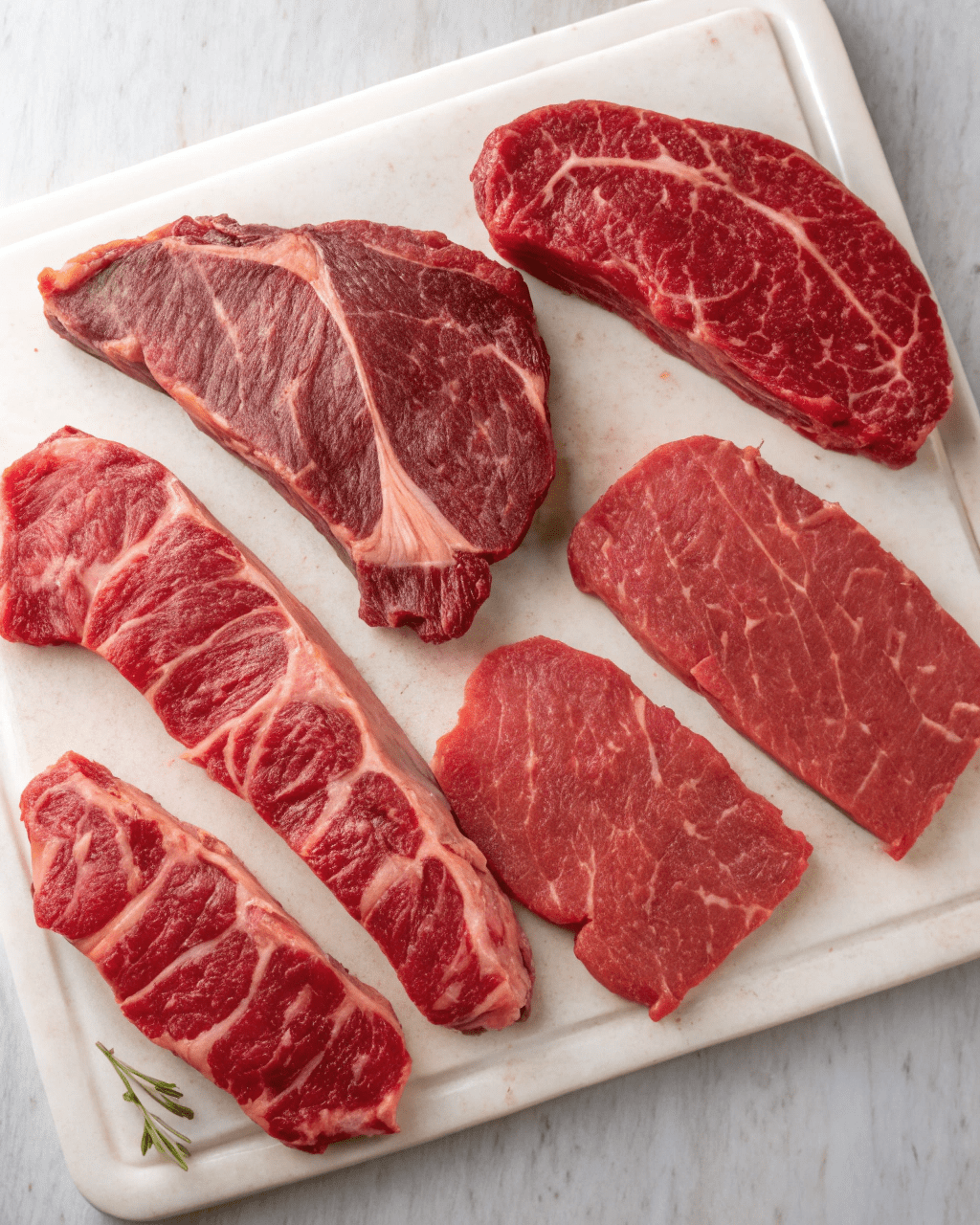

When it comes to meat, most people are familiar with popular cuts like T-bone, tenderloin and ribeye.
With the ribeye often stealing the spotlight as this cut is celebrated for its marbling and rich flavor.

Ribeye Steak
There are nonetheless, other cuts of meat that are underrated and often overlooked when purchasing beef.
These cuts of meat not only offer exceptional flavor but are often more economical as well.
Let’s explore some of these underrated cuts of meat that deserve a place on your grill or in your kitchen.
Beyond Ribeye: Explore These Underrated Meat Cuts
As mentioned early on, the ribeye steak is cut is celebrated for its marbling and rich flavor.
But did you know there are at least two cuts of underrated cuts meat with less expensive with marbling? These cuts include the “Flat Iron Steak” and the “Ranch Steak.”
Flat Iron Steak
The flat iron is a relatively recent addition to steak cuts. It is commonly referred to as butler’s steak or oyster blade steak.
This region of the animal was deemed undesirable for a long time. It contained connective tissue and sinew.
Researchers from the University’s of Nebraska and Florida worked together. They developed a groundbreaking method to remove the connective tissue. This led to the creation of the tender and tasty flat iron steak.

According to the University of Florida’s Institute of Food and Agricultural Sciences, the flat iron steak sales reach 90 million pounds annually. This makes the value-priced cut the nation’s fifth best-selling steak.
Dwain Johnson is a meat science professor with the University of Florida. He helped develop the flat iron steak in 2002. Some consumers say the cut tastes better than a New York strip.
According to Omaha Steaks, the flat iron is the second-most tender steak. It is next to the filet mignon in tenderness. It has a big, bold beefy flavor like the New York strip.
A flat iron steak is also considered the best cut of meat for a beef stir-fry.

Ranch Steak
Ranch steak is also known as “bistro steak” or “sirloin flap.” It is a cut that often flies under the radar. This cut is prized for its juicy flavor and good tenderness.

Ranch steak is typically cut from the bottom sirloin area, which is located near the rear of the cow.
This cut features a nice balance of leanness and marbling, ensuring flavor without excessive fat.
The meat has a coarse texture and a moderate amount of chew, making it a satisfying option when cooked properly.

Use A Ranch Steak To Make These Sweet Thai Chili Steak Lettuce Wraps
Chuck Eye Steak
Chuck eye steak is an often-overlooked cut that packs a flavorful punch. It comes from the chuck primal, which is the shoulder area of the cow.
This cut shares some characteristics with more well-known steaks, offering both tenderness and rich flavor at an affordable price.
Chuck eye steak is a relatively tender cut that features marbling throughout, which helps to enhance its flavor and juiciness.
It typically weighs between 1 to 2 pounds and is usually around 1-inch thick.
The marbling in chuck eye steak is similar to that found in ribeye. This similarity makes it an excellent option for steak lovers. They can enjoy great taste without the premium price.

Pan-Seared Skillet Chuck Steak: Cooking in Cast Iron
All you need to create a tasty Chuck steak on your stovetop is a heavy cast iron skillet.
This method lets you capture the rich flavor of a ribeye at a much lower price.
Start by seasoning the steak, which should be at room temperature, with a hickory smoked flavor seasoning or your favorite.

Next, heat your skillet and add a light layer of high-heat oil, like avocado or grape seed oil.
Cook the steak, turning it every 2 to 3 minutes, for approximately 7 to 8 minutes to achieve medium doneness.

Allow the steak to rest for 10 minutes before serving.
Flank Steak
Flank steak is typically boneless and weighs between 1.5 to 2.5 pounds. The cut is long and thin, usually about 1 inch thick.
Flank steak is known for its robust beefy flavor. It is also relatively lean, which means it has less fat compared to other cuts like ribeye or chuck.
Its lean nature makes it a healthier option. However, it can become tough if it is not cooked correctly.
Flank steak can be served in various ways:
Tacos and Fajitas: Slice cooked flank steak into thin strips for use in tacos or fajitas. Pair with sautéed jalapeños, tomatoes and onions, and mixed with Pepper Jack cheese and crispy cooked bacon.

Salads: Thinly slice flank steak and serve it on top of a fresh salad. The steak adds a delicious protein boost and flavor to mixed greens with a vinaigrette dressing.
Sandwiches: Use flank steak in sandwiches or steak burgers. Thin slices of flank steak can be combined with various toppings like onions, peppers, and cheese.
Skirt Steak
Skirt steak offers a robust flavor. It is tender when cooked properly. Its affordability makes it an excellent choice for a variety of dishes.
Many people overlook it. This is simply because it’s not as widely publicized. Yet, it can be a game-changer in meals like tacos, fajitas, or steak salads.

When marinated, grilled, or seared correctly, skirt steak can rival the flavor and satisfaction of pricier cuts.
It’s a great option for those looking to enjoy a delicious steak without breaking the bank. Its unique texture and ability to absorb flavors make it a hidden gem in the world of beef cuts.

With the right cooking techniques and seasonings, skirt steak can shine and deliver a satisfying dining experience.
Whether you’re making tacos, fajitas, or simply enjoying it as a steak, skirt steak is sure to please.
Understand The Difference
Flank steak and skirt steak are often confused as the same cut of meat. This confusion arises because of their similar appearances and cooking uses.
For example, with this Beef Steak Fajitas, where you have the choice to use either steak cut.

The two cuts of beef steak are in fact not the same cut.

Displayed here are uncooked skirt steak and uncooked flank steak. The grain of the skirt steak runs horizontally across its width, while the grain of the flank steak runs vertically along its length – (Photo Credit: WebstaurantStore)
The flank steak comes from the abdominal muscles of the cow, located beneath the sirloin and above the brisket.
The skirt steak comes from the diaphragm muscle of the cow, specifically from the plate section.
In Conclusion
Exploring cuts beyond ribeye can open up a world of flavor and tenderness, often at a more affordable price.
Each of these underrated cuts discussed here, offers unique characteristics that can elevate your culinary experiences.
Next time you’re at the butcher or grocery store, dare to venture away from the familiar and bring home something new. Your taste buds will thank you.
Be The Best Cook You Can Be In Your Kitchen – Continue Reading About Steak And Other Meats Here 👇🏼


Craving Something New – Find Your Next Favorite Breakfast, Lunch, Brunch, Side Dish, Soup , Salad, Sandwich, Dinner And Dessert Recipes Here 👉🏽 Recipe Index
More Deliciously Yummy Recipes
- A behind-the-scenes look at what I’ve been building lately 🍽️
- Ultimate Sheet Pan Teriyaki Chicken & Charred Brussels Sprouts
- How the Cooking Method of Using an Instant Pot Benefits the Preparation of Soups: 9 Powerful Advantages You Should Know
- Harvest Grain Bowl with Crispy Sausage, Chorizo & Aleppo-Lime Butter – A Bold, Cozy Dinner You’ll Crave
- Crispy Baked Buttermilk Popcorn Chicken
Please Share With Your Social Network:

Discover more from Cook Plate Fork
Subscribe to get the latest posts sent to your email.