
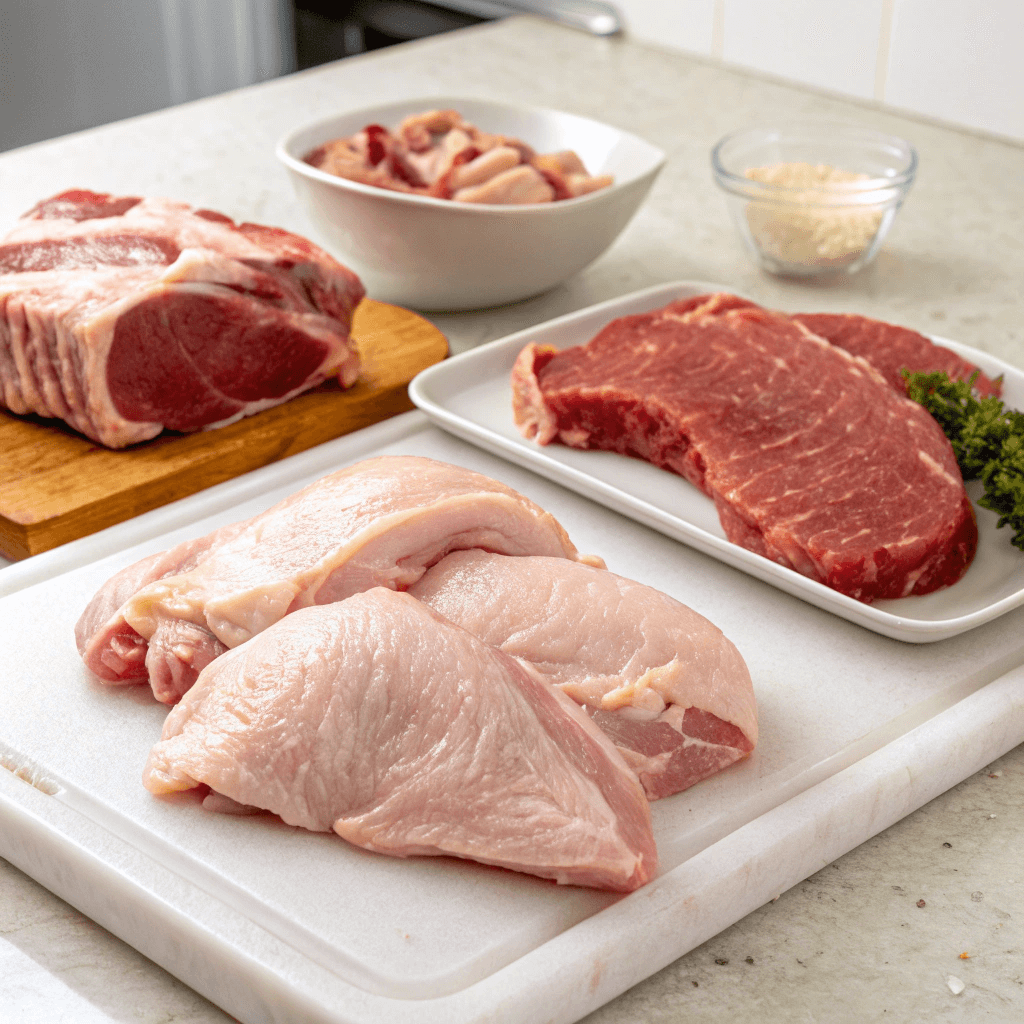

When it comes to consuming rare beef or pork, it depends on how these animals are farmed. This contrasts with not eating chicken rare.
Pathogen contamination can occur anywhere from the field to the supermarket shelf, with livestock processing.
Microbial cross-contamination of meat products during slaughter can also occur.
The question is than, why is it safe to eat rare beef or pork, but not poultry?

Why You Can Eat Rare Beef & Pork but Not Chicken
The bacteria that typically reside on the surface of beef cuts are mostly aerobic, meaning they need oxygen to survive.
When whole cuts of beef are seared quickly on the outside, it effectively kills off any surface bacteria. This process makes the inside safer to eat rare.

Science ABC states that since the 1990s, industries have developed new techniques to limit the contamination of pathogens in beef.
They say that most pathogen contamination occurs because the hide of the animal is contaminated.
This discovery led to interventions where the hide is cleaned, limiting the meat’s contamination.

What About Ground Beef
The exception to eating whole cuts of rare beef, is ground beef. Why? Let’s examine in brief.
According to Michigan State University, bacteria and pathogens like E. coli originate on the surface of carcasses and different meat cuts.
The process of grinding meat cuts into ground meat mixes any contamination from the surface throughout the product. This makes it important to thoroughly cook ground meat to 160°F. Cooking to this temperature ensures the meat is safe to consume.

Ground beef is also more perishable than beef roasts or steaks. Use purchased ground beef within one to two days. Alternatively, store it in the freezer, where it will keep for three to four months.
Thus, it is crucial to cook ground beef thoroughly to kill any potential bacteria and guarantee safety.

Why Is It Safe To Eat Pork Rare
The recommended cooking temperature for pork before 2011 was 160 degrees.
In 2011 USDA guidelines lowered the minimum cooking temperature for pork to 145 degrees with a 3-minute rest.
But according to Healthline – Nutrition, pork meat is prone to certain bacteria and parasites. These include Trichinella spiralis (roundworm) and tTaenia asiatica (tapeworms) which are life threatening to humans.
So why did the USDA lower the minimum cooking from 160 to 145? Because of new advances in technology and pig farming practices.

Pigs are known for eating virtually anything. They dig in the dirt, which exposes them to trichinella, the parasite that causes trichinosis.
Today most pig farming is done indoors and with the aid of technology and biosecurity.
This includes safety measures used to combat germs. For example, one practice is showering from head to toe when entering and exiting the facilities.
Extensive steps are taken to minimize the risk of disease or illness thus significantly eliminating a hogs exposure to trichinella.

Photo Credit: National Pork Board
The National Pork Board (NPB) states that pork meat today is very lean. Thus, it is important to not overcook it. Follow the recommended pork cooking temperature.
The NPB though still recommends cooking ground pork to 160° F.

What About Poultry
Chickens, like pigs and cows can harbor harmful bacteria.
Poultry has bacteria, like salmonella and E. coli throughout the meat, not just on the surface.
How much bacteria is lurking on and throughout your poultry?

According to food safety experts at Microbac Laboratories, approximately 30% of grocery store chicken is contaminated with bacteria.
To put that percentage into perspective, the Center For Disease Control (CDC) says that about 1 in every 25 packages of chicken are contaminated. You find these contaminated packages at the grocery store. These packages are contaminated with bacteria.

The Journal of Food Protection states that current and developing strategies are being developed to reduce contamination of salmonella and E. coli on poultry farms.
Before finding solutions, as in farming of cows and hogs, it’s crucial to cook poultry to the recommended internal temperature. This ensures the meat is safe to eat. The safe temperature is 165°F (74°C).

Always remember that food safety is key to enjoying your meals without any health risks.
So, while you can enjoy a juicy rare steak or a delicious thick cut rare pork chops, you must cook chicken thoroughly. This prevents potential foodborne illnesses.

Read More About Cooking With Meat
- How To Handle Raw Chicken
- Cooking With Pork
- Cooking With Chicken Breasts
- What Are The Benefits of Marinating Meat
More Deliciously Yummy Recipes
- How to Cook Store Bought Gnocchi: 5 Easy Methods for Perfect Texture Every Time
- Cooking With Tortellini Pasta: 11 Delicious Ways to Transform This Versatile Ingredient
- Creamy Caramelized Onion Tortellini
- Moist Gluten-Free Almond Flour Strawberry Banana Muffins
- 3 Flavorful and Easy Persian Recipes for Beginners
Please Share With Your Social Network:

Discover more from Cook Plate Fork
Subscribe to get the latest posts sent to your email.
Pork is so much moister and tastes better at 145º. My steak is still mooing when I fix it. 🤣
Yes the Pork board said that now days pork is much leaner and cooking it at 160 degrees would give a dry out piece of meat. I too like my steak with pink in it. But ground meat like pork, beef and chicken still need cooking to 160.