
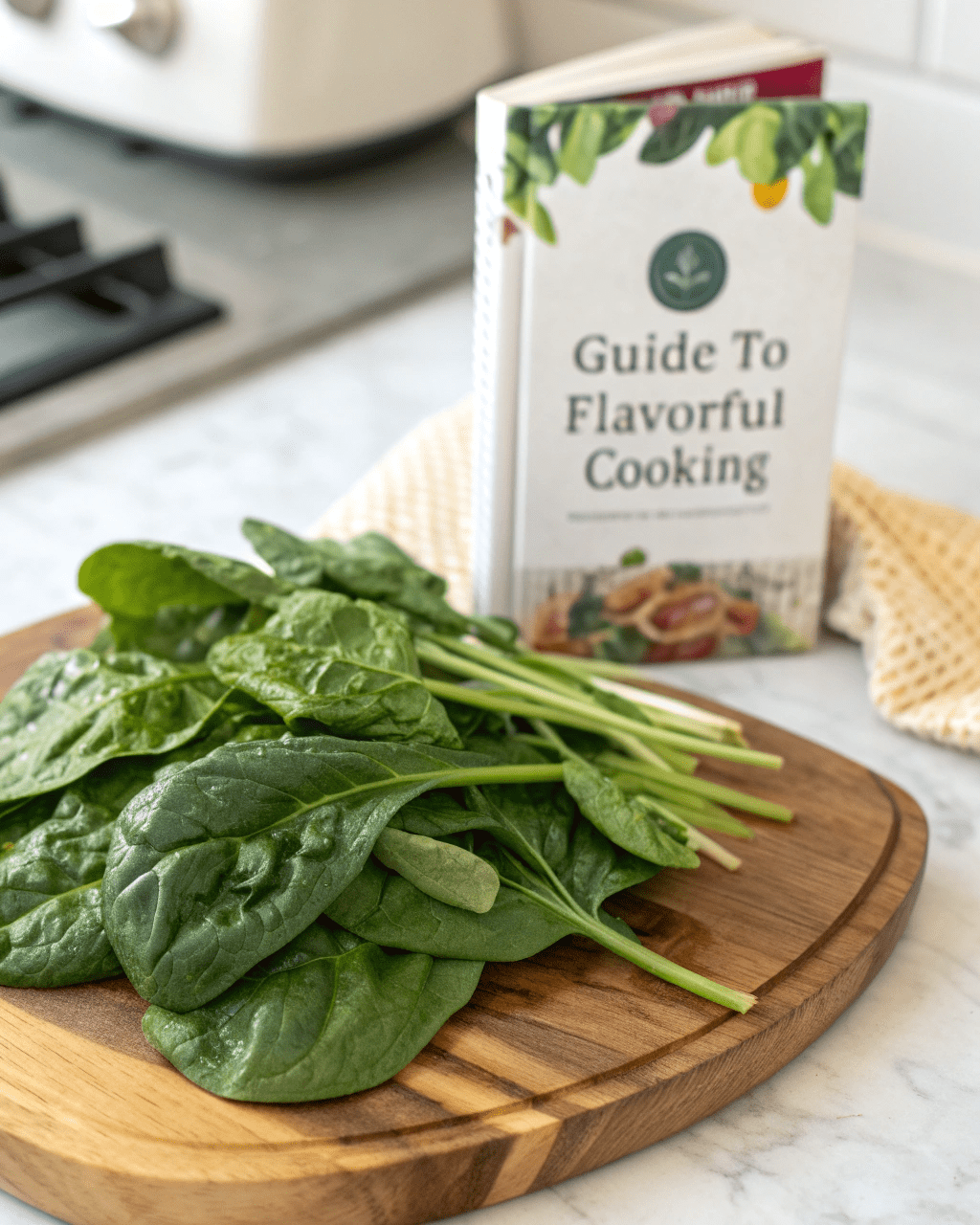

Spinach, a leafy green vegetable scientifically known as Spinacia oleracea, has been a staple in various cuisines around the world for centuries.
Prized for its nutritional benefits, versatility, and unique flavor profile, spinach continues to hold a special place in culinary traditions.
Let’s dive into the flavor profile of spinach, its seasonal availability, and a few culinary tips to elevate your dishes.
Flavor Profile of Spinach
Culinarily speaking, the flavor of raw spinach is often described as bitter, earthy, and slightly sweet. The bitterness is due to the presence of oxalic acid, a naturally occurring compound found in many leafy green vegetables.
Pairing raw spinach with sweet ingredients, such as apples or pears, can balance out its flavor.
Additionally, adding a squeeze of lemon juice can help break down the oxalic acid and reduce the bitterness.

When fresh, the leaves are tender and have a bright, vibrant green color, which translates into a crisp and refreshing taste.

The younger leaves (referenced as “baby spinach”) are often sweeter and more tender compared to larger, mature leaves, which may have a more pronounced bitterness.

When Is Spinach in Season?
Seasonality is crucial in maximizing the flavor and nutritional quality of spinach.
In the United States, spinach is typically in season during the cooler months of spring and fall.
It thrives in temperatures between 50°F and 60°F (10°C and 15°C), making early spring and late autumn the optimal times for growth.

However, depending on the region and climate, especially in milder areas, spinach can sometimes be grown year-round.
In spring, you may find baby spinach, which is younger and sweeter, appearing at farmers’ markets and grocery stores.
As fall approaches, the spinach plants grow larger and mature, offering heartier varieties perfect for hearty fall dishes.

Buying And Storing Loose Leaf Spinach
To buy loose leaf spinach, select vibrant green leaves that are crisp and firm, avoiding any that are wilted or yellowed.
It’s best to purchase in small batches, only what you can consume within a week. The leafy green will stay fresh 5-7 days. If stored properly, up to 14 days.
It is important to keep spinach dry and cool. The leaves are high in moisture, which is gradually released over time. Therefore, the objective is to minimize the exposure of the leaves to this moisture.

It’s best not to wash them until you’re ready to make a fresh salad or cook with them.
Store the leaves in a breathable container or perforated bag with a paper towel to absorb moisture.
Keep the spinach in the refrigerator’s crisper drawer, checking regularly for freshness.
Culinary Tips and Uses
Fresh spinach can pair excellently with several common pantry ingredients.
Fresh spinach can be the base of salads, bringing crunch and freshness.
Combine it with fruits, berries, nuts, and a creamy dressing to create a balanced dish.
Try One Of These Creamy Dressings
- Exotic Orange Tahini Dressing
- Mango Chipotle Dressing
- Creamy Avocado Cilantro Lime Dressing
- Peach Lavender Salad Dressing
While nuts and seeds, like almonds, pecans, cashews and pumpkin seeds, provide a delightful crunch.

For those who appreciate stronger flavors, cheese, such as feta, Parmesan and even sharp cheddar cheese, adds a depth of umami that complements spinach beautifully.
The bitter flavor of spinach can be enhanced through various cooking methods.
When cooked, spinach can develop an almost silky richness, perfect for enriching dishes like casseroles, pasta, soups and stews.
Sautéing and Stir-Frying
A quick sauté with garlic, olive oil, and a touch of red pepper flakes can yield a delightful side dish. Spinach wilts quickly, so it requires only a few minutes of cooking.

Soups and Stews
Adding spinach to soups and stews towards the end of cooking retains its vibrant color and nutrients while enriching the dish.

Pasta Dishes
Spinach incorporates seamlessly into pasta recipes. Whether blended into pesto, tossed into lasagna, or sautéed into a creamy sauce, its versatility shines.

Casseroles and One-Skillet
Casseroles and one-skillet recipes are another fantastic way to incorporate spinach into your meals.
Not only does spinach add a nutritional boost, but it also contributes a lovely color and flavor to baked and one-skillet dishes.


Pesto Sauce
One of the most delightful ways to elevate your culinary creations with spinach is by making a vibrant spinach pesto.
This alternative to traditional basil pesto showcases the unique flavor of spinach while offering a fresh twist to a classic favorite.

In Conclusion
Spinach is a versatile ingredient that can transform dishes with its subtle yet distinct flavor.
Understanding its flavor profile and knowing when to savor it in-season can elevate your culinary experiences.

Next time you’re at your local market, consider including fresh spinach in your meals—its delightful taste and myriad of health benefits will surely inspire your kitchen adventures.

Embrace the seasons, explore different preparations, and let spinach become a cherished ingredient in your culinary repertoire.

Craving Something New – Find Your Next Favorite Breakfast, Lunch, Brunch, Side Dish, Soup , Salad, Sandwich, Dinner And Dessert Recipes Here 👉🏽 Recipe Index
More Deliciously Yummy Recipes
- Cooking With Tortellini Pasta: 11 Delicious Ways to Transform This Versatile Ingredient
- Creamy Caramelized Onion Tortellini
- Moist Gluten-Free Almond Flour Strawberry Banana Muffins
- 3 Flavorful and Easy Persian Recipes for Beginners
- Instant Pot Ash Reshteh (Persian Herb, Bean and Noodle Soup)
Please Share With Your Social Network:

Discover more from Cook Plate Fork
Subscribe to get the latest posts sent to your email.