
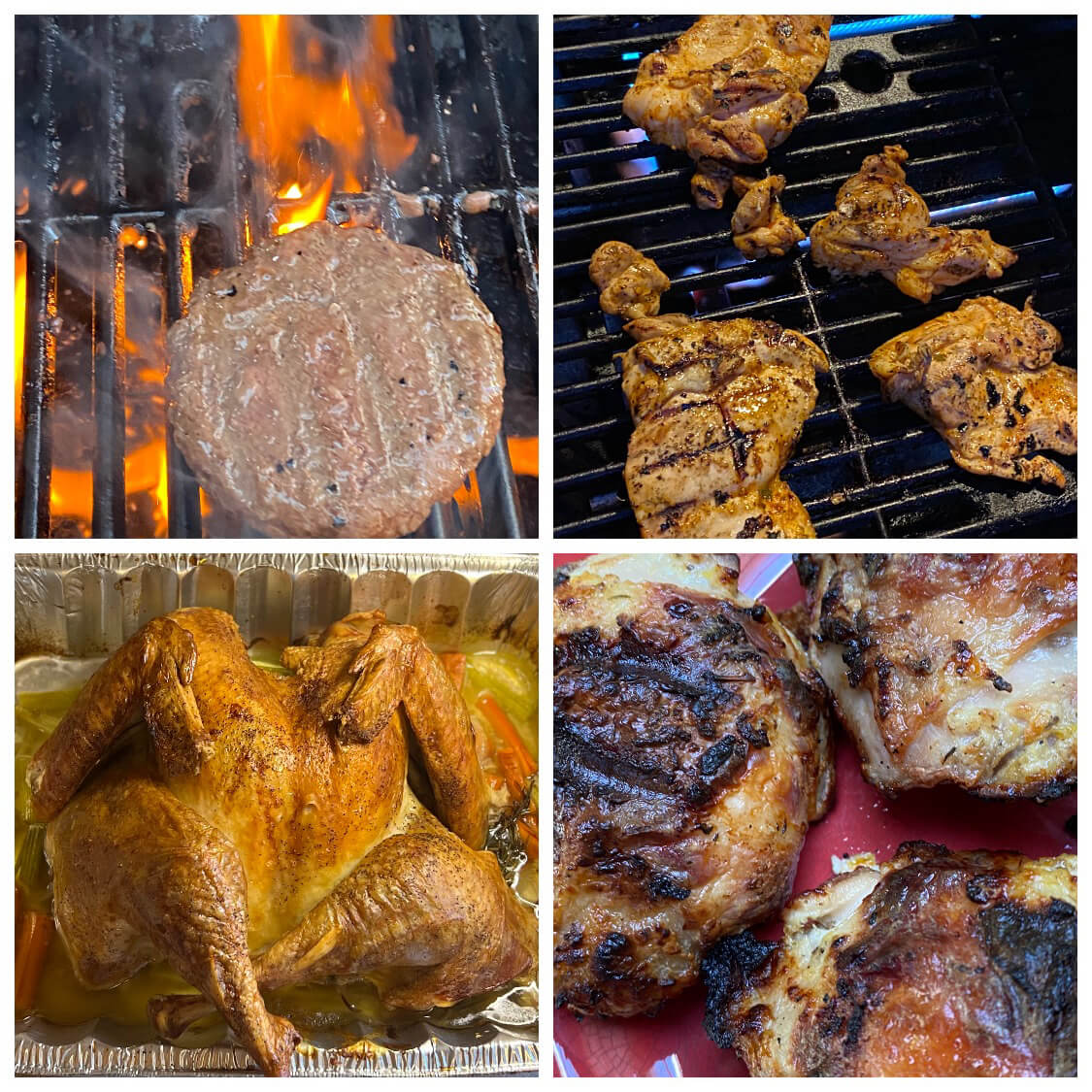

Roasting and charring are two cooking techniques. Both involve the application of heat to food. However, they differ in their outcomes and methods.
One technique uses surrounding heat, while, the other technique involves subjecting food to high, direct heat. Like a broiler or open flame.

Despite both techniques involving heat application, as noted, the out come of the cooked food differs.
Before we give you the breakdown of each method and how they differ, let’s get a little background on what happens to the food when it’s being roasted or charred.
The blackened ares of cooked food is due to what is called the Maillard reaction.
The the Maillard reaction requires the presence of amino acids and reducing sugars. This reaction contributes to the browning (or caramelization of the sugars) and flavor of cooked foods.
Charred food on the other hand is not primarily the result of the Maillard reaction.
As noted earlier, the Maillard reaction does contribute to browning and flavor, but when the food becomes charred, it is usually due to pyrolysis.
Pyrolysis is the thermal decomposition of materials at elevated temperatures in an inert atmosphere.
Unlike the Maillard reaction, which requires the presence of amino acids and reducing sugars, pyrolysis involves the breakdown of organic material due to high heat, often resulting in blackening or charring.
In summary, while the Maillard reaction contributes to the browning and flavor of cooked foods, charring is largely a result of pyrolysis.
Is Roasting And Charring The Same
Now let’s explore each method and how they differ.
Roasting
Roasting involves cooking food using dry heat, typically in an oven. It can be done at varying temperatures. These usually range from moderate to high heat (350 – 475 degrees). The food is cooked evenly on all sides.

Commonly roasted foods include meats, like chicken, beef, and pork. And vegetables, like potatoes, carrots, and squash. Even some fruits can be roasted, like peaches.

Roasting enhances the natural flavors of food, often creating a caramelized, golden-brown exterior while maintaining a moist and tender interior. The goal is to cook the food thoroughly without burning it.

The heat in roasting comes from the surrounding air in the oven, which cooks the food evenly from all sides.

Charring
Charring specifically refers to cooking food at very high temperatures until the surface becomes blackened or charred.
This is often achieved through grilling, broiling, or using an open flame.

Foods that are commonly charred include meats, vegetables, and even some fruits, like pineapple, watermelon and figs.

Charring is often used to add a smoky flavor and crisp texture to the outside of the food.
Charring gives food a distinct smoky, sometimes bitter flavor. It provides a crispy or crunchy texture on the outside.
Meanwhile, the interior remains tender. Yet, the focus is often on the contrast between the charred exterior and the softer inside.

Charring usually involves direct exposure to a high heat source. This can be a flame or very hot grill grates. It quickly blackens the food’s surface.
The Key Differences Between Roasting And Charring
Roasting aims for even cooking and caramelization, while charring focuses on creating a charred, smoky exterior.
Roasting uses indirect, dry heat, while charring uses direct, intense heat.

Roasting results in a uniformly cooked dish, while charring emphasizes texture and flavor contrasts with a blackened surface.
In summary, while both techniques can enhance the flavor of food, they are distinct in their approaches and results.

Roasting is about even cooking and caramelization, while charring is about achieving a smoky, charred blackened exterior.
More Reading On Cooking – Recipes Included
- Mastering the Basics: Essential Cooking Techniques for Every Home Cook
- Egg Cooking 101: Tips for Every Method
- How To Use The Broiler To Cook Food
- Smoke Point Of Cooking Oils
Follow Cook Plate Fork On Social Media For More Ideas:
More Deliciously Yummy Recipes
- 16 Best Brussels Sprouts Recipes: Crispy, Roasted & Flavor-Packed Ideas
- Asian Style Honey Garlic Chicken: Sweet, Savory, and Better Than Takeout
- Roasted Brussels Sprouts with Aleppo Pepper & Tahini Yogurt Sauce
- Instant Pot Pinto Bean Stew with Mexican Chorizo
- How to Cook Carrots (Roasted, Braised, Raw & More)
Please Share With Your Social Network:

Discover more from Cook Plate Fork
Subscribe to get the latest posts sent to your email.