
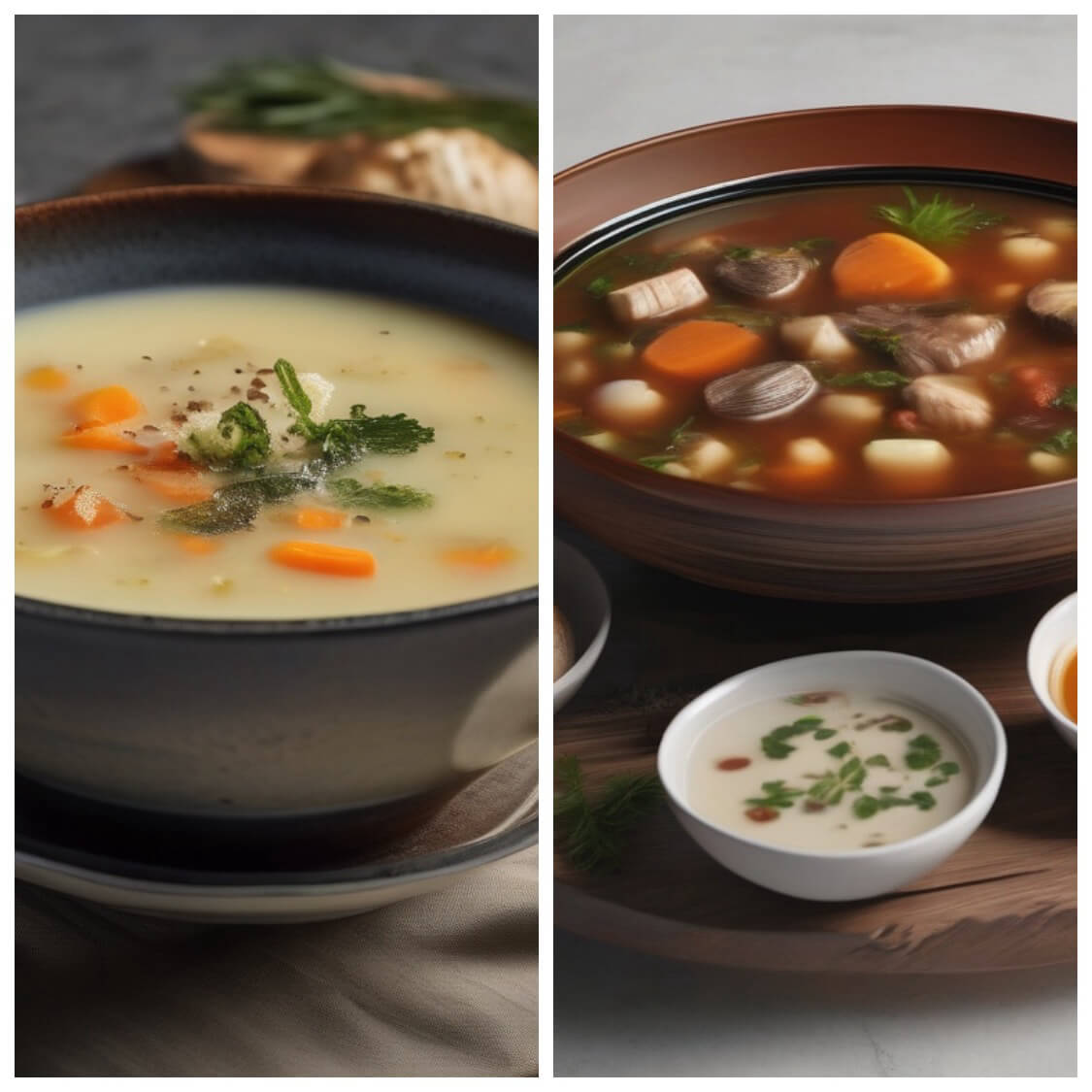

Soups and stews are both savory dishes that are typically made with a combination of broth, vegetables, and sometimes meat or other proteins, but they have distinct characteristics that set them apart.
Culinary History Of Soup And Stew
Soup is one of the oldest and most universal culinary creations, with a rich history that spans across cultures and millennia. When you think of soup, chicken soup typically comes to mind, like this Chicken Soup With Ditalini.

Its origins are closely tied to the development of cooking techniques and the advent of pottery, as boiling water in a vessel was crucial for making soup.
In ancient Greece, soups were common, with lentil soup being a staple. Try this modern day lentil soup, Sweet Potato, Carrot, Apple, and Red Lentil Soup.

Like soup, the origins of stew can be traced back to when humans first began cooking food.
Evidence of stews can be found in ancient texts and archaeological remains. The Epic of Gilgamesh, a Mesopotamian text dating back to around 2000 BCE, mentions a type of stew.
Ancient Egyptians, Greeks, and Romans all had variations of stews, using locally available ingredients like meats, fish, grains, and vegetables.
During the medieval period, stews were a staple in Europe.
The Difference Between Soup And Stew
The question remains, What Is The Difference Between Soup And Stew?
While both soups and stews are comforting and flavorful, the main difference lies in their consistency, cooking methods, and ingredient preparation.
Soup is more liquid-based, though they can be creamy, while stew is heartier and thicker, often served as a main dish.
Let’s examine in more detail the key differences.
Consistency and Liquid Content
Soup
Soups generally have a higher liquid content, making them more broth-like. They can range from clear and watery to thick and creamy but are typically more fluid than stews.
Creamy Soups

Spiced Butternut Squash Soup


The broth or liquid is a significant component of the dish and often serves as the primary medium in which the other ingredients are suspended.
Non-Creamy Soups


Stew
Stews are thicker and have less liquid compared to soups. Some stews even have a robust gravy-like consistency. Like this Pinto Bean And Pork Stew With Tomatoes And Citrus.

The ingredients are usually cut into larger pieces and the liquid is more of a sauce that coats the ingredients rather than a broth.
Stews are often simmered for a longer time to allow the flavors to meld and the liquid to reduce and thicken.

Ingredients And Preparation
Soup
Ingredients in soups can be finely chopped or pureed. Soups can be made quickly with a wide range of ingredients, including vegetables, meats, grains, and legumes.

A soup is typically cooked for shorter periods, especially if the ingredients are delicate.
Stew
The ingredients in a stew are typically cut into larger chunks. Stews often contain heartier ingredients such as root vegetables and tougher cuts of meat, which benefit from slow cooking.
The longer cooking time helps tenderize the meat and allows the flavors to develop fully. Like with this Caldo de Res – Mexican Beef Stew.

Cooking Method
Soup
Soups are often cooked at a higher temperature and for a shorter duration. They can be made by boiling or simmering.
Stew
Stews are usually cooked by simmering over a low heat for an extended period. This slow cooking process not only tenderizes tougher cuts of meat but also allows the flavors to meld and intensify. Like this Slow Cooker Latin Sweet Potato & Black Bean Salsa Chicken Stew.

Serving and Usage
Soup
Soups are versatile and can be served as a starter, main course, or even a light meal. They can be served hot or cold, depending on the type of soup.
Stew
Stews are typically served as a main course due to their hearty nature. They are generally served hot and are often accompanied by a side dish like bread or rice to soak up the flavorful sauce. Like this Sweet Potato Chicken Stew with Black Beans & Corn.

In Conclusion
Knowing the difference between soup and stew, do you have a preference as to which one you prefer to prepare. Or do you enjoy them both just the same?

What ever your answer maybe, just know this, that both a soup and stew on any occasion will fill the ones you’re serving with a sense of comfort and contentment.

Read More Here About The ABC’s Of Soup Making
More Soup And Stew Favorites
- Sweet Potato Stew With Chickpeas & Hardy Greens
- Asparagus and Sweet Potato Soup
- Indian Chicken And Cilantro Stew
- Instant Pot Broccoli Cheddar Cheese Soup
- Cannellini White Bean Soup with Swiss Chard
Follow Cook Plate Fork On Social Media For More Ideas:
More Deliciously Yummy Recipes
- Moist Gluten-Free Almond Flour Strawberry Banana Muffins
- 3 Flavorful and Easy Persian Recipes for Beginners
- Instant Pot Ash Reshteh (Persian Herb, Bean and Noodle Soup)
- Blueberry Lavender White Chocolate Bread Pudding
- Sweet Potato Kale and Farro Salad With A Orange Tahini Dressing
Please Share With Your Social Network:

Discover more from Cook Plate Fork
Subscribe to get the latest posts sent to your email.
I never thought about the difference, interesting! I wanted to grab the soups and stews right off the screen, they look so good and now that autumn is here, it’s soup season!
Yes that is one of my Autumn favorites – soups and stews – I really appreciate your comment – Let us know if you tried one or two of the recipes and how it turned out 🤓👍🏼👉🏽