
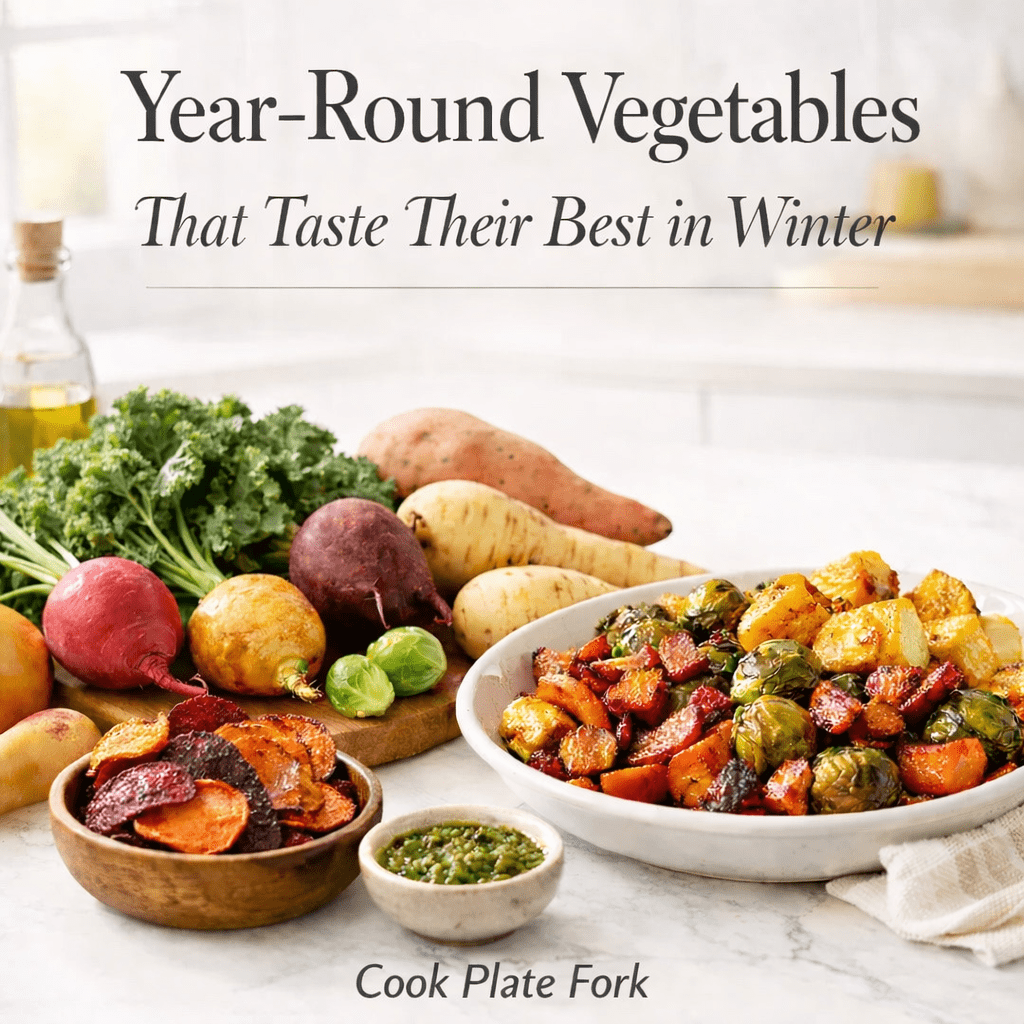

Many cold-hardy vegetables reach peak flavor during late fall and winter growing cycles, even though they remain available year-round.
As the air turns crisp, their structure strengthens, sugars concentrate, and flavor deepens.
Root vegetables are foundational to winter side dishes and cold-weather cooking.
Here’s how to cook them at their best.
Root Vegetables: Built for Cold Weather
Root vegetables store energy underground, which gives them dense texture and natural sweetness.
Many are harvested in fall and designed to last through winter, maintaining both structure and flavor in storage.
Parsnips, rainbow carrots, baby potatoes, and Brussels sprouts all benefit from high-heat roasting. At 400–425°F, their sugars caramelize, creating crisp edges and tender centers.
You can see this technique at work in Roasted Root Vegetables with Brussels Sprouts and Bacon, where parsnips, carrots, and potatoes roast alongside smoky bacon for a balanced winter side.
For a deeper understanding of heat and caramelization, explore The Art and Science of Roasting Vegetables at the Optimal Temperature, which breaks down why temperature and spacing matter.
Beets: Cold-Tolerant Roots with Concentrated Sweetness
Beets are one of the most dependable winter storage crops. As temperatures drop, they concentrate sugars within their roots, enhancing sweetness while maintaining their earthy depth.
Dense and structured, beets hold up to roasting, shaving, or simmering without losing integrity. Their pigment — ruby red, golden, or candy-striped — adds visual richness to winter plates.
Common market varieties include:
- Red Beets – Deep, earthy, and robust
- Golden Beets – Milder and subtly sweet
- Chioggia – Lightly sweet with distinctive interior rings
Beets pair well with acid, fresh herbs, fennel, goat cheese, and smoky elements like bacon.
Cook them into dishes like:
- Gnocchi With Pesto, Smoked Bacon and Roasted Golden Beets
- Golden Beets Fennel and Green Apple Slaw
- Red Kale Beets and Sweet Cilantro Vinaigrette
- Baked Beets and Sweet Potato Chips
Roasted or raw, beets anchor winter cooking with grounded sweetness.
Sweet Potatoes: Dense, Sweet, and Designed to Store
Sweet potatoes are harvested in late summer and cured before storage, a process that enhances sweetness and improves shelf life.
Stored properly, they last for months, making them a reliable winter staple.
Their high natural sugar content and firm structure make them ideal for roasting and sautéing.
They soften gradually, creating creamy interiors while maintaining shape.
Common market varieties include:
- Beauregard – Bright orange flesh with dependable sweetness
- Jewel – Smooth texture and balanced flavor
- Purple Sweet Potatoes – Dense and earthy
- Japanese (Murasaki) – Creamy white flesh with subtle sweetness
Sweet potatoes pair well with warming spices, citrus, toasted nuts, and savory proteins.
They shine in dishes like:
- Purple Sweet Potato Kale Cashew and Chicken Salad
- Creamy Skillet Tortellini with Sweet Potato and Red Kale
- Spiced Sweet Potatoes With Cashews And Cilantro
Few vegetables move as easily between roasted sides, skillet mains, and salads.
Kale: A Cold-Hardy Green That Improves with Frost
Kale thrives in cold weather. Many varieties remain harvestable well into winter and survive temperatures down to 5°F or lower.
Flavor improves after a light frost. As temperatures fall, the plant converts starches into sugars, reducing bitterness and enhancing sweetness.
Unlike delicate lettuces, kale maintains structure when sautéed, roasted, or dressed. It stands up to bold vinaigrettes and hearty preparations without collapsing.
Common market varieties include:
- Red Russian – Tender leaves with mild sweetness
- Tuscan (Dino/Lacinato) – Dark, pebbled leaves with refined earthiness
- Winterbor – Curly and sturdy, ideal for soups and braises
For a deeper look at selecting and preparing varieties, see Your Complete Guide to Kale: From Market to Table.
Why Winter Vegetables Respond So Well to Roasting
Cold-hardy vegetables share defining traits:
- Dense cellular structure
- Lower water content
- Natural sugar concentration
- Tolerance for high heat
Roasting intensifies sweetness through caramelization while preserving interior tenderness.
Proper spacing prevents steaming and encourages browning.
That contrast — crisp edges and tender centers — defines winter vegetable cooking.
Storing Winter Vegetables for Maximum Flavor
Beets and sweet potatoes are storage crops designed to last. Proper handling preserves texture and sweetness long after harvest.
Cool, dry, well-ventilated spaces extend shelf life and maintain quality through winter.
For detailed storage techniques, see How to Store Root Vegetables All Winter: 17 Proven Tips for Fresh, Long-Lasting Harvests.
A Seasonal Kitchen Mindset
Winter cooking isn’t about chasing availability. It’s about cooking what thrives in the cold.
- Roots caramelize
- Greens sweeten
- Dense vegetables transform under high heat
- Creamy sauces cling to structure
- Bright vinaigrettes cut through earthiness
These vegetables may be available year-round — but their flavor, texture, and character feel most at home in winter.
Explore the recipes above and build your own winter table around vegetables that truly thrive in the cold.
For more seasonal ingredient guides, foundational techniques, and practical kitchen insight, explore our Culinary Guides: Essential Cooking Techniques, How-To’s & Ingredient Tips.
Still hungry? These recent recipes are ready when you are.
More Deliciously Yummy Recipes
- Blueberry Lavender White Chocolate Bread Pudding
- Sweet Potato Kale and Farro Salad With A Orange Tahini Dressing
- Tahini in Culinary Applications: 5 Delicious Ways to Use This Nutty Super Ingredient
- Tuscan Tortellini, Sausage & Kale Soup
- Instant Pot Thai Coconut Chicken Soup
Please Share With Your Social Network:

Discover more from Cook Plate Fork
Subscribe to get the latest posts sent to your email.