
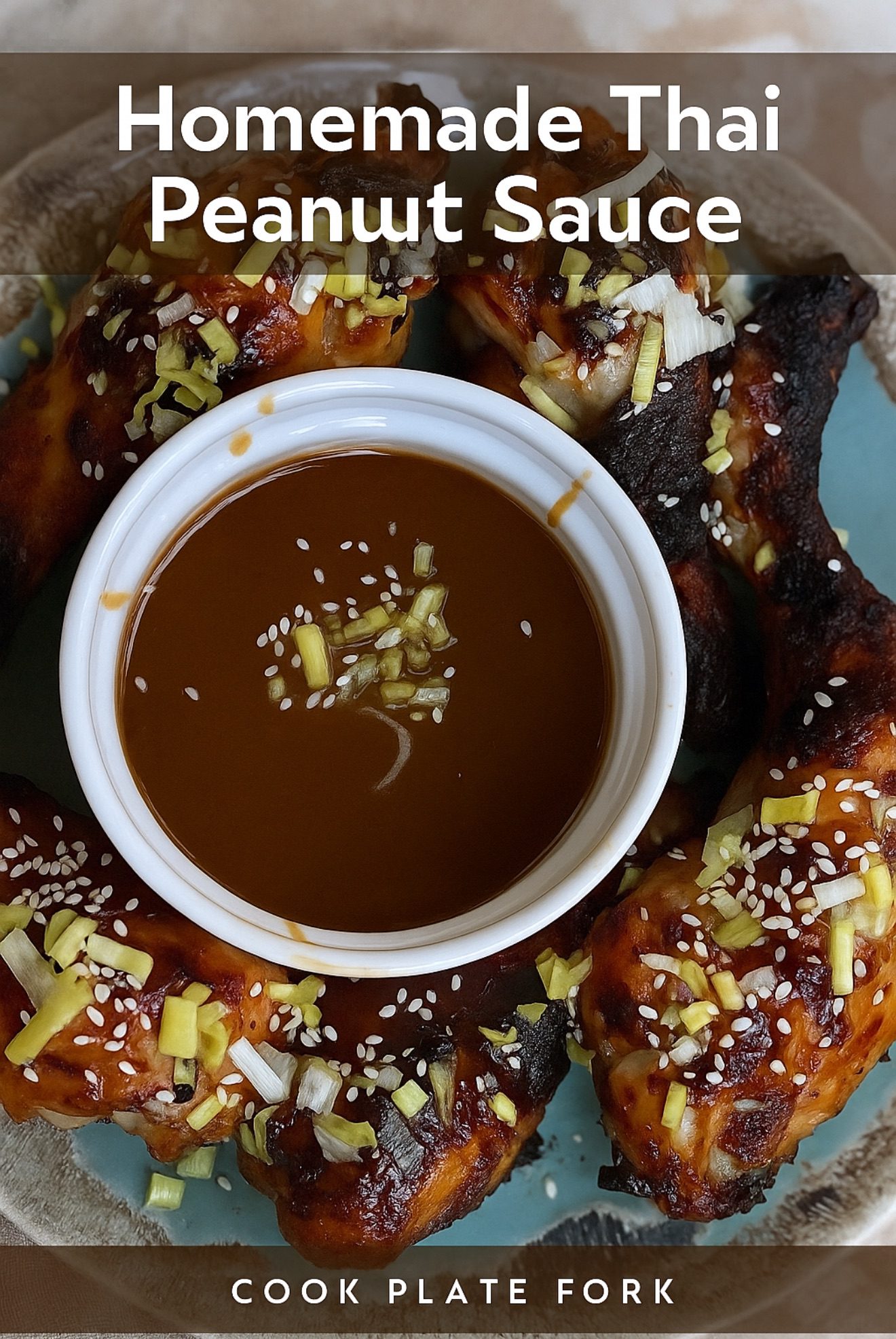

Thai Peanut Sauce is a creamy, nutty, and slightly spicy condiment that has captured the hearts of food lovers around the world.
Known for its perfect balance of sweet, salty, sour, and spicy notes, this versatile sauce pairs beautifully with noodles, grilled meats, vegetables, salads and even pizza.

While it’s often called “Thai Peanut Sauce,” this flavorful condiment actually has deep Southeast Asian roots that stretch beyond Thailand, blending culinary influences from neighboring Indonesia, Malaysia, and China.

The Fascinating History of Thai Peanut Sauce
Contrary to popular belief, peanut sauce didn’t originate solely in Thailand — its earliest known form traces back to Indonesia, where it is known as satay sauce (bumbu kacang).
Indonesian street vendors served grilled meat skewers (satay) with a rich peanut-based sauce, which quickly became a regional favorite.
When Thai chefs adopted and adapted this sauce, they infused it with the signature Thai balance of lime juice, garlic, chili, and soy sauce, creating the version we now associate with Thai cuisine.
The Evolution of Thai Cuisine and Western Influence
During the 20th century, as Thailand’s cuisine gained popularity abroad, Thai Peanut Sauce became Westernized.
American and European cooks began experimenting with ingredients like peanut butter, honey, and olive oil, which made the sauce easier to prepare while retaining its exotic flair.

Traditional Ingredients and Flavor Profile
Thai Peanut Sauce is an artful combination of five core flavor dimensions that form the foundation of Thai cuisine.
These include:
- Sweetness from honey
- Saltiness from soy sauce
- Sour tasting from fresh lime juice.
- Spiciness from cayenne pepper or Thai chilies
- Umami from soy sauce, garlic, and roasted peanuts

It’s this harmony that makes Thai Peanut Sauce irresistible. The umami component — that deep, savory richness — comes primarily from the fermented soy elements (like soy sauce or Worcestershire) and the roasted peanuts, which both contribute to that satisfying, mouth-filling flavor.
This blend ensures every bite feels balanced, comforting, and complex — just as Thai cooking intends.

Homemade Thai Peanut Sauce
The flavorful and versatile Thai Peanut Sauce is easy to prepare and perfect for dipping, drizzling, or marinating.
¼ cup honey * See Cooks Notes
¼ cup creamy peanut butter *See Cooks Notes
¼ cup soy sauce
1 teaspoon Worcestershire sauce (optional)
¼ teaspoon cayenne pepper
3 garlic cloves, grated
Juice of 3 limes (plus wedges for serving) * See Cooks Notes
½ cup + 2 tablespoons olive oil
1½ teaspoons salt
Black pepper, to taste
Cooks Notes
Honey: Over-sweetening – can mask other flavors.
Peanut Butter: Do not use chunky peanut butter, as it will make the sauce grainy.
Lime Juice: This acidic juice is key to balancing the flavors in this sauce. If you don’t have lime juice you can substitute lemon juice.
Or you can opt for using white wine vinegar: 3 tablespoons white wine vinegar + 3 tablespoons water.
In a bowl, whisk together honey, peanut butter, soy sauce, and Worcestershire sauce until smooth. Add cayenne, garlic, lime juice, salt, and pepper.
Slowly drizzle in the olive oil while whisking to emulsify the sauce. Taste and adjust — add more lime for tang, or honey for sweetness.
Save any unused portion in a jar tight jar and store in the refrigerator. Use within a week.

Modern Variations and Global Adaptations
To make this peanut sauce vegan, simply replace honey with maple syrup. For a gluten-free sauce, use tamari instead of soy sauce. You can also opt for coconut aminos.
Western Fusion Recipes Using Peanut Sauce
In Western kitchens, peanut sauce has become a favorite addition to:
- Wraps and sandwiches
- Salad dressings
- Grilled chicken bowls
- Stir-fry’s

FAQs About Thai Peanut Sauce
Q1: Is Thai Peanut Sauce the same as satay sauce?
A: They’re closely related, but Thai versions are typically sweeter and tangier.
Q2: Can I use almond butter instead of peanut butter?
A: Yes, almond butter offers a lighter, earthier flavor that works beautifully.
Q3: Is Thai Peanut Sauce spicy?
A: It can be mild or fiery depending on how much chili or cayenne you use.
Q4: How can I thin my peanut sauce?
A: Add a splash of warm water or coconut milk while whisking.
Q5: Can I make Thai Peanut Sauce without soy sauce?
A: Try tamari or coconut aminos for a gluten-free, soy-free option.
Q6: What dishes can I serve with Thai Peanut Sauce?
A: Satay, stir-fry, salads, noodle bowls, and even roasted vegetables.
Craving Something New – Find Your Next Favorite Breakfast, Lunch, Brunch, Side Dish, Soup , Salad, Sandwich, Dinner And Dessert Recipes Here 👉🏽 Recipe Index
More Deliciously Yummy Recipes
- Moist Gluten-Free Almond Flour Strawberry Banana Muffins
- 3 Flavorful and Easy Persian Recipes for Beginners
- Instant Pot Ash Reshteh (Persian Herb, Bean and Noodle Soup)
- Blueberry Lavender White Chocolate Bread Pudding
- Sweet Potato Kale and Farro Salad With A Orange Tahini Dressing
Please Share With Your Social Network:

Discover more from Cook Plate Fork
Subscribe to get the latest posts sent to your email.
Love a good stir fry!
Yes and with peanut sauce 😋😋 – But of course you cant forget teriyaki or chicken and cashews and on and on 🤣🤣🤣🤣