
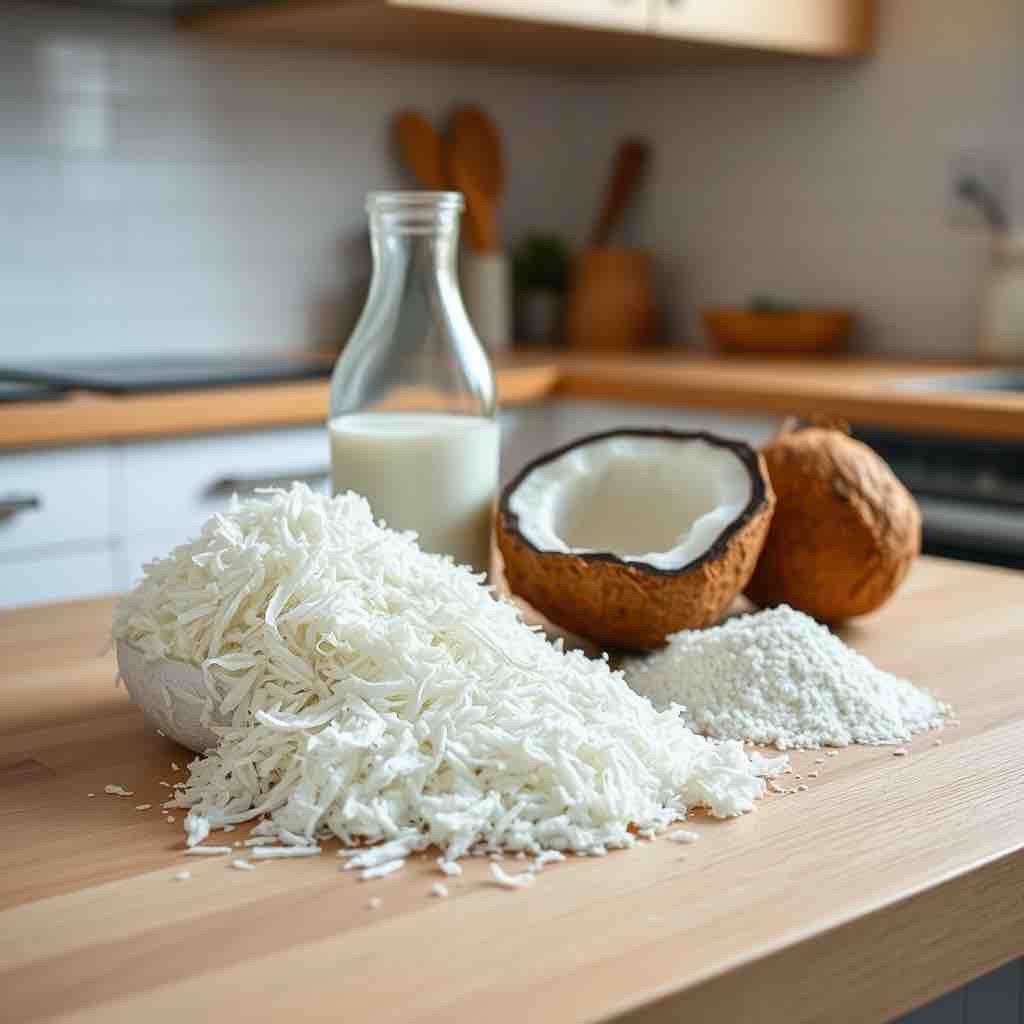

The coconut, once a humble fruit of tropical regions, has evolved into a global superstar. Its journey from local staple to international favorite is a fascinating tale of culture, trade, and versatility.
Origins and Early Expansion
Coconut palms grow on just about every subtropical coastline around the world. Genetic testing underwritten by the National Geographic Society in 2011 showed the coconut originated in the Indo-Pacific region.


The Niu Kafa-type coconut, naturally spread itself. As it was large, buoyant, and watertight, making it well suited for long-distance dispersal by ocean currents, enabling its natural spread to coastal regions.
An example of this, is reports of early Spanish explorers seeing coconut palms on the Pacific coasts of Costa Rica, Panama and northern Colombia.
The Niu Vai-type coconut was dispersed by people, including the early Polynesians.
The first written record of seeing coconut palms in India and Sri Lanka was in 545 A.D. by an Egyptian named Cosmos.
Marco Polo reported in 1280 seeing them in Indonesia.

Portuguese Explorer Vasco de Gama – Image AI Produce
A explorer Vasco de Gama was looking for a route around Africa to India, at which he did in 1498.
In his journals he did not write finding coconut palms on the Atlantic coast of Africa nor in Southern Africa. His first journaled record was at the eastern coast of Africa in Malindi Kenya on the Indian ocean.


History states that Diego Corenco, a former pastor of Cape Verde, introduced the first coconuts into the Caribbean to Puerto Rico in 1549.
From Indian Walnut To Coconut
The ancient Roman name for the coconut was nux indica, which also translates to “Indian nut.”

Long before modern trade routes, seafaring Arab spice traders carried coconuts from India to East Africa. They named the fruit zhawzhat al-hind—“walnut of India”—and that name endures in Arabic today.
The modern word “coconut” evolved from the 16th-century Portuguese word coco (“head” or “skull”), which referred to the three dark indentations on the shell that look like a face.


Global Expansion
The most common type of coconut cultivated worldwide is the Malayan Dwarf, found throughout Asia, South America, Oceania, the Caribbean and Florida.
The Ivory Coast (Africa) boasts extensive coconut plantations along its coastline, where the tropical climate is ideal for coconut cultivation.

The Ivory Coast is nickname the “Coconut Coast” for its lush, palm-fringed shoreline, which attracts tourists yearly
These plantations are vital for producing coconut oil, copra (dried coconut kernels), and other derivatives used in food and cosmetics.
The British and Dutch empires (colonial influencers) cultivated coconut plantations in their tropical colonies, boosting its availability worldwide.
The first recorded use of the term “coconut milk” in English was in 1698, though the ingredient has a much longer history in tropical regions.
The Coconut Boom
The Industrial Revolution in the 19th and 20th centuries brought about technology advances in processing of food, which allowed for mass production of coconut oil, milk, and desiccated coconut.
In recent decades, the coconut’s health benefits—such as its medium-chain triglycerides (MCTs) and hydrating water—have made it a darling of wellness trends. Coconut oil, once a niche product, is now a kitchen staple globally.

Modern-Day Coconut
The major producers today of coconuts include Indonesia, the Philippines, and India.
The global coconut industry was valued at roughly 12.88 billion (USD) in 2024 and is projected to reach approximately 14.18 billion (USD) in 2025, with further growth expected to an estimated 33.71 billion by 2034.
The market is being driven by increasing consumer demand for plant-based alternatives, health benefits associated with coconut products, and the expansion of coconut applications in food, beverages, and cosmetics.


Fun Facts
Coconuts are among the few seeds that can travel across oceans and still germinate.
Every part of the plant is used including the trunk, husks, fruits, shells, leaves and fronds.
Some of its uses include: musical instruments, clothing, canoe hulls, food containers, base for kukui torches, kava drinking cup (‘apu), brooms, toys, medicine, weaving and hats.
In many cultures, the coconut palm is called the “Tree of Life” because every part of it is useful—from the husk to the shell to the water inside.
Article sources:
Continue Reading And Learning To Be The Best Cook You Can Be


Craving Something New – Find Your Next Favorite Breakfast, Lunch, Brunch, Side Dish, Soup , Salad, Sandwich, Dinner And Dessert Recipes Here 👉🏽 Recipe Index
More Deliciously Yummy Recipes
- A behind-the-scenes look at what I’ve been building lately 🍽️
- Ultimate Sheet Pan Teriyaki Chicken & Charred Brussels Sprouts
- How the Cooking Method of Using an Instant Pot Benefits the Preparation of Soups: 9 Powerful Advantages You Should Know
- Harvest Grain Bowl with Crispy Sausage, Chorizo & Aleppo-Lime Butter – A Bold, Cozy Dinner You’ll Crave
- Crispy Baked Buttermilk Popcorn Chicken
Please Share With Your Social Network:

Discover more from Cook Plate Fork
Subscribe to get the latest posts sent to your email.