
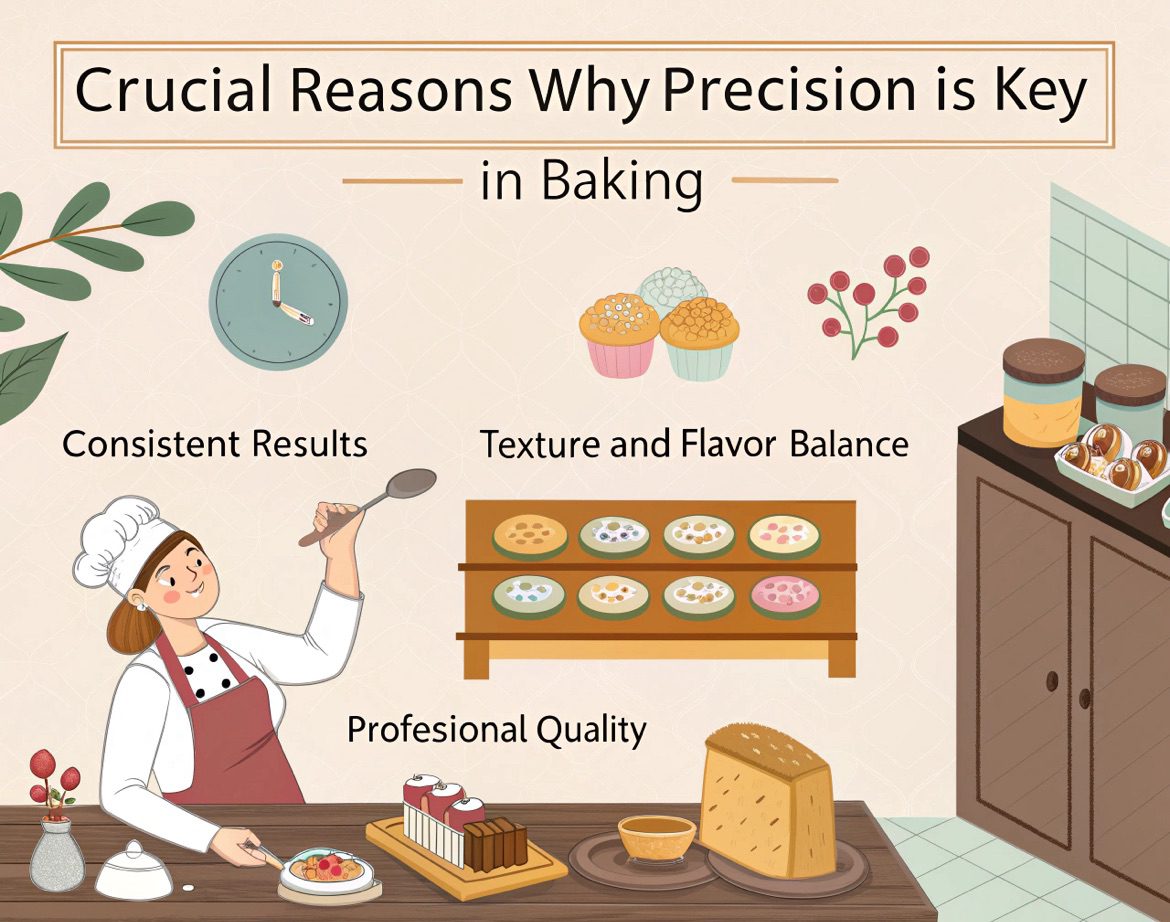

Baking is both an art and a science, but unlike cooking, which often allows for improvisation, baking, including gluten-free baking requires a certain level of precision.

Here are four crucial reasons why following recipes to the letter is essential for baking success.
4 Crucial Reasons Why Precision is Key in Baking
Being attentive to the recipe and understanding how ingredients work together can go a long way in mastering baking.

Baking does require a bit more precision than cooking.
In the kitchen, you can often tweak ingredients on the fly—add a pinch more salt or throw in some extra herbs without much worry.

But in baking, especially with recipes like cakes or pastries, even small adjustments can significantly affect the final product.

1. Chemical Reactions Matter
Baking relies heavily on chemical reactions to produce the desired texture, flavor, and structure.
Leavening is a crucial process in baking. It helps create light, airy textures in many baked goods.
Baking soda and baking powder are the most common leavening agents. Both of these ingredients play a vital role in producing carbon dioxide.

Ingredients like baking powder, baking soda, and yeast create gas bubbles that help baked goods rise.
If you alter the amounts of these ingredients even by a small margin, it can drastically change the outcome.
For example, too much baking soda can lead to a metallic flavor and uneven rise, while too little may produce dense, flat results.
2. Ingredient Balance Creates Structure
Each ingredient serves a specific purpose, contributing to the overall structure, moisture, leavening, and flavor of the dish.
For example, flour provides the backbone, while fats like butter or oil add moisture and tenderness.

The balance between dry and wet ingredients is crucial. If you substitute one ingredient without adjusting the others, you may end up with a soggy or overly dry product.
Maintaining the right ratios helps achieve that perfect crumb and consistency.
3. Oven Science: Baking Times and Temperatures
Precision also extends to baking times and temperatures.
Different ingredients can affect how quickly something cooks. A change in moisture content can lead to increased baking times, while increased fat may cause your goods to bake faster.

A precise oven temperature ensures even cooking and helps avoid undesired results like burnt edges or raw centers.
An oven thermometer can be a great tool to ensure your oven is accurate.
4. Consistency Leads to Success
Whether you’re baking for a special occasion or for daily enjoyment, consistency is key.
Precision allows you to recreate the same delicious results every time you bake.
When you fine-tune your measurements and techniques, you’re not only perfecting your skills but also building confidence in your baking.

In Conclusion
Mastering the art of baking requires understanding the importance of precision.
By appreciating the science behind your ingredients and maintaining accurate measurements, you’ll be well on your way to creating bakery-quality treats in your own kitchen!
So the next time you bake, remember: great results come from careful attention to detail.

Craving Something New – Find Your Next Favorite Breakfast, Lunch, Brunch, Side Dish, Soup , Salad, Sandwich, Dinner And Dessert Recipes Here 👉🏽 Recipe Index
More Deliciously Yummy Recipes
- Roasted Sweet Potatoes With White Miso and Maple Syrup
- Guide To Cooking With Salt
- Fruit-Based Seasonings You Use Every Day Without Even Realizing It
- Easy Chicken Tinga Tostadas: A Flavor-Packed Mexican Classic with an Asian Twist
- Roasted Sweet Potatoes And Chickpeas with Feta, Pomegranate And Maple Tahini
Please Share With Your Social Network:

Discover more from Cook Plate Fork
Subscribe to get the latest posts sent to your email.
Good read. Thanks for sharing. 🙂
Thank you. Glad you enjoyed the info!! 👍🏼🤓
Always. 🙂