
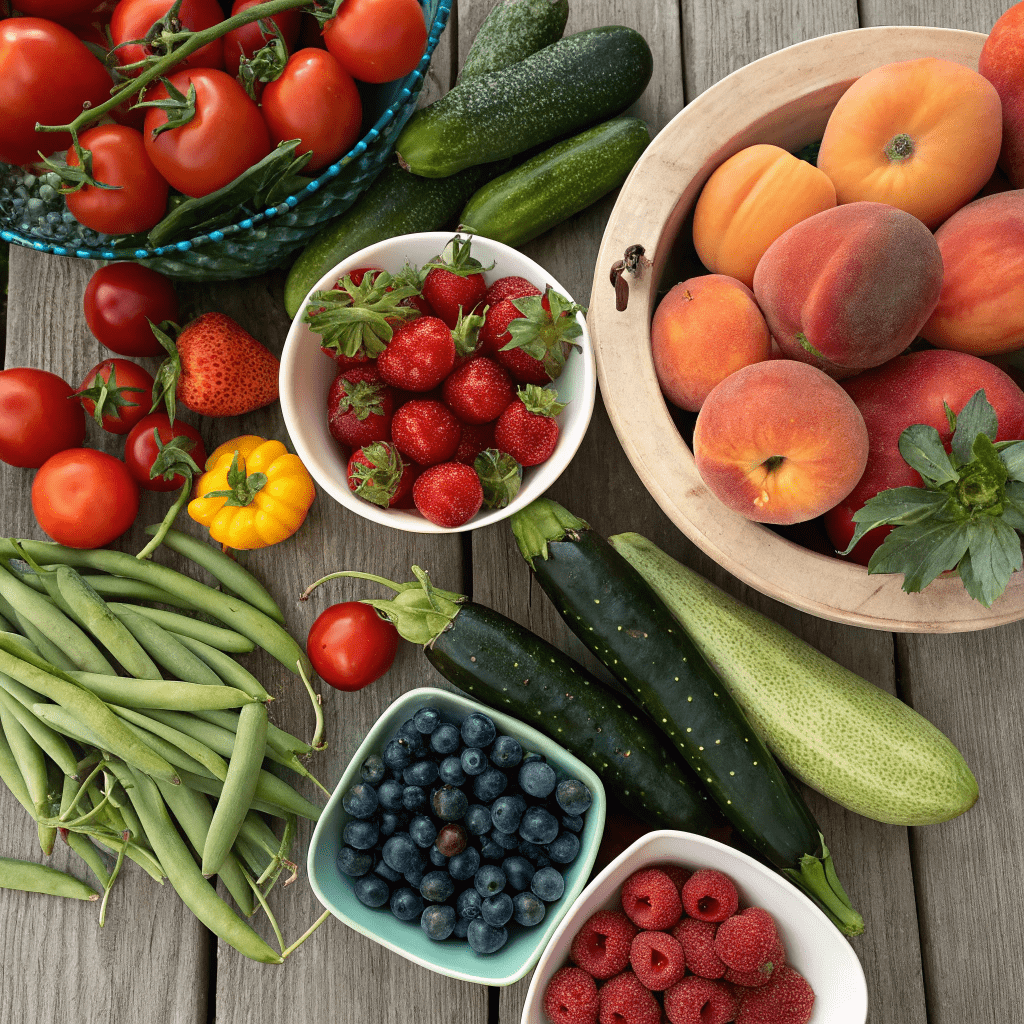

Savor the lively flavors of summer with this comprehensive guide to the fruits and vegetables that are in season, along with helpful tips for selecting, storing, and incorporating them into your meals.
In-Season Fruits and Vegetables
Summer brings an abundance of fresh produce that delights the palate. Here are some essential fruits and vegetables to seek out.
Tomatoes
Bursting with juiciness and flavor, they are ideal for salads, sauces, and salsas. Enjoy the rich, juicy sweetness of heirloom tomatoes.

Summer is a great time to find them at farmers’ markets and grocery stores.
Cucumbers
Crisp and refreshing, perfect for salads, pickling or making a tzatziki sauce.

Berries
Strawberries, blueberries, blackberries and raspberries are at their peak ripeness and perfect for snacking, adding g to salads and desserts, or blending into smoothies.

Berries are typically fresh in season from May through September.
Peaches
Sweet and aromatic, they are delightful eaten fresh, grilled or roasted, baked into treats, added to beverages or made into a salad dressing.
Peaches are in season April-October, with California, Georgia, and Texas, starting peaches season in late spring and peaks during the summer months.


Cherries
Sweet and succulent, perfect for snacking, desserts, or topping off your favorite dishes.


Cherries are in season May through August, with the pick months being June and July.
Zucchini and Summer Squash
Highly versatile, zucchini are great for grilling, roasting and sautéing.





Can be added to a frittata (egg dish) or made into a gluten-free spaghetti pasta, ribbons for flatbread or incorporated into baked goods.
Bell Peppers
Colorful and crunchy, they can be made into a dipping sauce, enhance salads and stir-fries,


Bell peppers can also be stuffed or roasted.
Corn
Sweet and tender, it is best enjoyed on the cob with butter and a sprinkle of chili powder or tossed fresh off the cob into salads.


Corn season in the U.S. is generally from May to September.
Green Beans
Crisp and tender, excellent for steaming, sautéing, or adding to salads.
Green beans are not used only for a salad or side dish, consider breakfast with this Green Beans Almondine & Sun-Dried Tomatoes Frittata.


Green beans are available May-October with the summer months (July-September) being peak season.
Watermelon
Refreshingly sweet and hydrating, perfect for snacks, salads, or blended into smoothies.
Watermelon season is from May-September, with July and August being the peak of the season.


Pineapple
Tropical and juicy, ideal for snacking, grilling, or adding to fruit salads.
Pineapples are available April-September, with peak season from March to July.


Peak season guarantees there are sweeter pineapples in circulation.
Tips for Selecting and Storing Produce
The following selecting and storing tips can ensure that your fruits and vegetables remain fresh longer, maximizing their flavor and nutritional value.
Choose Freshness
Look for firm, brightly colored fruits and vegetables, and avoid items with bruising or blemishes.
Fruits that feel heavier typically indicate they are juicier and fresher on the inside.
For varieties such as melons, or tomatoes, a bit of extra weight is a positive indicator that they are full of moisture rather than being dried out.

Fruits such as pineapples, melons, and peaches should emit a sweet and aromatic fragrance near the stem. A lack of scent often suggests a lack of flavor.
When choosing cherries, look for fruit that still has its stems attached. Cherries with stems tend to be fresher and have a longer shelf life, as the stems help prevent moisture loss and keep the fruit plump.

Additionally, the presence of stems can be an indication that the cherries were harvested recently, ensuring optimal flavor and quality.
Look for cherries that are firm, glossy, and free of blemishes or soft spots.
Choosing the freshest produce is the first step in being able to store them for longer.
Storage
Most fruits and vegetables should be refrigerated to maintain their freshness.
Though there are some produce best enjoyed fresh and at room temperature.

These include tomatoes, kept on the countertop away from sunlight to maintain flavor and texture.
Stone fruit like peaches ripen at room temperature. Refrigerate when they feel soft.
Cherries should be refrigerated. At room temperature, cherries spoil quickly. They will remain plump for a few days before losing their sheen and turning flaccid.
Store cherries uncovered. If they are stored tightly sealed, moisture will accumulate, and they will loose moisture and rot. Store them in an open bag or container.
Watermelon can be stored at room temperature for a couple of days. When cut into, store melon in the refrigerator wrapped tightly to minimize exposure to air.
Refrigerate berries in their original containers and do not wash until ready to eat them to prevent mold.
Leafy Greens, spinach or arugula among others, should be stored in a breathable bag or damp paper towel within a produce drawer to maintain moisture without causing rot.
Bell peppers should be stored in the crisper drawer.
Use Quickly
To maximize flavor and nutrients, it’s best to consume summer produce within a few days of purchase.
By embracing these seasonal fruits and vegetables in your meals, you can indulge in the best flavors summer has to offer while supporting local agriculture. Happy cooking!
Enjoy Summer Days With Fresh Recipes, BBQ Tips And Beverages


Craving Something New – Find Your Next Favorite Breakfast, Lunch, Brunch, Side Dish, Soup , Salad, Sandwich, Dinner And Dessert Recipes Here 👉🏽 Recipe Index
More Deliciously Yummy Recipes
- Creamy Caramelized Onion Tortellini
- Moist Gluten-Free Almond Flour Strawberry Banana Muffins
- 3 Flavorful and Easy Persian Recipes for Beginners
- Instant Pot Ash Reshteh (Persian Herb, Bean and Noodle Soup)
- Blueberry Lavender White Chocolate Bread Pudding
Please Share With Your Social Network:

Discover more from Cook Plate Fork
Subscribe to get the latest posts sent to your email.
Such informative information. In addition to leaving the bags open in the refrigerator I also fold a paper towel and place it on top of the fruit, it really absorbs a lot of the excess moisture.
Thank you. Yes, I wrap my cilantro, parsley, green onions heads of romaine in damp paper towels.