
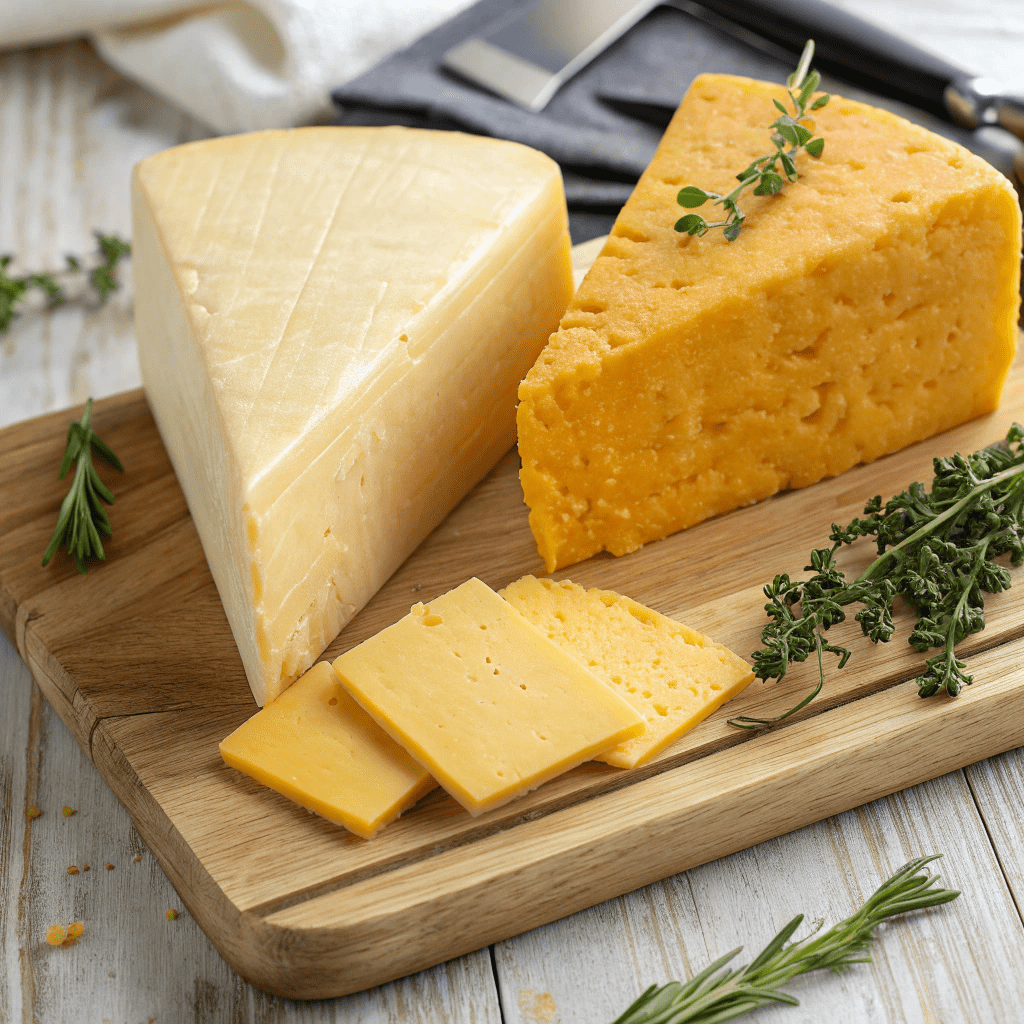

Getting to know cheese is more than just understanding its flavors; it’s about appreciating the nuances in texture, usage, and storage.
Here’s an insightful guide on various cheeses and practical tips to enhance your cheese knowledge.
Art of Cheese: A Journey Through Varieties and Culinary Uses
Sharp & Mild Cheddar
Sharp cheddar has a strong, pronounced flavor. It’s ideal for adding a punch to dishes like mac and cheese, vegetable dishes with broccoli or cauliflower, soups or egg dishes like frittatas.


Mild cheddar is aged for a shorter period than its counter part the sharp cheddar, with a smooth texture and a slightly tangy flavor.
The orange color in mild cheddar cheese comes from the addition of a natural dye called annatto, derived from the seeds of the achiote tree, which is native to tropical regions in the Americas.
It’s great for melting and is often used in sandwiches or sauces.
Monterey And Pepper Jack
Known for its mild flavor and creamy texture, it melts beautifully and is often used in Mexican dishes, including desserts and grilled sandwiches.


Monterey Jack and including pepper jack melts very smoothly and evenly, creating a creamy texture. It’s less oily compared to some other cheeses, maintaining a cohesive melt without separating.
Mozzarella
Mozzarella has its roots in Italy, traditionally made using water buffalo milk.
This cheese has a milky flavor and is a staple in pizza due to its excellent melting properties.


Whether using fresh mozzarella for its soft and creamy texture or block-style mozzarella for a firmer, drier cheese that’s easy to grate, mozzarella fits well in a wide array of dishes.


Fresh Mozzarella has a high moisture content, making it soft and pliable. This moisture contributes to its smooth melting properties.
Parmesan
From the Parma region in Italy, Parmesan is a hard, aged cheese with a sharp, nutty flavor.
It’s typically grated over but can also be mixed in with pasta dishes and salads.

Ricotta
An Italian cheese made from whey left over from the production of other cheeses. It can be milk whey from sheep, cow, goat, or water buffalo.
Ricotta is a soft and creamy cheese. When heated it maintains its texture rather than becoming gooey or stretchy.

Feta
A crumbly, tangy cheese often made from sheep’s or goat’s milk. It’s typically used in salads and as a topping for Mediterranean dishes.
When heated, Feta softens and becomes creamy but retains its shape without liquefying into a smooth, gooey consistency.

Goat Cheese
A soft, tangy cheese that’s ideal for spreading on bread or adding to salads for a creamy texture.
When baked or grilled, goat cheese holds its shape more than other melting cheeses. It develops a creamy interior and can form a slightly crusty exterior, which is perfect for applications like baked goat cheese appetizers or topping roasted vegetables.
Goat cheese is versatile. It can be add to pasta dishes, used to stuff chicken breasts and even used to make salad dressing.
Use the soft, tangy cheese to make a Pear and Goat Cheese Dressing.


Provolone
Originating from Southern Italy, Provolone is a semi-hard cheese with a smooth texture and a flavor that varies from mild to sharp, depending on its aging process.
Provolone sits between semi-soft and hard cheeses due to its texture and moisture content.


Provolone melts into a smooth, creamy texture, making it ideal for dishes that require gooey, molten cheese.
It doesn’t separate into oil and protein as quickly as some cheeses, allowing it to maintain a consistent texture.
It’s often used in sandwiches or melted on top of dishes and used on cheese platters.
Brie
A soft cheese with a creamy interior and edible white rind, Brie has a mild, buttery flavor with earthy undertones.
When Brie is warmed, it melts smoothly and retains a creamy texture, often without completely losing its shape.
This makes it great for baked dishes, such as baked Brie topped with fruit or nuts. Like this Cherry Walnut Baked Brie.


Though not typically used in sandwiches, it works with this Brie Grilled Cheese with Fig Jam and Apples.
Cheese Storage
Refrigeration
Most cheeses, including soft, hard and semi-hard, should be stored in the refrigerator, ideally between 34°F (1°C) and 38°F (3°C).
Until ready to use, leave cheese in its original packaging as it is designed to protect the cheese during its shelf life.
Once opened, avoid using plastic wrap directly on any cheese to store it. Plastic wrap can trap moisture and lead to mold growth.
It is recommended to store unused open cheese in wax, parchment or cheese paper to allow them to breathe.
Place wrapped cheese in a loose plastic bag or a container to maintain humidity and prevent the absorption of other odors from the refrigerator.
Soft cheeses like ricotta, brie, goat cheese and feta should be kept in an airtight container to retain moisture.
Freezing
Soft cheeses do not freeze well. Freezing can make them watery and change their texture significantly.
When freezing a block of semi-hard provolone, keep in mind when thawed it could be more crumbly.
Slices or shredded provolone freeze better for cooking use.
Hard cheeses can be frozen, though the cheese could become more crumbly or dry after thawing.
While it might not be suitable for a cheese platter, it’s still perfect for cooking, baking, or melting into sauces. Like with this Roasted Vegetables Bacon & Sweet Peppers with White Cheddar Cheese Sauce.

Grating versus Shredding
Grating
Grating produces fine, powdery pieces. And is ideal for hard cheeses like Parmesan when you need a cheese that melts into dishes.

Top: Grated Cheese – Bottom: Shredded Cheese
Shredding
Shredded cheese results in longer, thin strips. Useful for cheeses like Monterey, mozzarella or cheddar, which melt to provide coverage over dishes like casseroles, pizzas or even flatbreads.

Measuring Cheese
Grating or Shredding
Generally, 1 cup of shredded or grated cheese weighs around 4 ounces.
Block or Pre-Shredded
Block Cheese
Freshly grated or shredded from a block offers the best flavor and meltability as it doesn’t contain additives like anti-caking agents found in pre-shredded cheese.
Pre-Shredded Cheese
While convenient, this type may not melt as smoothly due to the added starches and anti-caking agents.
These additives can include: potato starch, powdered cellulose, and natamycin an anti-mold agent.
In Conclusion
Exploring the world of cheese can greatly enhance your culinary adventures.
Each type brings its own unique qualities to the table, and understanding these can help you make better choices for storage, preparation, and pairing.
Learn More Here

Search For Yoyr Next Favorite Recipe Here: Recipe Index
More Deliciously Yummy Recipes
- Creamy Caramelized Onion Tortellini
- Moist Gluten-Free Almond Flour Strawberry Banana Muffins
- 3 Flavorful and Easy Persian Recipes for Beginners
- Instant Pot Ash Reshteh (Persian Herb, Bean and Noodle Soup)
- Blueberry Lavender White Chocolate Bread Pudding
Please Share With Your Social Network:

Discover more from Cook Plate Fork
Subscribe to get the latest posts sent to your email.