
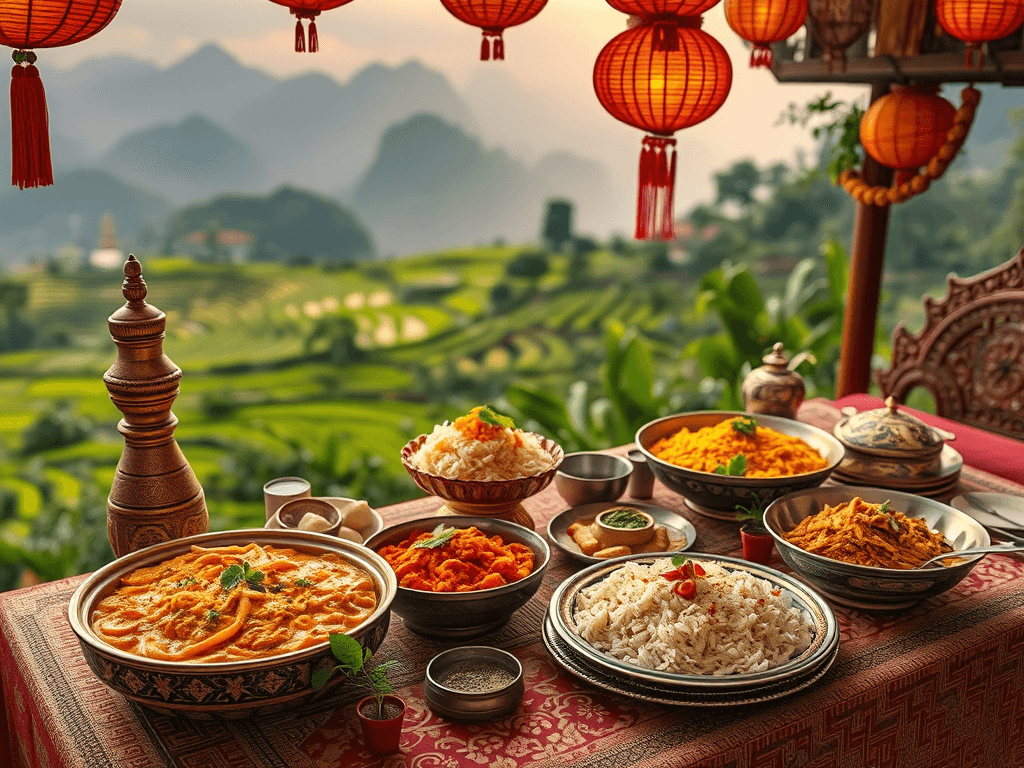

Indian cuisine is a rich and diverse culinary tradition that reflects the country’s extensive cultural history and geographical diversity. As part of the Asian continent, India shares some culinary traits with its neighbors, but its cuisine is distinct in several ways.
Diverse Ingredients and Spices
Indian cuisine is renowned for its extensive use of spices and herbs.
Common spices include cumin, coriander, turmeric, cardamom, ginger, garlic, and chili.


The use of these spices adds depth and complexity to Indian dishes, setting them apart from other Asian cuisines.
Regional Diversity
India is home to a variety of regional cuisines, each with its own unique flavors and cooking techniques.
For instance, Northern Indian cuisine is known for its rich, creamy dishes such as butter chicken and naan, while Southern Indian cuisine features dishes like dosa and sambar that are often lighter and use rice as a staple.

Vegetarianism
India has a large vegetarian population, and this is reflected in its cuisine. Many Indian dishes are vegetarian or have vegetarian versions, making use of lentils, beans and paneer as protein sources.

Use of Dairy Products
Dairy products like ghee, paneer snd yogurt are commonly used in Indian cooking, providing a creamy texture and rich flavor to many dishes. Yogurt is also often served with a dish to mix in after serving.

Instant Pot Chicken Tagine with Apricots and Chickpeas
Cultural and Religious Influences
Indian cuisine is heavily influenced by the country’s diverse cultures and religions.
For example, Hindu dietary practices have led to the prevalence of vegetarian dishes, while Muslim influences are evident in the rich and aromatic biryanis and kebabs.

Distinctive Breads
Indian cuisine features a variety of breads, such as naan, paratha, puri, and roti (also called chapati) which are used to accompany dishes and soak up flavorful sauces.

Complexity and Variety
Indian meals often consist of multiple dishes, offering a variety of flavors and textures.
This complexity is a hallmark of Indian cuisine and differs from the more simplistic or single-dish focus seen in some other Asian cuisines.
Sweets and Desserts
Indian desserts are also diverse, with sweets like jalebi, gulab jamun, and rasgulla being popular.
These desserts often feature ingredients like sugar, milk, and nuts.
In contrast to other parts of Asia, Indian cuisine stands out with its bold flavors, extensive use of spices, and a wide variety of vegetarian options.
While other Asian cuisines like Chinese, Japanese, or Thai also have their distinct characteristics, Indian cuisine’s use of spices and herbs creates a unique sensory experience that is both aromatic and flavorful.

Continue reading about Indian cuisine here: Indian Cuisine With It’s Many Flavors.
More Deliciously Yummy Recipes
- Ultimate Sheet Pan Teriyaki Chicken & Charred Brussels Sprouts
- How the Cooking Method of Using an Instant Pot Benefits the Preparation of Soups: 9 Powerful Advantages You Should Know
- Harvest Grain Bowl with Crispy Sausage, Chorizo & Aleppo-Lime Butter – A Bold, Cozy Dinner You’ll Crave
- Crispy Baked Buttermilk Popcorn Chicken
- Baked Chicken Recipes Round Up: 11 Simple, Oven-Baked Family Favorites
Please Share With Your Social Network:

Discover more from Cook Plate Fork
Subscribe to get the latest posts sent to your email.
Good and interesting information. Thanks for sharing. 🙂
Thank you 😊