
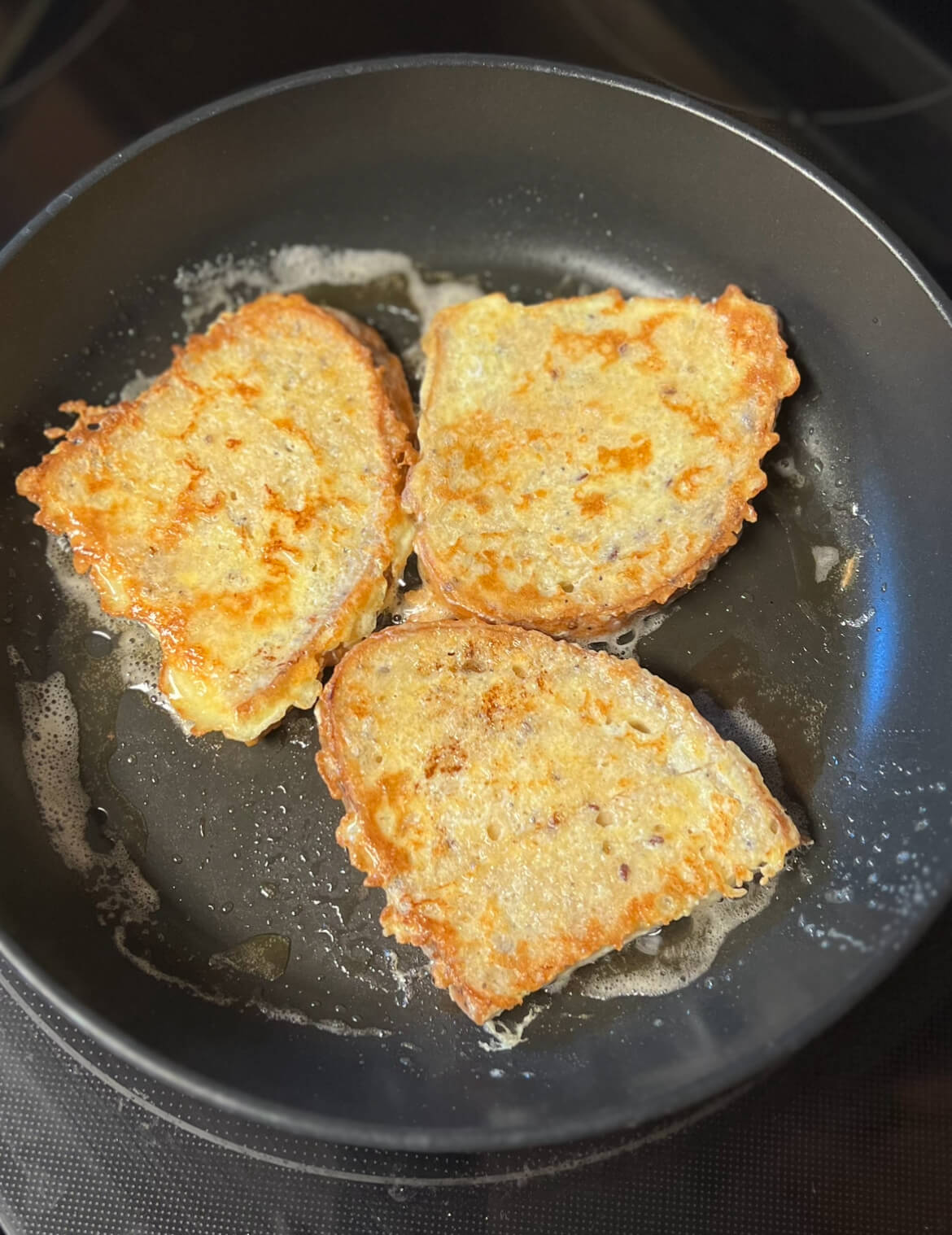

French toast, a beloved breakfast dish enjoyed worldwide, carries a misnomer that often surprises many: it isn’t a French cuisine dish.
Throughout history, many cultures have created their own variations or versions of French toast.
French toast across the world’s many cuisines goes by many names as well.

The French for example call it “pain perdu” – meaning lost bread. The name refers to the idea of reviving stale or “lost” bread by soaking it and making it palatable again.
In Spain, it’s called “torrijas” and in the United Kingdom, it is referred to as “eggy bread.”
In Canada it’s called “golden bread” or pain doré.
Other names include, omelette bread, gypsy toast, Bombay toast, poor knights of Windsor, Spanish toast, German toast, nun’s toast and French-fried bread.
Each culture adds its unique twist, using different types of bread, spices, and toppings.

The concept of soaking bread in a liquid mixture and then cooking it dates back to ancient times.
The history of French toast is quite fascinating and spans across different cultures and centuries.
Early Origins – Roman Influence
The origins of French toast are somewhat unclear and more complex than one might expect.
The earliest reference to a dish resembling French toast can be found in a Roman cookbook named the Apicius.
It had a collection of Latin recipes dating to the 1st century C.E. during the Roman Empire. In the cookbook it described French toast as simply pan dulcia, translated “another sweet dish.”
The recipe involved slicing white bread, removing the crusts, soaking it in milk and beaten eggs, frying it, and then drizzling honey over it.
Medieval Times Influence
In medieval Europe, a similar dish was made to utilize stale bread, which was a common practice to avoid waste. The same practice was used in making bread pudding.

The bread would be soaked in a mixture of milk and eggs and then fried. This dish was often sweetened with sugar or honey and known by various names across different countries.
Renaissance Influence
Moving forward to the 15th century, a similar recipe gained popularity in the court of Henry V of England, where the dish was referred to as “lost bread.”
The term French toast though, did not actually appear until the 17th century in an English cookbook titled The Accomplisht Cook, according to The Oxford English Dictionary.
However, this version did not include eggs; instead, it involved soaking already toasted bread in a mixture of wine, sugar, and orange juice.

Ottoman Culture Influence
Ottoman cuisine has its roots in the culinary traditions of the Ottoman Empire, which lasted from approximately 1299 to 1922.
The cuisine began developing in the late 13th century and evolved over the centuries, influenced by various cultures and regions within the vast empire.
Ottoman cuisine has existed for over 700 years, with its influences still present in modern Turkish and Middle Eastern cuisines.
In Ottoman cuisine, ther version of French toast is called fāvniyye. It is prepared by soaking bread in eggs and honey, with no milk included.

Modern Day French Toast
With the early settlers of North America came many recipes. One including the eggy bread from England.
But the question still stands, did the French invent the dish and if not, why is it called French Toast?
The answer to that question falls to Joseph French an American innkeeper in Albany, New York, circa 1724. He replicated the dish (eggy bread) and he named it “French’s Toast.”

The French toast we know today hasn’t changed much since the Middle Ages. It’s still basically made with eggs, milk, and bread.
Some historians believe that the recipe for Aliter Dulcia (meaning ‘Another sweet dish’) found in Apicius (cookbook) is quite similar to modern French toast, despite the absence of eggs.
Long before the rise of the Parisian kingdom, French toast, though under different name’s was prepared and eaten.
And it is concluded, with no other references found, that Joseph French, the New York innkeeper gave the American version of bread deep in a egg mixture then fried in oil or butter, the name, French Toast.

Try These Homemade Syrup Favorites For Your Next Plate Of French Toast, Crepes Or Pancakes
- Easy Banana Syrup: Quick & Delicious
- How to Make Maple Bacon Syrup at Home
- Gluten-free Crepes With Coconut Syrup
- Homemade Fluffy Buttermilk Pancakes With Blueberry Syrup
More Deliciously Yummy Recipes
- Cooking With Tortellini Pasta: 11 Delicious Ways to Transform This Versatile Ingredient
- Creamy Caramelized Onion Tortellini
- Moist Gluten-Free Almond Flour Strawberry Banana Muffins
- 3 Flavorful and Easy Persian Recipes for Beginners
- Instant Pot Ash Reshteh (Persian Herb, Bean and Noodle Soup)
Please Share With Your Social Network:

Discover more from Cook Plate Fork
Subscribe to get the latest posts sent to your email.
No matter what name it goes by, it is always delicious. 🙂
Very true 😋👍🏼
🙂 🙂 🙂