
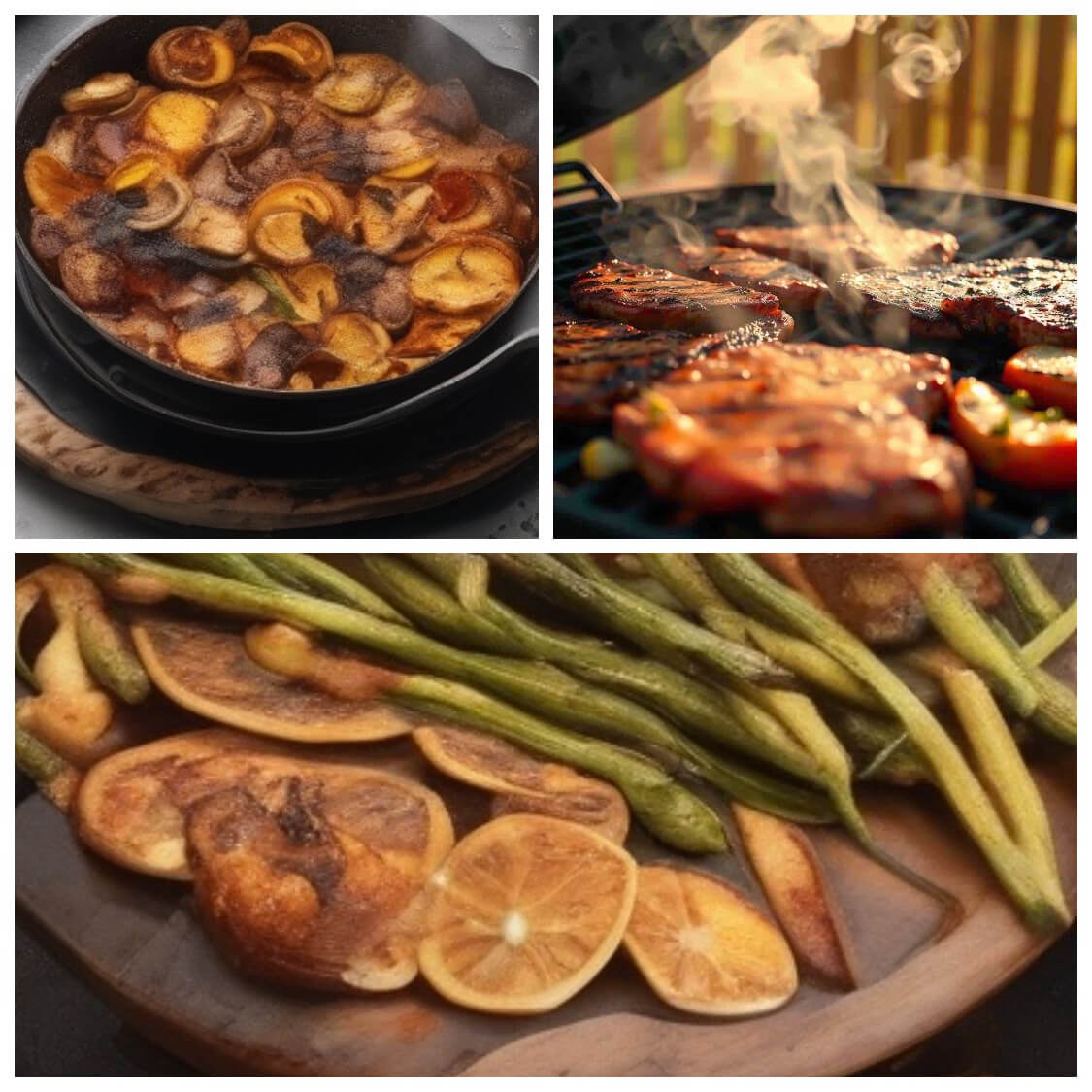

Charring food refers to the process of cooking food at high temperatures until the surface becomes blackened.

Charring food is not the same as burning. Charring is controlled and intentional.
This high heat grilling technique imparts a smoky flavor and a desirable texture.

Many foods can be charred, including vegetables like chili peppers, tomatoes, bell peppers, eggplant, asparagus, onions, and garlic as well as proteins like chicken, beef, pork and fish.

Even fruits such as pineapples and peaches can be charred to add a unique flavor to desserts or salads.

What’s There To Know About Charring Food
Here’s a deeper look into the concept and implications of charring food.
Flavor Development
Charring can enhance the flavor profile of food by adding a smoky, bitter, or caramelized taste, depending on the food item and the degree of charring.

Charring occurs when food comes into direct contact with a flame or is subjected to very high temperatures, typically higher than 400 degrees. Like with this Oven-Charred Broccoli With Pistachios And Parmesan cooked at 500 degrees.

The intense heat causes two key chemical processes.
This includes the sugars and proteins in the food undergo what is referred to as the Maillard reaction and caramelization, leading to the development of complex flavors and a distinctive charred appearance.
The Maillard reaction is a chemical reaction between amino acids and reducing sugars to create melanoidins, the compounds which give browned food its distinctive flavor.
It’s important to monitor the cooking process of charting your food closely. You want to achieve the desired char without overcooking or burning the food.

Using a combination of direct and indirect heat can help control the level of charring.
Additionally, flipping the food regularly and avoiding prolonged exposure to open flames can prevent excessive burning.
Methods
Common methods for charring food include grilling, broiling, roasting, and using a blowtorch.

Roasted African Drumsticks
Vegetables, meats, and bread are often charred to add depth of flavor.

Culinary Uses
Charring is used in various cuisines to create dishes with unique textures and flavors. For example, charred bell peppers, charred corn, and charred eggplant are popular in many recipes.

Using Charred Corn From The Barbecue Grill – Caribbean-Style Corn Salad
Visual Appeal
Charring can also add visual appeal to dishes, providing contrast and enhancing the presentation with its distinct color and texture.

Overall, charring is a versatile cooking technique that can add a delightful flavor dimension to food and enhance the culinary experience.

Charring Corn For A – Smoked Turkey, Black Bean, Bell Pepper and Corn Salad
More Charred Food Favorites
- Crispy Korean Style BBQ Brussels sprouts
- Roasted Charred Sweet Potatoes
- Spicy & Sweet Roasted Pork Belly
Follow Cook Plate Fork On Social Media For More Ideas:
More Deliciously Yummy Recipes
- Moist Gluten-Free Almond Flour Strawberry Banana Muffins
- 3 Flavorful and Easy Persian Recipes for Beginners
- Instant Pot Ash Reshteh (Persian Herb, Bean and Noodle Soup)
- Blueberry Lavender White Chocolate Bread Pudding
- Sweet Potato Kale and Farro Salad With A Orange Tahini Dressing
Please Share With Your Social Network:

Discover more from Cook Plate Fork
Subscribe to get the latest posts sent to your email.
You always share such good information!
Thank you. You as well. 🤓👍🏼🍻