
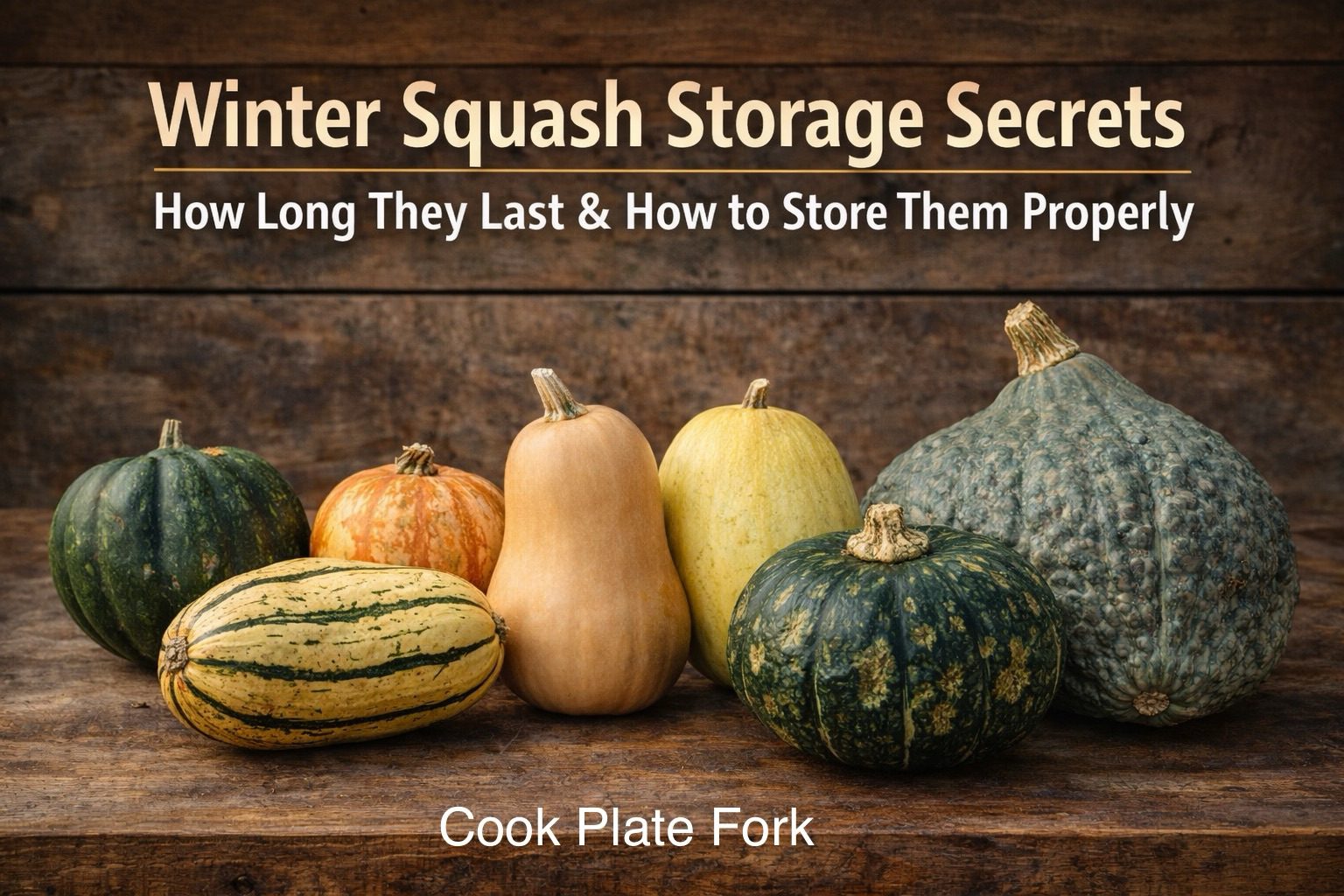

Winter squash refers to hard-skinned squash varieties harvested in late summer and fall, then stored for use throughout the winter months.
Unlike summer squash, these varieties mature fully on the vine, developing thick rinds that protect the flesh inside.
Proper storage is essential because it directly affects flavor, texture, and food safety.
When stored correctly, winter squash can last anywhere from a few weeks to several months.
Understanding how long each variety keeps—and how to store it—helps reduce food waste and ensures your squash recipe guides for spaghetti squash, acorn squash, and butternut squash always start with quality ingredients.
How Long Can Winter Squash Be Stored?
The storage life of winter squash depends on the thickness of its skin, sugar content, and storage conditions.
Harder, thicker-skinned squash generally last much longer than softer varieties.
Storage Life by Winter Squash Variety

Acorn Squash Storage Time
1 to 2 months
- Best used early in the season
- Tends to lose moisture quickly
Since acorn squash has a shorter shelf life than most winter squash varieties, it’s best enjoyed earlier in the season.

Sweet and Savory Stuffed Acorn Squash: Comfort Food Made Simple
Its natural bowl shape makes it perfect for hearty baked meals, such as Sweet and Savory Stuffed Acorn Squash: Comfort Food Made Simple, which can be prepared as soon as the squash comes out of storage.
Delicata Squash Storage Time
1 to 2 months
- Thin skin makes it more perishable
- Excellent for quick roasting recipes
Butternut Squash Storage Time
2 to 3 months (sometimes longer in ideal conditions)
- One of the most reliable long-term storage squash
- Improves in flavor during storage
One advantage of butternut squash is that its flavor often improves during storage, making it ideal for roasting and warm salads.

Parmesan Roasted Butternut Squash
When you’re ready to use it, simple oven recipes like Parmesan Roasted Butternut Squash or seasonal combinations such as Roasted Butternut Squash & Blood Orange Salad With A Toasted Pecan Vinaigrette highlight its natural sweetness and creamy texture.

Roasted Butternut Squash & Blood Orange Salad With A Toasted Pecan Vinaigrette
Spaghetti Squash Storage Time
5 to 6 weeks
- Softer rind than butternut
- Best used before mid-winter
Because spaghetti squash has a shorter storage life than most winter squash, it’s best to plan meals soon after harvest or purchase.

Bacon & Cheddar Cheese Spaghetti Squash Bake
Popular baked and skillet-based dishes make excellent use of fresh spaghetti squash, especially comfort-style recipes like Bacon & Cheddar Cheese Spaghetti Squash Bake or lighter, protein-packed meals such as Sweet Chicken Sausage Kale & Spaghetti Squash.

Sweet Chicken Sausage Kale & Spaghetti Squash
Hubbard Squash Storage Time
Up to 6 months
- Very thick skin
- Ideal for long-term winter use

Buttercup Squash Storage Time
1 to 2 months
- Rich, sweet flesh
- Should be checked frequently
Ideal Conditions for Storing Winter Squash
Temperature, Humidity, and Light Requirements

To maximize the shelf life of winter squash, store them in:
- Temperature: 50–60°F (10–15°C)
- Humidity: Moderate, not damp
- Light: Dark or low-light environment
- Airflow: Good air circulation
Basements, root cellars, cool pantries, or unheated spare rooms often work well.
Avoid refrigeration for whole squash, as cold temperatures can damage the flesh.
How to Cure Winter Squash for Longer Storage
Curing is a critical step, especially for homegrown winter squash.

How to Cure:
Place freshly harvested squash in a warm, humid area. Maintain 80–85°F with good airflow. Cure for 10–14 days.
Curing hardens the skin, seals small cuts, and extends storage life significantly.
Best Practices for Storing Whole Winter Squash

- Store squash in a single layer, not stacked
- Handle gently to avoid bruises or cracks
- Do not wash before storage
- Keep squash dry at all times
- Check monthly and remove any showing spoilage
How to Store Cut or Cooked Winter Squash

Once cut, winter squash must be refrigerated.
- Raw, cut squash: Wrap tightly; use within 3–5 days
- Cooked squash: Store in airtight containers; use within 4–6 days
- Freezing: Cook first, then freeze for up to 8–12 months
Cooked winter squash also freezes exceptionally well, especially when pureed. This makes soups an excellent option for preserving squash at peak quality.

Instant Pot Apple Butternut Squash Soup
Recipes like Instant Pot Apple Butternut Squash Soup can be batch-cooked, frozen, and enjoyed months later without sacrificing flavor or texture.
Common Storage Mistakes to Avoid
- Storing near apples or bananas (ethylene gas causes spoilage)
- Washing squash before storage
- Using damaged squash for long-term storage
- Storing in overly humid areas
Signs of Spoilage in Winter Squash

Discard or compost squash if you notice:
- Mushy or sunken spots
- Mold growth
- Strong or unpleasant odors
- Severely shriveled skin
FAQs About Winter Squash Storage
1. How long does winter squash last at room temperature?
In a cool, dry room (50–60°F), winter squash can last from 1 to 6 months depending on the variety.
2. Can winter squash be stored in the refrigerator?
Whole squash should not be refrigerated. Cut or cooked squash must be refrigerated.
3. Which winter squash lasts the longest?
Hubbard squash has the longest storage life, lasting up to 6 months.
4. Should winter squash be stored touching each other?
It’s best to store them in a single layer with space between for airflow.
5. Can I freeze winter squash?
Yes, but it should be cooked first before freezing.
6. Does curing really make a difference?
Yes. Proper curing can extend storage life by several weeks or even months.
Get the Most From Your Winter Squash
Whether you’re roasting, stuffing, or slow-cooking your winter squash, choosing the right recipe at the right time ensures nothing goes to waste and every variety shines at its peak.
Understanding how long winter squash lasts and how to store it properly ensures better flavor, less waste, and more reliable cooking results.
Whether you’re working with acorn squash, spaghetti squash, or butternut squash, proper curing, gentle handling, and the right storage conditions make all the difference.
With these tips, your winter squash can remain a dependable and delicious ingredient all season long.
More Winter Cooking Guides You’ll Love
If you’re ready to put your stored squash to use, these guides will help you turn winter ingredients into comforting, flavorful meals:

Cooking With Butternut Squash
Cooking With Butternut Squash – A complete guide to roasting, blending, and cooking butternut squash in soups, sides, and main dishes throughout the colder months.

15 Cozy Winter Comfort Foods You’ll Love: The Ultimate Winter Recipe Roundup
15 Cozy Winter Comfort Foods You’ll Love: The Ultimate Winter Recipe Roundup – A curated collection of hearty, warming recipes perfect for winter dinners, slow weekends, and make-ahead meals.
Still hungry? These recent recipes are ready when you are.
More Deliciously Yummy Recipes
Please Share With Your Social Network:

Discover more from Cook Plate Fork
Subscribe to get the latest posts sent to your email.