
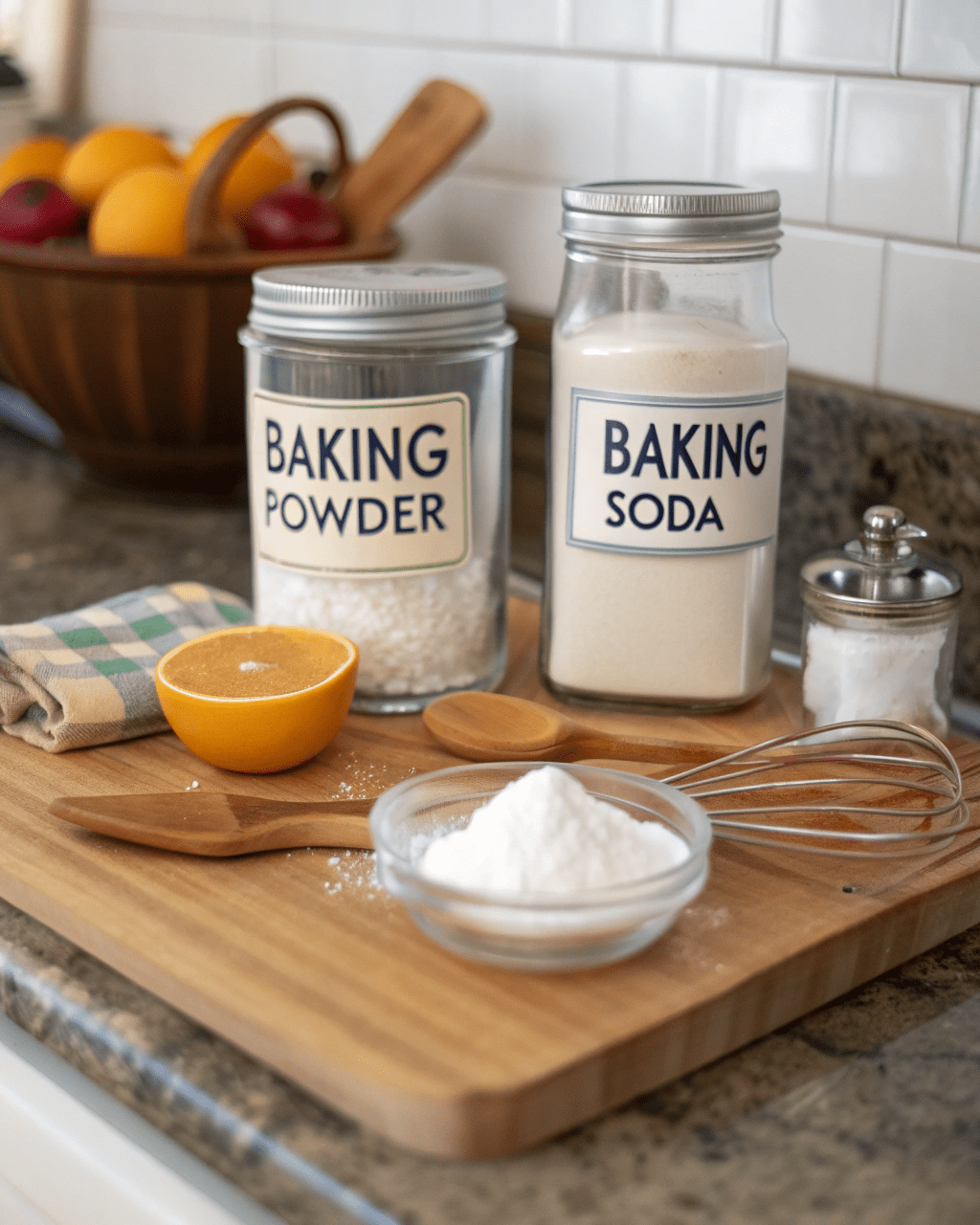

Baking powder and baking soda are essential chemical leaveners that make cakes fluffy, cookies chewy, and breads light.
Though they both produce carbon dioxide (CO₂) gas to create rise, they work differently due to their chemical compositions. Understanding their science is key to baking success.

The Science Behind Baking Powder and Baking Soda
Baking Soda
Baking soda is a pure alkaline compound. It requires both moisture and an acid to activate. Examples of acids include lemon juice, yogurt, buttermilk, or vinegar.
When combined with an acid, it undergoes an immediate chemical reaction. This releases CO₂ bubbles. These bubbles expand when heated, causing baked goods to rise.

Cranberry Pecan Banana Bread Rising While Baking
Key Properties Of Baking Soda
Baking soda reacts as soon as it mixes with a liquid and an acid. A little goes a long way. Most recipes require only 1 teaspoon.
If used in excess, the unreacted baking soda will give your baked goods a bitter metallic flavor.
Baking soda is best in recipes with a natural acid. This includes dishes like buttermilk pancakes, chocolate cake with cocoa, and banana bread. It is also useful in other baked goods.


Baking Powder
Baking powder is a pre-mixed leavener containing:
- Baking soda (base)
- An acid (usually cream of tartar or sodium aluminum sulfate)
- A drying agent (like cornstarch to absorb moisture)
Types of Baking Powder
Single-Acting Baking Powder
A single-acting baking powder produces a reaction only once when mixed with a liquid.
This reaction occurs only once. It’s especially important to work quickly. Get the batter in the oven soon after mixing.
Doing so will ensure your baked goods rise nicely. You won’t lose any of the valuable bubbles from the reaction.
A single-acting powder is more commonly used in bakery’s where a fast rise is needed, like donuts for example.
Double-Acting Baking Powder
A double-acting baking powder is commonly sold at the supermarket and provides a more reliable rise for home baking.
The initial reaction happens slightly when mixed with a liquid. But a second rise or major gas release happens when heated in the oven.
Key Properties Of Baking Powder
- Self-contained – Doesn’t need added acid in the recipe.
- More forgiving – Less risk of overuse compared to baking soda.
- Best for neutral or low-acid recipes, such as a vanilla cake, biscuits, muffins or cupcakes.


Can They Be Used Interchangeably
While both produce CO₂, they are not interchangeable due to their different activation methods.
Substituting baking powder for baking soda is not ideal as baking powder is weaker because it’s only 1/3 baking soda.
Baking soda needs an acid to work, so you must add it manually. Keep in mind adding an acid (typically a liquid) you need to adjust other ingredients in the recipe.
The downside of substituting include a denser baked good texture. It also cause less browning. There is a slightly bitter aftertaste from excess additives.
Additionally, the reaction happens instantly, so batters must be baked right away to avoid collapse.

A Collapsed Orange Olive Oil Cake
Best Practices
Use the leavener specified in the recipe for reliable results. In emergencies, adjust carefully and expect texture changes.

Arm & Hammer recommends these substitutions:

Storage & Shelf Life
Baking soda lasts indefinitely if kept dry but loses potency over time.
Baking powder lasts 6–12 months; test freshness by mixing 1 teaspoon with hot water. If it bubbles vigorously, it’s still active.
Troubleshooting Common Issues
Metallic tasting baked good: You used too much baking soda. The Fix: Depending on your recipe, balance with an acid, like citrus juice or buttermilk.
Dense or flat baked goods: Either your leavener has expired or wrong substitution.
Too much browning: Baking soda promotes browning; baking powder results in lighter bakes.
Final Takeaways
- Baking soda equals a pure base and needs an acid. Best for acidic batters.
- Baking powder is pre-mixed with an acid. Best for neutral recipes.
- Substitutions are possible but risky. It’s best to stick to the recommended leavener.
Mastering these two ingredients ensures light, fluffy, and perfectly risen baked goods every time.
Craving Something New – Find Your Next Favorite Breakfast, Lunch, Brunch, Side Dish, Soup , Salad, Sandwich, Dinner And Dessert Recipes Here 👉🏽 Recipe Index
More Deliciously Yummy Recipes
- Moist Gluten-Free Almond Flour Strawberry Banana Muffins
- 3 Flavorful and Easy Persian Recipes for Beginners
- Instant Pot Ash Reshteh (Persian Herb, Bean and Noodle Soup)
- Blueberry Lavender White Chocolate Bread Pudding
- Sweet Potato Kale and Farro Salad With A Orange Tahini Dressing
Please Share With Your Social Network:

Discover more from Cook Plate Fork
Subscribe to get the latest posts sent to your email.