
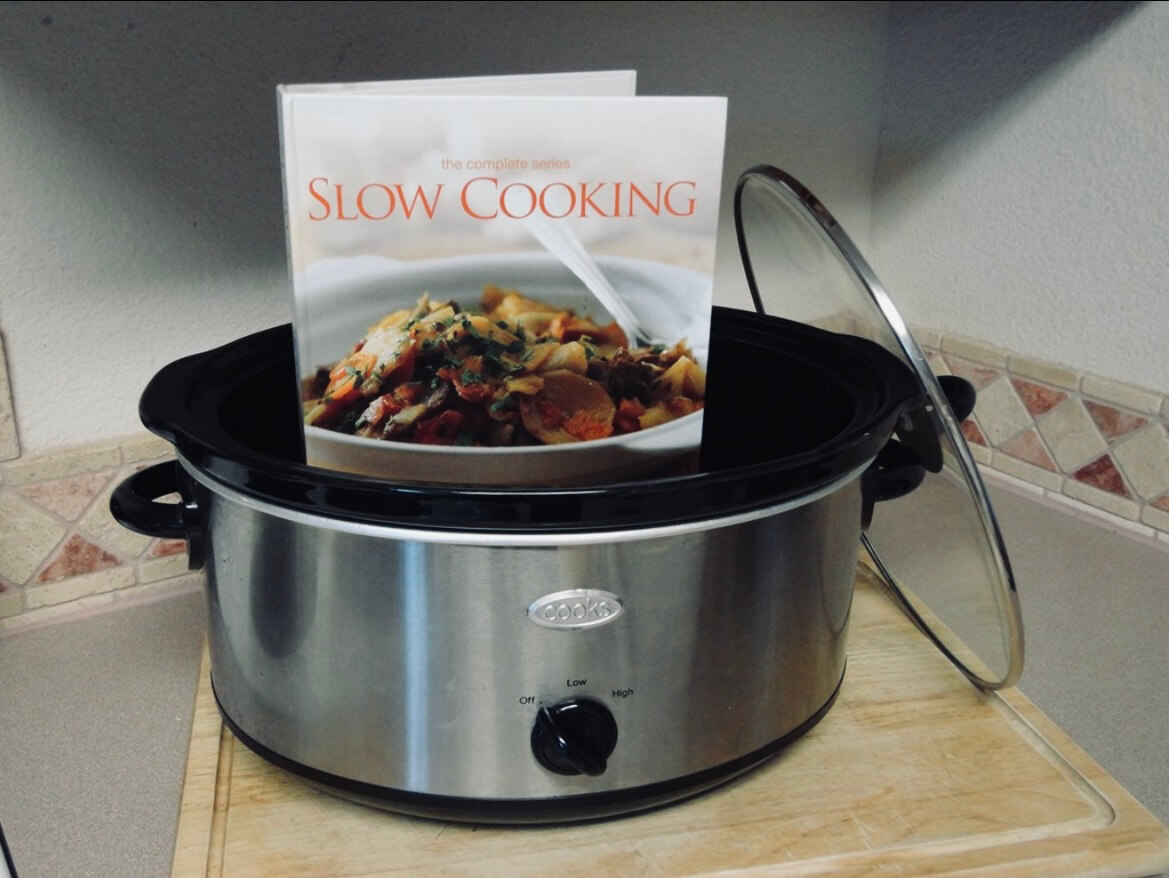

In early times past, people wrapped food stuff such as roots, vegetables, and meats in leaves. They placed these packages on warm or hot rocks that formed a ring around a fire.
The wrapped food was left there for a long period of time. Early cooks discovered that cooking this way tenderized tough plants and meats, and released more flavor into the food.
This concept or type of cooking was carried over into pot-based cooking over fires and eventually to stoves.
History of the Crock Pot
This tradition of slow cooking was first commercialized by the Naxon Corporation. They developed an electric slow cooker intended only for beans.
Rival Corporation bought Naxon in 1971. Rival redesigned the slow cooker and branded the bean cooker as the crock pot.

The original crock pots stoneware liner wasn’t removable. Than In 1974 the product was redesigned with a removable liner, for easy cleaning.
Crock pots remained virtually unchanged aside from cosmetic changes and the addition of larger sizes. This was the case until the introduction of a programmable crock pot in 2001.

Is Slow Cooking Safe
Yes, slow cooking is generally safe when done correctly. Slow cookers, or crock pots, are designed to cook food at low temperatures over a long period. This process helps to tenderize meat and enhance flavors.
Here are a few safety tips to ensure safe slow cooking.
Temperature Control
Make sure your slow cooker stays at a temperature between 170°F and 280°F (77°C and 138°C). This range keeps food safe from bacteria.
The direct heat from the pot destroys bacteria. The lengthy cooking time also contributes to this effect.
Additionally, the steam created within the tightly-covered container aids in this process. This makes the slow cooker a safe process for cooking foods.

Slow low heat cooking helps less expensive, leaner cuts of meat become tender and shrink less.
Proper Usage
Always follow the manufacturer’s instructions for your specific slow cooker model. We will discuss layering the ingredients in proper order in a few moments.
Safe Food Handling
Always wash your hands with soap and water before handling food. Also, clean cutting boards, counter tops and utensils to prevent cross-contamination.
Use separate cutting boards and knives for raw meats and vegetables to prevent cross-contamination.
Use a food thermometer to ensure the food’s internal temperature reaches the safe minimum. Follow the recommended temperature for the type of meat you are cooking.
Defrosting
Ensure that any frozen meat or poultry is completely thawed before adding it to the slow cooker.
This helps in maintaining a consistent cooking temperature and ensures even cooking.
Avoid Overfilling
Don’t overfill the slow cooker. Leave space for the heat to circulate. Slow cookers work by circulating heat around the food.

If the pot is too full, it can hinder proper heat distribution, leading to uneven cooking and under cooked food.
As a general rule, fill your slow cooker no more than two-thirds to three-quarters full. This will not only allow for proper heat distribution but will also reduce the risk of spills.
Use the Right Amount of Liquid
Slow cookers require less liquid than traditional cooking methods because they retain moisture.
Be cautious not to add too much liquid, as ingredients will release their juices while cooking.
Use the Right Setting
Use the correct heat setting as per the recipe to ensure thorough cooking.

Avoid Opening the Lid
Each time you open the lid, heat escapes and increases the cooking time. Try to open it only when necessary to stir or check on the food, and do so quickly.

Adapting Recipes
Remember that converting a conventional recipe for a slow cooker requires adjusting the cooking time. 15 to 30 minutes in an oven or on a stove top equals 1.5 to 2.5 hours on high. It is also about 4 to 8 hours on low in a slow cooker.
Herbs and Spices
Fresh herbs are best added towards the end of the cooking time, as their flavors can dissipate with long cooking. Dried herbs and spices can be added at the beginning.
Layering Ingredients In The Slow Cooker
Layering ingredients properly in a crock pot or slow cooker is important for ensuring even cooking and maximizing flavor.
Here’s a step-by-step guide on how to layer a crock pot with ingredients.
Start by placing the dense, root vegetables at the bottom of the crock pot. These include carrots, potatoes, turnips, and other similar veggies. They take longer to cook, so they need to be closest to the heat source
Next, add your meats on top of the dense vegetables. This allows the meat to absorb the flavors from the vegetables and any seasonings you add. If you’ve browned the meat beforehand, this is where you’d add it.

Add aromatic vegetables like onions, garlic, and celery on top of the meat. They’ll infuse the dish with flavor as they cook
Add any softer vegetables, such as bell peppers, zucchini, or mushrooms, on top of the meat and aromatics. These vegetables cook faster and don’t need to be as close to the heat source.

If your recipe includes grains or pasta, add them towards the end of the cooking process. They can become mushy if cooked for too long.
Pour any liquids, such as broth, wine, or sauces, over the top of the layered ingredients. This ensures even distribution of moisture and flavors. Add seasonings and spices at this stage as well.

Add any fresh herbs or dairy products towards the end of the cooking time. This helps preserve their flavors and prevents curdling.
By layering your ingredients in this order, you ensure that everything cooks evenly and your dish is flavorful and well-balanced.

When used correctly, a slow cooker is a safe way to prepare food. This machine offers convenience and delivers tasty results. Strictly follow instructions and guidance from the manufacturer for optimal performance of the cooker.
Try These Delicious Slow Cooker Recipes


🧑🍳 What would you like to cook?
Popular Searches
More Deliciously Yummy Recipes
- Creamy Caramelized Onion Tortellini
- Moist Gluten-Free Almond Flour Strawberry Banana Muffins
- 3 Flavorful and Easy Persian Recipes for Beginners
- Instant Pot Ash Reshteh (Persian Herb, Bean and Noodle Soup)
- Blueberry Lavender White Chocolate Bread Pudding
Please Share With Your Social Network:

Discover more from Cook Plate Fork
Subscribe to get the latest posts sent to your email.
Pingback: Crockpot Creamy Tuscan Chicken Thighs | Splendid Recipes and More
Pingback: Easy Chicken Curry | Recipes for a Healthy You
Pingback: Beat the Summer Heat with Crock Pot Cooking | Recipes for a Healthy You
Reblogged this on Carolina Mountain Blue.
Reblogged this on hocuspocus13.