
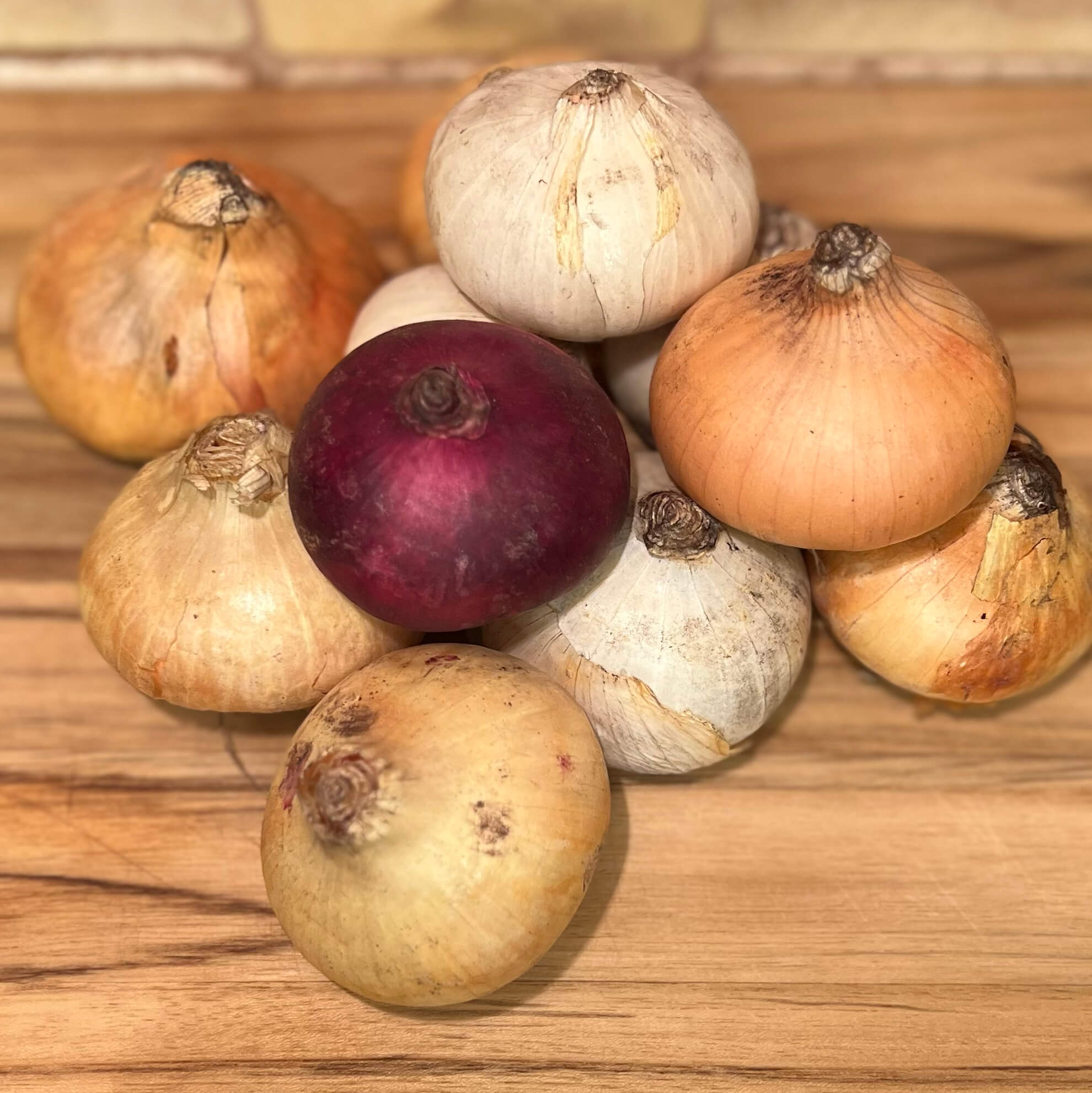

Onions are often regarded as the quintessential kitchen staple. They boast a rich history dating back over 5,000 years. This makes them one of humanity’s oldest cultivated crops.
These versatile bulbs originate in Central Asia. They have woven themselves into the fabric of diverse culinary traditions worldwide.
Whether sautéed, caramelized, or pickled, onions enhance everything from hearty stews to fresh salads.

Essential Tips for Proper Onion Storage
An onion farmer of more than 500 million pounds onions says that a cool, dry, well-ventilated, out of direct light (light can trigger sprouting) is essential to maintain their freshness and flavor (Peri & Sons Farmers).

Here are the ideal conditions for storing onions to maximize their shelf life and maintain their quality.
The first step to storing any color of onion is to select firm ones when purchasing them. Not only firm to the touch, but also dry without any signs of sprouting or soft spots.
Store onions whole and unpeeled until you’re ready to use them. Once peeled or cut, onions should be refrigerated, wrapped tight in plastic wrap or in a container with a tight fitting lid, and used within a few days.
Keep onions in a dark place to prevent sprouting, as light can encourage growth.

Avoid refrigerating whole onions, as the cold and humidity can cause them to sprout as well. The ideal temperature for storing should be between 45°F and 55°F (7°C to 13°C).
Routinely check for any onions with mushy spots, brown spots, black spots (mold) or a slimy texture and remove them to avoid spoliation of the others.

If your onions have a soft and wrinkled spot somewhere on the surface, it still has lots of water and is still usable.
Avoid storing them in plastic bags, as this can trap moisture and lead to spoilage. Instead, opt for mesh bags or baskets that allow for air circulation.

It’s also crucial to keep onions away from potatoes, as the gases emitted by them can cause onions to sprout.
Though each onion type has a distinct texture and flavor, they all are basically stored the same using the general storage guidelines noted above.

Regardless of the variety of onion, always ensure they are dry and free from bruises before storage.
Periodically check your stored onions for any signs of spoilage, such as soft spots or mold, and remove any affected onions immediately.
With the right care, your onions can be a staple in your culinary arsenal, ready to elevate any dish with their aromatic essence.

More Articles With Cooking Tips
- Egg Cooking 101: Tips for Every Method
- How To Use The Broiler To Cook Food
- Mastering the Basics: Essential Cooking Techniques for Every Home Cook
- Cooking With A Cast Iron Skillet
More Deliciously Yummy Recipes
- Gnocchi Round Up: 10 Ways to Elevate Store-Bought Gnocchi
- How to Cook Store Bought Gnocchi: 5 Easy Methods for Perfect Texture Every Time
- Cooking With Tortellini Pasta: 11 Delicious Ways to Transform This Versatile Ingredient
- Creamy Caramelized Onion Tortellini
- Moist Gluten-Free Almond Flour Strawberry Banana Muffins
Please Share With Your Social Network:

Discover more from Cook Plate Fork
Subscribe to get the latest posts sent to your email.
Excellent information Randy, I just learned about not storing the onions near the potatoes a few months ago along with potatoes can be store in the refrigerator.
Thank you