
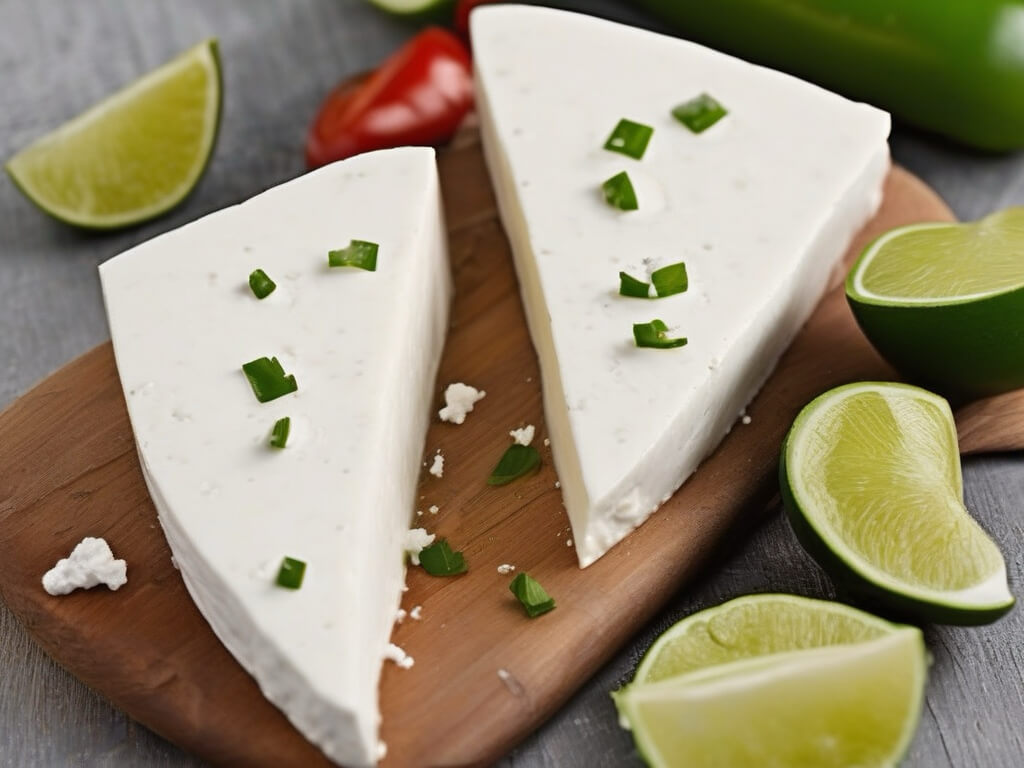

Popular in countries like Mexico and Central America, Queso Fresco is widely used in cooking.
It is used crumbled over tacos, tostadas, chilaquiles, enchiladas and is often incorporated into traditional dishes like chile rellenos.
Unlike harder aged cheeses, such as Parmesan cheese, queso fresco or fresh cheese is a soft cheese that is not aged. Its bright white in appearance and a slightly tangy taste.


The popularity of Queso fresco has spread beyond Mexico, finding a place in various regions including American cuisines.
Such as in the Southwestern cuisine in the state of New Mexico where it is celebrated for its ability to elevate everyday dishes with its unique flavor profile and textural contrast.

Southwestern Style Chicken & Chorizo Enchiladas With Chipotle Crema Sauce – Topped With Queso Fresco
Its mild flavor makes it a versatile companion in both savory and sweet recipes, allowing it to shine in everything from breakfast dishes to desserts.

Fresh Mexican cheese is similar to ricotta, soft and creamy and crumbly like goat cheese. It’s even spongy and has a slight saltiness.

This soft, creamy, slightly salty fresh cheese makes a great topping to salads as well as combined with a vegetable salad, like this Corn Salad with Queso Fresco.

How Is Queso Fresco Made
Queso fresco is crafted through a simple yet artful process that captures the essence of traditional cheesemaking.
If the fresh cheese is made in a home kitchen, it begins with warm, fresh milk—often from cows or goats—which is gently heated and combined with an acidic agent, like vinegar or lime juice.

Learn How To Make Homemade Yogurt
In a dairy factory fresh warm pasteurized milk is used, salt and renet in place of vinegar or lime juice.
As the milk curdles, a mesmerizing transformation takes place as curds form while whey separates, creating a delicate dance of texture.

The curds are then carefully ladled into molds, where they are pressed lightly to release any remaining whey, allowing the cheese to take shape.
After a brief resting period, the cheese is removed, resulting in a soft, crumbly delight that boasts a mild, tangy flavor.
Each bite is a testament to the craftsmanship behind this beloved cheese, perfect for bringing a touch of authentic flair to any Mexican or Latin American dish you make, like this Pasta With Peruvian Pesto – Tallarines Verde.

How Is Queso Fresco Sold
Queso fresco is typically sold in various forms to cater to different culinary needs and preferences.
You can find it in blocks, crumbled, or shredded, each offering convenience for different recipes.

Packaged Crumbled Queso Fresco (Desmoronado)
In many grocery stores, it’s often located in the dairy section alongside other cheeses, sometimes wrapped in plastic or vacuum-sealed to maintain freshness.

Markets that specialize in Latin American foods may offer queso fresco made by local artisans, showcasing a range of textures and flavors.
Additionally, it can be found at farmers’ markets, where small-scale producers sell fresh, hand-crafted varieties.

Queso Fresco – Authentic Crumbling Cheese
How To Store Queso Fresco
Storing queso fresco properly is essential to maintaining its delightful flavor and creamy texture.
To keep this fresh cheese at its best, start by wrapping it tightly in plastic wrap or placing it in an airtight container to prevent it from drying out or absorbing unwanted odors from the fridge.
Before purchasing check the expiration date on the package as that can give you a good indicator of its quality and how time you have to consume it before it expires or spoils.
If you’re using an unopened package, you can simply store it in the refrigerator until you’re ready to enjoy it.
For optimal freshness, consume within 5-7 days. You can also freeze the cheese in its packaging as well as crumble it or cut it into smaller portions, wrap each portion separately and place them in a freezer-safe bag.
When you’re ready to use it, thaw the portions you need in the refrigerator the night before.
If you notice any off smells, mold, or changes in texture, it’s best to err on the side of caution and discard it.
With proper care, you can continue to enjoy this delightful cheese in your favorite dishes, but always be mindful of its shelf life.
Read More Here About Cheese
- Cooking With Goat Cheese
- Top Nine Varieties Of Cheese’s Enjoyed By Food Lovers
- How To Incorporate Parmesan Cheese Into Your Cooking
Follow Cook Plate Fork On Social Media For More Ideas:
More Deliciously Yummy Recipes
- Cooking With Tortellini Pasta: 11 Delicious Ways to Transform This Versatile Ingredient
- Creamy Caramelized Onion Tortellini
- Moist Gluten-Free Almond Flour Strawberry Banana Muffins
- 3 Flavorful and Easy Persian Recipes for Beginners
- Instant Pot Ash Reshteh (Persian Herb, Bean and Noodle Soup)
Please Share With Your Social Network:

Discover more from Cook Plate Fork
Subscribe to get the latest posts sent to your email.