
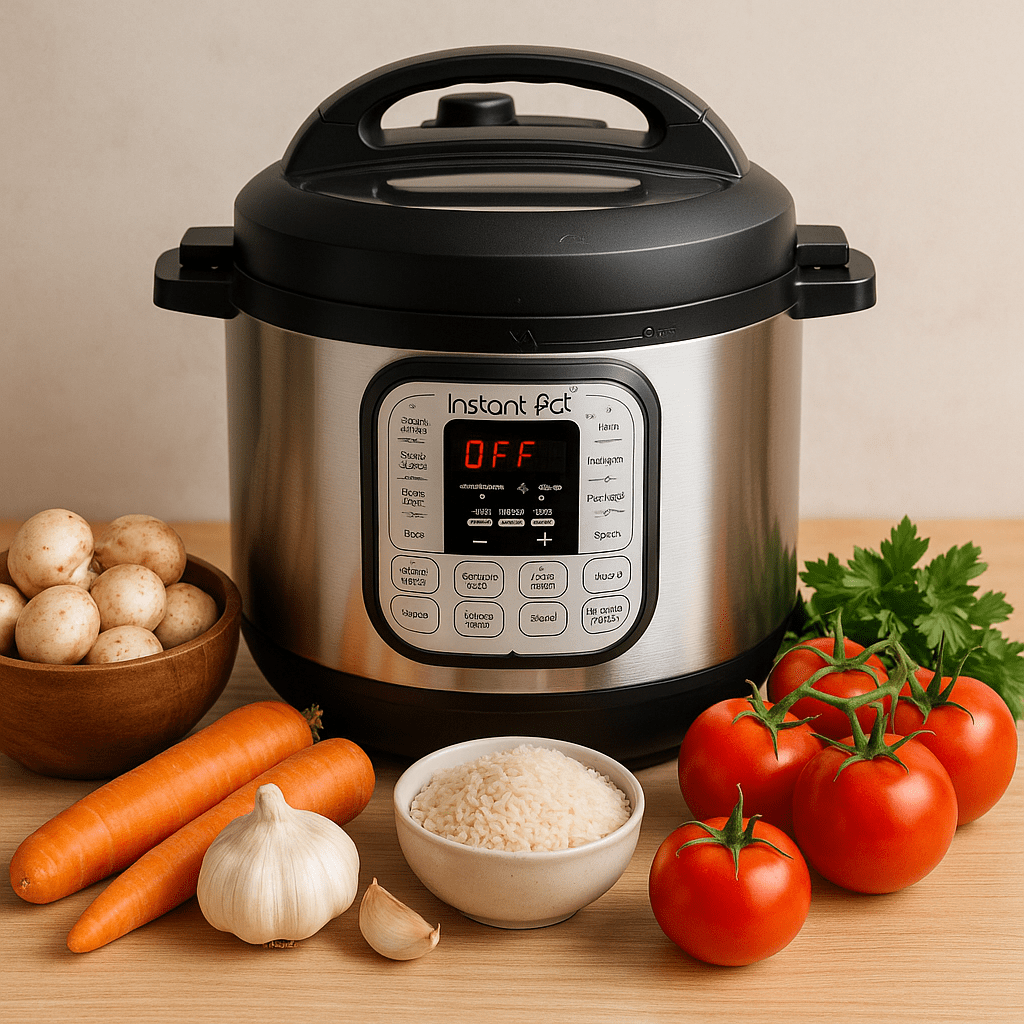

The Instant Pot has quickly become a must-have appliance in home kitchens across the world.
Designed to cook meals faster, easier, and with more consistent results, it’s especially loved by busy families, home cooks, and anyone who enjoys flavorful meals without spending hours in the kitchen.
If you’re just getting started or want to understand the fundamentals before cooking your first dish, this guide covers everything you need to know about using the Instant Pot with confidence.
What Is an Instant Pot?
An Instant Pot is an electric multi-cooker that combines the functions of several kitchen appliances in one. Depending on the model, it can act as a:
- Pressure cooker
- Slow cooker (Glass Lid Required)
- Sauté pan

- Steamer
- Yogurt maker
- Rice cooker
- Food warmer
This versatility allows you to create countless meals using one appliance, saving time, energy, and counter space.
How the Instant Pot Works
The Instant Pot works by sealing in steam and building pressure inside the pot. This increased pressure raises the boiling point of water, allowing food to cook significantly faster than traditional methods.
Here’s what happens step-by-step:
- You add liquid (like broth or water).
- The lid is sealed and the pot begins to heat.
- Pressure builds as steam forms inside.
- Food cooks quickly and evenly under high pressure.
- Pressure is released—either naturally or manually—before you open the lid.
Because moisture is sealed inside, dishes often turn out more tender, juicy, and flavorful.
Natural Release vs. Quick Release
Releasing pressure safely is a key Instant Pot skill. You’ll use one of two methods depending on the recipe:
Natural Pressure Release (NPR)
The Instant Pot cools and depressurizes on its own.
Great for: soups, stews, large cuts of meat.
Quick Release (QR)
You manually turn the steam valve to release pressure.

Great for: vegetables, delicate foods, and dishes you don’t want overcooked.
Your recipe will typically tell you which method to use.
Instant Pot Buttons You’ll Use Most
Each model offers slightly different features, but these are the essential buttons most cooks rely on:
1. Pressure Cook / Manual: Your primary cooking button for most recipes.
2. Sauté: Lets you brown meats, cook onions, or warm ingredients directly in the pot.
3. Slow Cook: Functions like a traditional slow cooker (requires glass lid)

4. Steam: Perfect for vegetables and some seafood dishes.
5. Keep Warm: Automatically keeps food warm after cooking.
6. Yogurt: Specialized settings for heating and fermenting.
You’ll likely use “Pressure Cook” and “Sauté” the most.
Instant Pot Safety Basics
Modern Instant Pots are extremely safe thanks to built-in sensors and lock-in mechanisms.
Still, these quick tips will ensure an even smoother experience:
- Always check that the sealing ring is correctly placed.
- Make sure the steam valve is set to “Sealing” before starting.

- Use at least ½ cup to 1 cup of liquid, depending on your recipe. *See Cooks Notes
- Never fill to above the MAX line.
Keep your hands and face away from the steam vent during Quick Release.
Following these steps ensures safe use of the appliance while cooking with it.
Cooks Notes
Some Instant Pot recipes will not require adding any liquid, like with this Quick & Flavorful Instant Pot Asian-Style Chicken Tinga (Easy Recipe!) for example.

The ingredients used create plenty of natural cooking liquid which is well above the Instant Pot’s minimum requirement of 1/2 cup liquid.
Broths, stocks, thin sauces, and water all count as liquid. Avoid thick sauces unless combined with broth to prevent burning.
Do Not Use Milk As A Liquid As It Will Only Curdle Under Pressure
Beginner-Friendly Instant Pot Recipes to Try First
Once you’re comfortable with basic settings, the best way to learn is by cooking real dishes.
These recipes are designed to help you learn the Instant Pot quickly.
Once you’ve tried your first few recipes, learn why so many home cooks rely on it daily in our Why We Use the Instant Pot Guide.
Here are beginner-friendly recipes from our collection that work beautifully in the Instant Pot and help you master essential techniques.
🍳 Breakfast & Brunch
Instant Pot Eggs en Cocotte (French Baked Eggs)
A delicate pot-in-pot recipe that teaches gentle cooking control.

Find Recipe Here 👉🏽 Instant Pot Eggs en Cocotte (French Baked Eggs)
Instant Pot Bacon Sweet Potato Frittata
Shows how to use sauté mode plus pressure cooking for brunch perfection.

Find Recipe Here 👉🏽 Instant Pot Bacon & Sweet Potato Frittata
🍲 Simple & Cozy Soups
Instant Pot Creamy Leek & Potato Soup with Crispy Shallots
Smooth, comforting, and beginner-friendly.

Find Recipe Here 👉🏽 Instant Pot Creamy Leek & Potato Soup with Crispy Shallots
Instant Pot Harira (Moroccan Chickpea & Lentil Soup)
A hearty, aromatic soup great for learning layered flavors.

Find Recipe Here 👉🏽 Instant Pot Harira (Moroccan Chickpea and Lentil Soup)
Instant Pot Frijoles Charros
A rich, traditional bean soup that pressure cooking elevates beautifully.

🍖 Beginner-Friendly Proteins
How To Pouch Chicken Thighs With Your Instant Pot
Ideal for meal prep and perfecting timing.

Find Recipe Here 👉🏽 How To Pouch Chicken Thighs With Your Instant Pot
Instant Pot Bourbon Pulled Pork
A simple, hands-off recipe showcasing tender meat under pressure.

Find Recipe Here 👉🏽 Instant Pot Bourbon Pulled Pork
🍝 Comfort Classics
Instant Pot – Better Than Kraft Macaroni & Cheese
Quick, creamy comfort food that’s easy for any beginner.

Find Recipe Here 👉🏽 Instant Pot – Better Than Kraft Macaroni & Cheese
Roasted Tomato Pasta Sauce (Instant Pot Version)
A flavorful sauce that teaches sautéing and simmering techniques.

Find Recipe Here 👉🏽 Nonna-Approved Roasted Pasta Sauce With a Modern Twist
🍮 Dessert
Instant Pot Creme Brulee
Surprisingly simple and an excellent introduction to Instant Pot desserts.

Find Recipe Here 👉🏽 Instant Pot Creme Brulee
These recipes strengthen your foundation using sauté mode, pressure cooking, natural release, pot-in-pot, and more—helping you become comfortable using your Instant Pot for all kinds of dishes.
Common Mistakes Beginners Make (and How to Avoid Them)
- Not adding enough liquid
- Forgetting to set the valve to “Sealing”
- Overfilling the pot
- Adding dairy before pressure cooking
- Opening the lid before pressure fully releases
Avoiding these mistakes ensures smooth and frustration-free cooking.
Tips for Getting the Most Out of Your Instant Pot
- Deglaze the pot after sautéing to prevent burn alerts.
- Layer ingredients properly—thicker sauces on top.
- Cook large batches for quick weeknight meals.
- Use pot-in-pot for delicate recipes like eggs or desserts.
- Keep a spare sealing ring for sweet vs. savory dishes.
Ready to Go Beyond the Basics?
Now that you’ve cooked your first recipes and understand the fundamentals, the next step is learning why the Instant Pot becomes a go-to tool in so many kitchens—from saving time and money to creating flavorful meals in minutes with less effort.
Whether you’re making soups, sauces, proteins, frittatas, or even creme brulee, the Instant Pot makes cooking more convenient and enjoyable.
Explore our Instant Pot recipes, and be amazed at how quickly it becomes an essential part of your kitchen routine.
Continue here: Why We Use the Instant Pot Guide to discover how this one appliance can completely change the way you cook day after day.
Explore More – browse the Culinary Guides collection or our collection of One-Skillet Meals.
More Deliciously Yummy Recipes
- Blueberry Lavender White Chocolate Bread Pudding
- Sweet Potato Kale and Farro Salad With A Orange Tahini Dressing
- Tahini in Culinary Applications: 5 Delicious Ways to Use This Nutty Super Ingredient
- Tuscan Tortellini, Sausage & Kale Soup
- Instant Pot Thai Coconut Chicken Soup
