
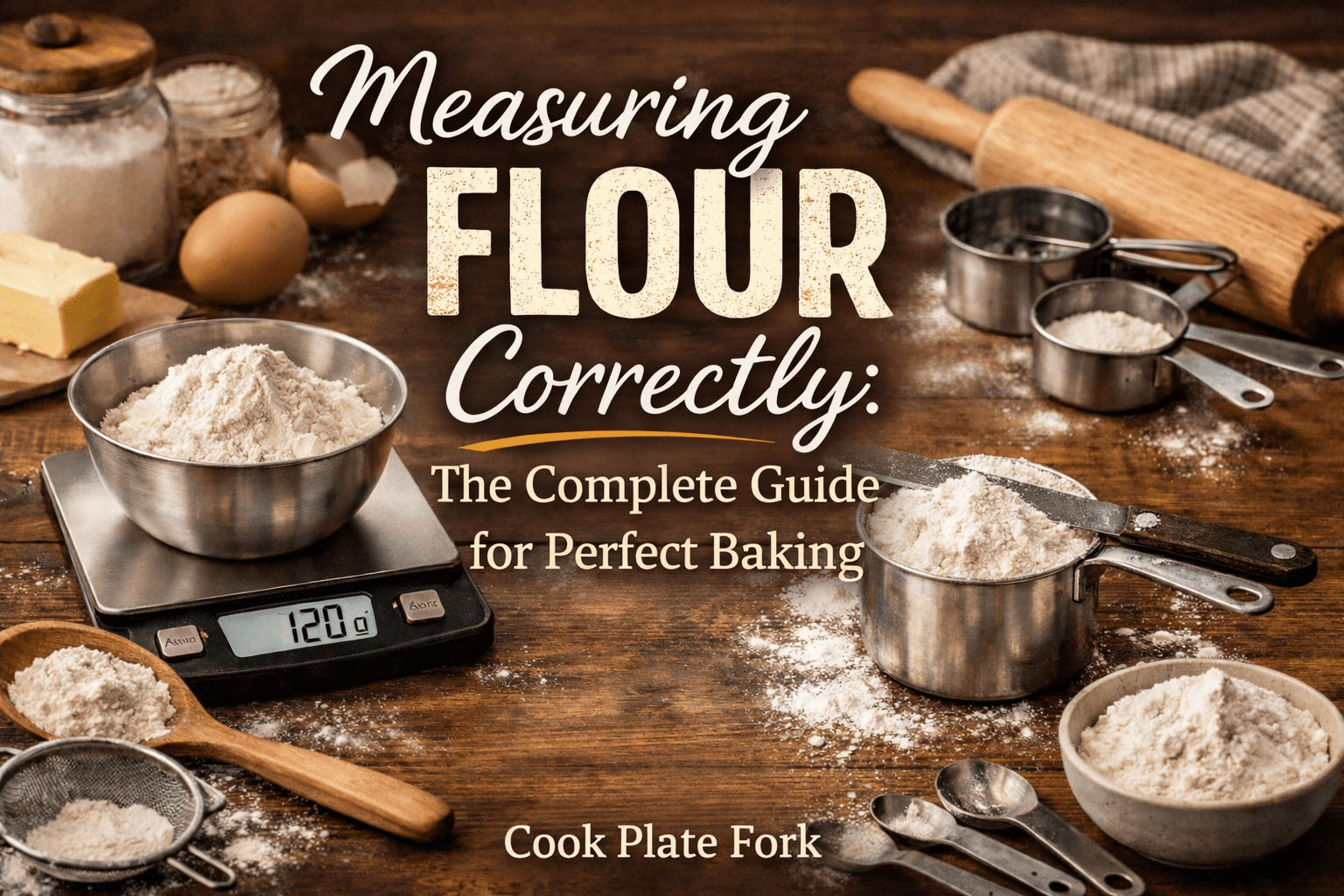

If you want consistently soft cookies, fluffy cakes, and bakery-quality results at home, mastering Measuring Flour Correctly is non-negotiable.
Even a small measuring mistake can throw off texture, structure, and moisture balance.
This complete guide walks you through the two most accurate measurement methods, essential culinary practices, and the science behind precision baking—so you can bake with confidence every single time.
What You’ll Learn in This Guide
By the end of this guide, you will understand:
- The 2 most accurate methods for measuring flour
- The difference between weighing and volume measuring
- 4 essential kitchen practices that prevent hidden errors
- Why precision is critical in baking chemistry
- How to check gram-to-cup standards for recipe accuracy
- Practical ways to apply proper flour measurement in dessert recipes
The 2 Most Accurate Ways to Measure Flour
There are only two reliable methods for Measuring Flour Correctly. Everything else supports these foundational techniques.
Use a Digital Kitchen Scale (The Gold Standard)
Professional bakers measure flour by weight because it removes guesswork and eliminates packing errors.
Most baking sources use 120 grams as the standard weight for 1 cup of all-purpose flour, though some use 125 to 130 grams.
Always follow the gram measurement listed in your specific recipe for best accuracy.

How to weigh flour properly:
- Place your bowl on the scale
- Press “tare” to reset it to zero
- Add flour until you reach the required grams
Weighing ensures consistent results across every batch.
Use the Spoon-and-Level Method (Best Without a Scale)
If you do not have a kitchen scale, this method provides the most accurate volume measurement.
Steps:
- Stir or fluff the flour inside its container
- Gently spoon flour into a dry measuring cup
- Level off the top with a straight edge
Never scoop directly with the measuring cup. Scooping compresses flour and can add significantly more than intended.
4 Essential Culinary Practices When Measuring Flour
These habits protect measurement accuracy and prevent hidden errors.
❌ Never Scoop Directly with the Measuring Cup
Scooping compacts flour, increasing the amount used.
❌ Don’t Tap or Shake the Cup
Tapping settles flour and increases density.
❌ Use Dry Measuring Cups (Not Liquid Cups)
Dry measuring cups allow precise leveling. Liquid cups are designed for fluid measurement.
Follow the Recipe’s Measurement Standard
When a recipe provides gram measurements, use them. If it lists cups only, follow proper measuring technique carefully.
Why Precision Matters in Baking
Precision separates average baking from consistent, professional-quality results. When ingredient ratios shift—even slightly—texture, structure, and moisture balance are affected.

Crucial Reasons Why Precision is Key in Baking
For a deeper explanation of how ingredient accuracy impacts baking chemistry, read: 4 Crucial Reasons Why Precision is Key in Baking.
That article explores the science behind ingredient ratios, gluten development, chemical reactions, and recipe repeatability in much greater depth.
Ingredient Substitutions & Measurement Accuracy
When substituting ingredients, accurate measurement becomes even more important. Small changes in ratios can affect moisture, structure, and texture.

Top Kitchen Substitutes at a Glance
For a complete substitution reference chart and detailed breakdowns, see: Top Kitchen Substitutes at a Glance.
That guide provides quick-reference swaps and measurement adjustments to help maintain balance in your recipes.
Essential Tools for Accurate Flour Measurement
Accurate baking depends not only on proper technique but also on having the right tools and storage practices in place.

Pantry Essentials Guide
For a complete breakdown of foundational baking tools, ingredient storage tips, and must-have kitchen equipment, see: Pantry Essentials Guide
That guide covers scales, measuring tools, and pantry setup essentials that support consistent, precise baking results.
Apply What You’ve Learned
Now that you understand Measuring Flour Correctly, it’s time to practice.
Put these techniques to work using one or more dessert recipes from Cook Plate Fork: link HERE.
Applying accurate flour measurement to real recipes is the best way to see immediate improvement.
Frequently Asked Questions
1. How much does 1 cup of all-purpose flour weigh?
Most baking sources use 120 grams as the standard weight for 1 cup, though some use 125–130 grams.
2. Why are my baked goods dense?
Dense texture is often caused by using too much flour due to scooping or packing.
3. Should I sift flour before measuring?
Only sift first if the recipe specifies “1 cup sifted flour.” Otherwise, measure first and sift afterward if needed.
4. Is weighing flour necessary?
It is not mandatory, but it is the most accurate method.
5. What happens if I use too little flour?
Baked goods may spread excessively or collapse.
6. Do different brands of flour weigh differently?
There may be slight differences, which is why gram measurements are more reliable than cups.
Final Thoughts
Mastering Measuring Flour Correctly is one of the simplest and most powerful improvements you can make in your kitchen.
Precision protects ingredient ratios, improves texture, and ensures consistent results every time you bake.
This guide gives you a clear, dependable foundation.
From this point forward, your measurements will support your recipes—not sabotage them.
Precision builds confidence, and confident bakers create exceptional results.
Still hungry? These recent recipes are ready when you are.
More Deliciously Yummy Recipes
- 3 Flavorful and Easy Persian Recipes for Beginners
- Instant Pot Ash Reshteh (Persian Herb, Bean and Noodle Soup)
- Blueberry Lavender White Chocolate Bread Pudding
- Sweet Potato Kale and Farro Salad With A Orange Tahini Dressing
- Tahini in Culinary Applications: 5 Delicious Ways to Use This Nutty Super Ingredient
Please Share With Your Social Network:

Discover more from Cook Plate Fork
Subscribe to get the latest posts sent to your email.