
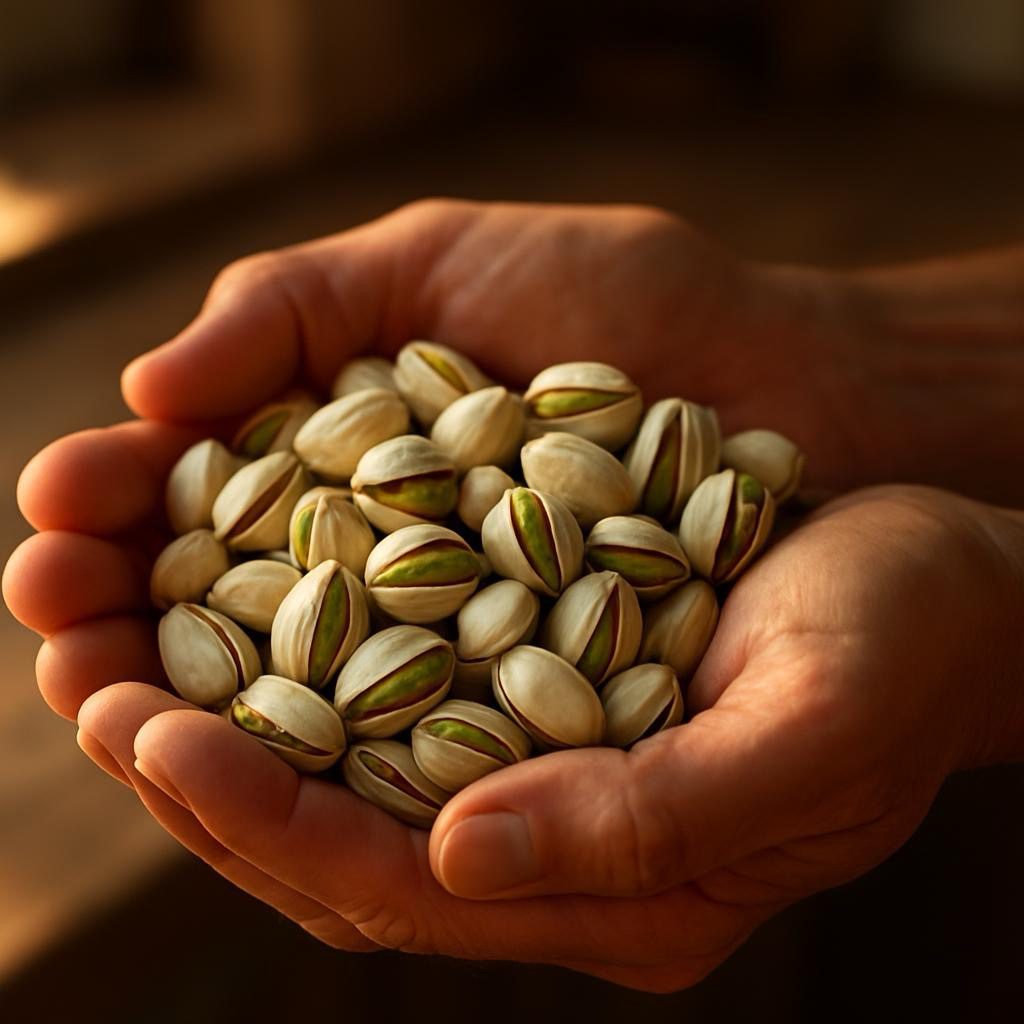

Pistachios are one of the world’s most beloved nuts, prized for their unique flavor, vibrant green color, and versatility in sweet and savory dishes.
Here’s a friendly, detailed overview to satisfy your curiosity—from origin stories to tasty ways to cook with them.
Note: Find recipes throughout this article and a link at the end to several recipes using pistachios in the dish or as a garnish.
Origin and History Of Pistachios
Pistachios come from the Pistacia vera tree, native to regions of Western Asia and the Middle East. The long tradition of growing and consuming pistachios spans ancient civilizations.

An Orchard Of Pistacia Vera Trees
Evidence suggests pistachios were cultivated thousands of years ago in what is now Iran and surrounding areas.
They became a cultivated staple along trade routes like the Silk Road, spreading to the Mediterranean and beyond.

By ancient Greek and Roman times, pistachios were enjoyed across the Roman Empire.
Using pistachios in pesto was and is today a culinary practice from Sicily, where pistachios are a regional delicacy.
Pistachios later found a cherished place in Middle Eastern and Mediterranean cuisines. They are a common ingredient in salads and other dishes across the two regional cuisines.

Middle Eastern-Style Chicken And Sweet Potato Salad With Pomegranate Dressing – Garnish with Pistachios and Goat Cheese
The United States (especially California) and Turkey are major contemporary producers, with Iran and other Middle Eastern countries remaining important cultivators.

In the US, pistachios became a significant crop in the 20th century and are now widely grown and exported.
The word “pistachio” traces back through Persian to other ancient languages, reflecting its long cultural presence.

What Is A Pistachio
The edible pistachio we know as a nut is actually a seed. The Pistacia vera tree, is a cousin of the cashew family (Anacardiaceae).
The tree is evergreen and can reach a modest height with a long lifespan.

The nut is inside a hard shell that often splits open as it ripens. The exposed kernel is the edible portion you eat; its flesh is typically a bright greenish hue with a tender, slightly chewy texture.
Nutritional snapshot (per 1 oz. approximately 49 kernels / about 28 grams):
- Calories: around 160–170
- Fat: about 13 grams (mostly healthy fats)
- Protein: around 6 grams
- Carbs: about 5 grams (including fiber)
- Fiber: roughly 3 grams
Key nutrients include copper, manganese, phosphorus, potassium, vitamin B-6 and various plant compounds with antioxidant properties.
The seeds flavor profile is a rich, toasty and slightly sweet with a distinct savory edge. The flavor pairs well with both sweet desserts and hearty savory dishes.

The kernels inside the shell can range from pale to vivid green, depending on variety and growing conditions. The shells are typically beige to light tan.
A pale variety pistachio is not only known for its pale green kernel that is encased in a light-colored shell, but is also highly prized for its buttery, mildly sweet flavor.
Pale pistachio varieties include:
- Ahmad Aghaei (pistachio from Iran)
- Joley (developed from the University of California, Davis)
- Golden Hills (noted for fewer blanks and a higher percentage of opened shells)
- Kerman (cultivar has large yields of a light greenish-yellow kernel)

Green pistachios are early-harvest varieties where the kernels are immature, producing a bright green coloration and a soft, buttery texture.
They command premium status due to their pronounced flavor and color, and are used in confectionery applications such as gelato, pastries, and desserts.
Representative green cultivars include:
- Iranian
- Larnaka
- Bronte

How To Store Pistachios
To store pistachios,use an airtight container and keep them in a cool, dark place like the refrigerator, typically up to one year.
For longer shelf life, freezer for up to three years to prevent them from going rancid.
For short-term storage, an airtight container on the counter is acceptable but they will only last about a month.

Fun Facts About Pistachios
The shell of a ripe pistachio often splits open naturally, which has made people associate the nut with a “smiling” appearance.
They’re sometimes nicknamed the “green nut” due to their vibrant kernel color.
In the United States, National Pistachio Day is celebrated on February 26.
The green color comes from chlorophyll and other pigments; the exact shade or color of the kernel can vary by cultivar and growing conditions.
They’re not only tasty but also contain a variety of phytochemicals and antioxidants that contribute to their healthful reputation when eaten as part of a balanced diet.
Important Consideration
If you have a tree-nut allergy, check with a healthcare professional before trying pistachios.
Find More Recipes Using Pistachios Here 👉🏽 Pistachio
Read More About Nuts


Craving Something New – Find Your Next Favorite Breakfast, Lunch, Brunch, Side Dish, Soup , Salad, Sandwich, Dinner And Dessert Recipes Here 👉🏽 Recipe Index
More Deliciously Yummy Recipes
- Moist Gluten-Free Almond Flour Strawberry Banana Muffins
- 3 Flavorful and Easy Persian Recipes for Beginners
- Instant Pot Ash Reshteh (Persian Herb, Bean and Noodle Soup)
- Blueberry Lavender White Chocolate Bread Pudding
- Sweet Potato Kale and Farro Salad With A Orange Tahini Dressing
Please Share With Your Social Network:

Discover more from Cook Plate Fork
Subscribe to get the latest posts sent to your email.
YUM! I love pistachios!
Me as well 🤓👍🏼
I knew it. 🙂