
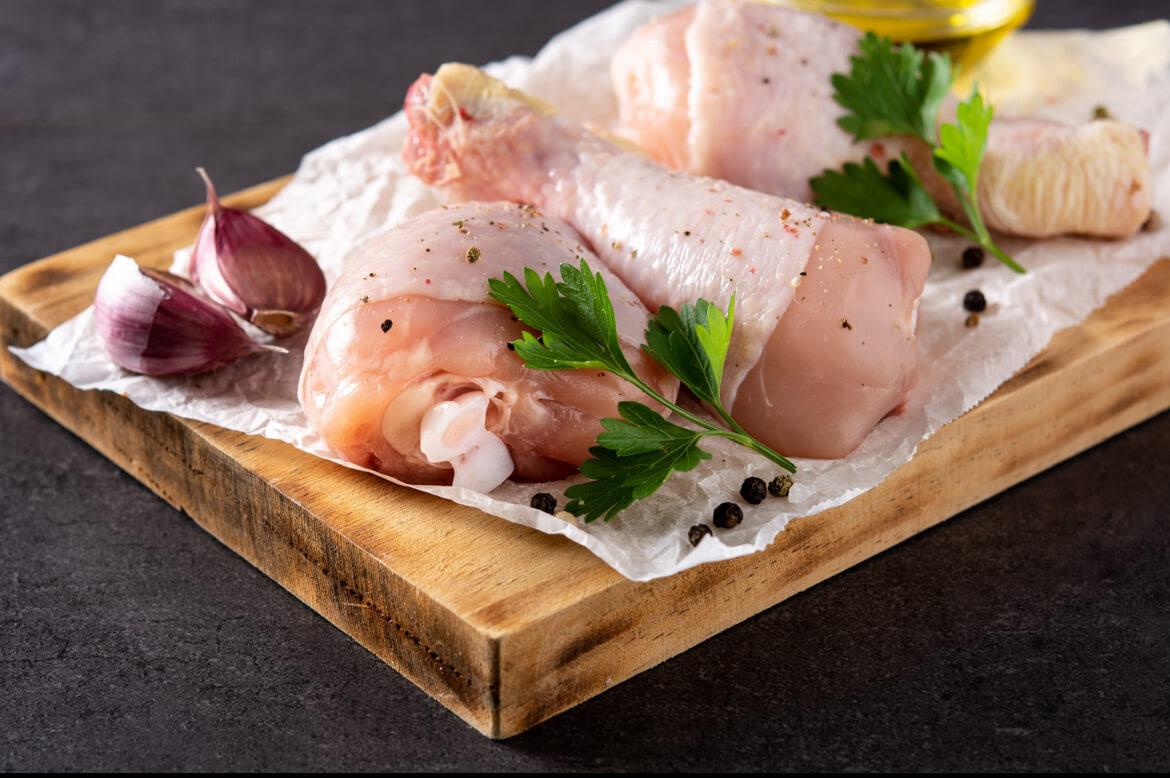

The possibilities are endless when it comes to cooking with chicken.
Whether you’re sautéing, frying, grilling, like this Greek Grilled Chicken, or roasting, like this Roasted Brown Sugar Garlic Chicken Thighs, chicken is a versatile protein that can be paired with a variety of flavors to create delicious meals.


When handling raw chicken it is important to follow proper food safety guidelines to prevent food borne illnesses and to avoid cross-contamination with other foods.
How To Handle Raw Chicken
1. Keep Chicken Chilled
It is crucial to keep chicken chilled at all times to avoid the growth of harmful bacteria. Raw chicken is a breeding ground for bacteria such as salmonella, which can cause serious foodborne illnesses.
It is recommended to store chicken in the fridge at a temperature of 40°F or below. This ensures that the chicken stays fresh and prevents bacteria from multiplying.
Additionally, do not leave chicken at room temperature for more than 2 hours, as this can promote bacterial growth.
Chicken can store raw in the refrigerator for up to 3 days. And store frozen up to 9 months.
2. Use Separate Cutting Boards & Utensils
To avoid cross-contamination with other foods it’s recommended to use separate cutting boards and utensils when handling raw chicken.

To avoid spreading bacteria do not wash raw chicken before cooking as it can spread bacteria around your kitchen.
3. Wash Your Hands Not The Chicken
It is crucial to wash your hands thoroughly before handling raw chicken to prevent the spread of harmful bacteria and reduce the risk of food borne illnesses.
By washing your hands, you can eliminate any potential contaminants that may be present on your skin, which can transfer to the chicken during preparation.

Wash Hands Thoroughly With Soap And Water To Prevent Food Borne Illnesses
Proper hand hygiene is essential in maintaining food safety standards and protecting yourself and others from getting sick.
Remember, a simple act like washing your hands can make a significant difference in ensuring the safety of your food and those who will be consuming it. Stay safe and wash your hands diligently!
The opposite holds true with raw chicken. Washing raw chicken before cooking it can actually spread bacteria rather than eliminate it.
The water splashing around can spread harmful bacteria like Salmonella to other surfaces in your kitchen, increasing the risk of cross-contamination.
To ensure food safety, it’s best to cook chicken to the appropriate internal temperature to kill any bacteria present, rather than rinsing it beforehand.
3. Don’t Reuse Plates
Make sure to keep your raw chicken in the refrigerator until you’re ready to grill.
Typically we place chicken onto a plate and then add a spice rub. Or remove marinated chicken from the marinade and plate the pieces onto a plate.

But, once you put the chicken into a baking dish, a skillet or on the grill, use a clean plate to put the cooked chicken on.
And this is important, never place skewers, spatulas or tongs on a plate that held raw chicken. Cross contamination can easily result.
4. Don’t Reuse Marinades
Using the same marinade multiple times is not only unhygienic, but it can also be dangerous for your health.
When meat is marinated, bacteria from the raw meat mixes with the marinade, making it potentially unsafe to reuse.

By reusing the marinade, you are essentially cross-contaminating any new meat that you use it on.
This can lead to food poisoning and other illnesses.
It is always best to discard any leftover marinade to ensure the safety and quality of your food.
Don’t take any chances when it comes to your health and always remember, don’t reuse marinades.

Read More Here – What Are The Benefits of Marinating Meat
5. Cook Chicken Thoroughly
It is incredibly important to cook chicken thoroughly before consuming it.
Undercooked chicken can contain harmful bacteria such as salmonella, which can lead to food poisoning.
To ensure chicken is fully cooked, it is recommended to use a meat thermometer to check the internal temperature.
The USDA recommends that all chicken, regardless of cut, should reach a safe minimum internal temperature of 165 degrees to kill any potential bacteria.
If you do not have a meat thermometer, make sure the chicken is no longer pink and the juices run clear.
How Long To Cook Chicken
When cooking chicken parts, it is essential to consider the varying cooking times based on the specific cut, and if the chicken is boneless and skinless or cooked with bone-in and skin on.
Boneless Skinless Breasts Or Thighs
Preheat your oven to 375°F (190°C) and bake the chicken for approximately 20-30 minutes, depending on the thickness of the meat.
For pan-frying, heat a skillet over medium-high heat and cook the chicken for about 6-8 minutes per side until it reaches an internal temperature of 165°F (74°C).

Grilling Boneless Skinless Chicken Breasts
When barbecuing boneless, skinless chicken breasts they take approximately 6-8 minutes per side, and chicken thighs may take slightly longer, about 8-10 minutes per side. Grill should be heated to 475 degrees.
Bone-In Skin-On Breasts Or Thighs
For bone-in, skin-on chicken breasts or thighs, they typically require about 30-40 minutes in a preheated oven at 375°F (190°C) to reach an internal temperature of 165°F (74°C), ensuring that the meat is cooked through and remains juicy.

Alternatively, pan-frying them in a skillet over medium-high heat is 6-8 minutes per side until the skin is crispy and the internal temperature reaches 165°F (74°C).

When barbecuing chicken breasts or thighs, place the chicken pieces on the grill, skin side down, and cook for about 6-8 minutes per side for breasts and 8-10 minutes per side for thighs. Grill should be heated to 375 degrees.
Leg-Quarters And Drum Sticks
When pan frying leg quarters or drum sticks, it typically takes about 10-12 minutes per side over medium-high heat for leg quarters and 6-8 minutes per side for drum sticks.
For oven cooking, preheat it to 400°F and bake the leg quarters for approximately 40-45 minutes and the drum sticks for 35-45 minutes.

When grilling leg quarters and drumsticks, place them on a heated grill to 375 degrees.
Grill the meat for about 30-40 minutes, turning occasionally to ensure they cook evenly and develop a nice crispy skin.
Pouching Boneless Skinless Chicken Breasts Or Thighs
Pouching boneless, skinless chicken breasts typically takes about 15 to 20 minutes, depending on the thickness of the meat.
Bring a pot of water to a gentle simmer, place the chicken breasts in a heatproof pouch or bag, and carefully submerge them in the water.
Ensure the water covers the chicken completely and maintain a steady temperature throughout the cooking process.
Cooking chicken breasts in a pouch helps retain moisture and flavor, resulting in tender and juicy meat. Keep an eye on the time and adjust cooking duration as needed for optimal results.
For chicken thighs, it typically takes around 20-25 minutes, depending on the size and thickness of the thighs.
Make sure to use enough liquid to cover the chicken thighs completely, and season the liquid to enhance the flavor of the meat.
Be sure to monitor the process closely to avoid overcooking.
Alternatively, if you have an Instant Pot, you can pouch your chicken thighs.

Baking A Whole Chicken
To bake a whole chicken, preheat your oven to 375°F (190°C).
Depending on the size of the chicken, you will need to bake it for approximately 20 minutes per pound (450g) or until the internal temperature reaches 165°F (74°C).
Remember to baste the chicken with melted butter or olive oil every 30 minutes to keep it moist and flavorful.
In Conclusion
It is important to use a food thermometer to check that the internal temperature of the chicken reaches 165°F (74°C) no matter what cooking method you use, to guarantee the meat is safe to eat.
Remember, always adjust cooking times based on the size and thickness of the chicken parts to achieve the best results.
It is never worth risking your health by consuming undercooked chicken, so always take the time to cook it thoroughly.
More Articles On How To Handle Chicken
More Deliciously Yummy Recipes
- Cooking With Tortellini Pasta: 11 Delicious Ways to Transform This Versatile Ingredient
- Creamy Caramelized Onion Tortellini
- Moist Gluten-Free Almond Flour Strawberry Banana Muffins
- 3 Flavorful and Easy Persian Recipes for Beginners
- Instant Pot Ash Reshteh (Persian Herb, Bean and Noodle Soup)
Please Share With Your Social Network:

Discover more from Cook Plate Fork
Subscribe to get the latest posts sent to your email.
This was a great idea for a post Randy. Safe handling of chicken is so important to keep us all from getting sick.
Thank you 😊