
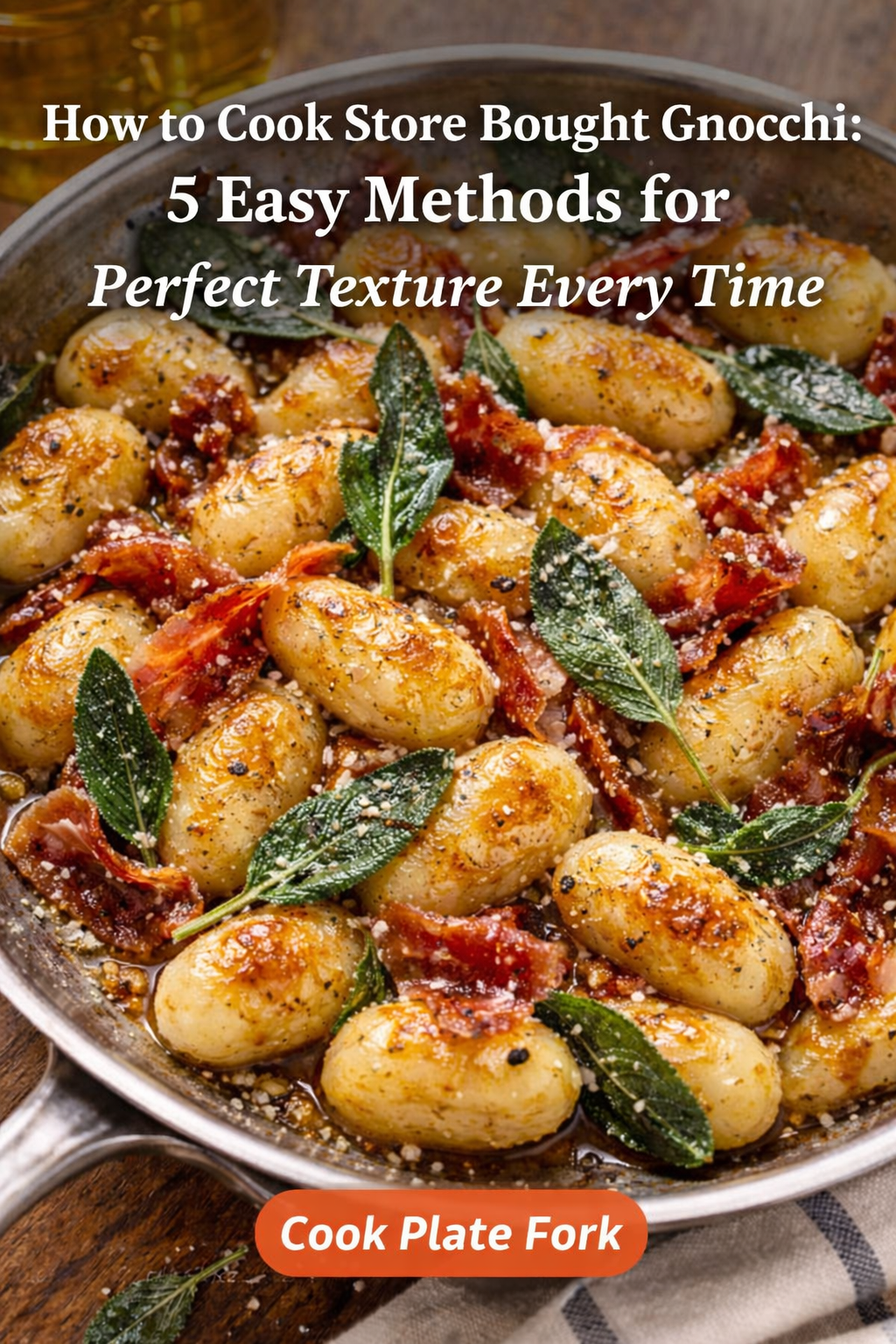

If you’ve ever wondered how to cook store bought gnocchi so it turns out perfectly soft—or deliciously crispy—you’re not alone. Gnocchi is one of the easiest pasta alternatives to prepare, but it’s also one of the easiest to get wrong.
These small Italian dumplings are traditionally made from potatoes, flour, and sometimes eggs. When cooked properly, gnocchi should be light, tender, and slightly pillowy. When overcooked or prepared incorrectly, they can quickly become dense or gummy.
The good news? Cooking with gnocchi doesn’t have to be complicated. Whether you prefer the classic soft texture or a crispy golden bite, there are several simple cooking methods you can use depending on your dish.
In this guide, you’ll learn exactly how to cook store bought gnocchi using 5 easy methods, when to use each one, and how to avoid common mistakes that can lead to gummy or overcooked gnocchi.
What Is Gnocchi and How Is It Different From Pasta?
Gnocchi are soft dough dumplings most commonly made with potatoes, though variations include ricotta, spinach, or sweet potato.
Unlike traditional pasta, gnocchi has a more delicate texture and cooks much faster.

Shelf Stable Italian Gnocchi With Basil Pesto
You’ll typically find store bought gnocchi in three forms:
- Shelf-stable (vacuum-sealed in the pasta aisle)
- Refrigerated (near fresh pasta)
- Frozen
Each type can be cooked using similar methods, but texture and cooking time may vary slightly.
How to Cook Store Bought Gnocchi (4 Easy Methods)
1. Boiling (Classic Method)
Boiling is the traditional way of cooking gnocchi and is best when you want a soft, tender texture.
How to do it:
- Bring a large pot of salted water to a boil
- Add gnocchi
- Cook for 2–4 minutes
- Remove once they float to the surface
Tip: Don’t overcook—this is the #1 reason gnocchi becomes gummy.
Best for: Light sauces like pesto or marinara

For a fresh and flavorful example, try this Gnocchi With Arugula-Pistachio Pesto – it’s a perfect match for the soft, classic texture of boiled gnocchi.
2. Pan-Frying (Best for Crispy Texture)
Pan-frying is one of the most popular modern methods for cooking with gnocchi. It creates a crispy, golden exterior while keeping the inside soft.
How to do it:
- Heat olive oil in a skillet over medium-high heat
- Add gnocchi in a single layer
- Cook 5–7 minutes, turning occasionally
Tip: Shelf-stable gnocchi can go straight into the pan—no boiling needed.
Best for: One-pan meals and bold flavors

Crisp Gnocchi With Brussels Sprouts & Brown Butter
For a rich and flavorful example, try this Crispy Gnocchi with Brussels Sprouts and Brown Butter—the nutty brown butter and caramelized vegetables pair perfectly with golden, pan-fried gnocchi.
3. Roasting (Hands-Off and Flavorful)
Roasting gnocchi in the oven gives you crispy edges with minimal effort.
How to do it:
- Preheat oven to 425°F
- Toss gnocchi with olive oil and seasoning
- Spread on a sheet pan
- Roast for 20–25 minutes
Tip: Shelf-stable gnocchi can go straight on to the sheet pan—no boiling needed.
Best for: Sheet pan dinners with vegetables and protein

Tuscan Sheet Pan Gnocchi And Sun-Dried Tomatoes
For a simple, flavor-packed dinner, try this Tuscan Sheet Pan Gnocchi And Sun-Dried Tomatoes—it’s a perfect example of how roasting brings out bold, savory flavors with minimal effort.
4. Boil + Sauté (Best of Both Worlds)
This method combines softness with crispiness.
How to do it:
- Boil gnocchi until they float
- Drain and transfer to skillet
- Sauté in oil or butter until golden
Best for: Balanced texture and restaurant-style dishes
5. Simmering in Sauce (One-Skillet Method)
Cooking gnocchi directly in a sauce is one of the easiest and most flavorful methods. Instead of boiling separately, the gnocchi cooks right in the liquid—absorbing flavor while becoming tender.
How it works:
- Add gnocchi directly to simmering broth, sauce, or cream
- Cook gently until tender
- Finish in the oven
Best for: Creamy dishes, one-pan meals, and comfort food recipes

One-Skillet Creamy Chicken With Sun-Dried Tomatoes Spinach and Gnocchi
A great example is this One-Skillet Creamy Chicken With Sun-Dried Tomatoes Spinach and Gnocchi, where the gnocchi cooks directly in a rich, flavorful sauce.
Do You Have to Boil Gnocchi First?
No—you don’t always have to boil gnocchi before cooking it.
Shelf-stable gnocchi can often be pan-fried or roasted directly, which saves time and adds texture.
However, refrigerated or homemade-style gnocchi usually benefit from boiling first to ensure even cooking.
Bottom line:
- Boil for soft texture
- Skip boiling for crispy results
Why Your Gnocchi Turns Out Gummy (And How to Fix It)
One of the most common complaints when cooking with gnocchi is a gummy or sticky texture.
Here’s why it happens:
- Overcooking in boiling water
- Letting gnocchi sit too long after draining
- Overcrowding the pan
- Not using enough oil when frying
Quick fix:
Boil in small batches and remove gnocchi as soon as they float.
Best Sauces for Gnocchi
Gnocchi pairs well with a wide range of sauces because of its soft, absorbent texture.
Top choices include:
- Pesto
- Brown butter and sage
- Cream sauces (like Alfredo)
- Tomato-based sauces
- Garlic and olive oil
Heavier sauces work especially well with crispy gnocchi.
Frequently Asked Questions About Cooking With Gnocchi
Do you have to boil store bought gnocchi?
No. While boiling is traditional, you can also pan-fry or roast gnocchi for a crispier texture.
How do you know when gnocchi is done?
Gnocchi is done when it floats to the surface of boiling water, usually within 2–4 minutes.
Can you cook gnocchi without boiling it first?
Yes, especially shelf-stable gnocchi. It can be cooked directly in a skillet or oven.
Why is my gnocchi mushy?
Mushy gnocchi is usually the result of overcooking or leaving it in water too long.
Is pan-frying gnocchi better than boiling?
It depends on your preference. Pan-frying gives a crispy texture, while boiling keeps it soft and traditional.
Can you reheat cooked gnocchi?
Yes. Reheat in a skillet for best texture rather than microwaving.
Final Thoughts on Cooking With Gnocchi
Cooking with gnocchi is simple once you understand the basics. Whether you prefer it soft and tender or crispy and golden, the key is choosing the right cooking method for your dish.
Store bought gnocchi makes it easy to create quick, satisfying meals without sacrificing flavor. With just a few techniques, you can transform this humble ingredient into something truly delicious.
For even more ideas, check out this guide on 10 Ways To Elevate Store-Bought Gnocchi and take your meals to the next level.
Still hungry? These recent recipes are ready when you are.
More Deliciously Yummy Recipes
- How to Cook Store Bought Gnocchi: 5 Easy Methods for Perfect Texture Every Time
- Cooking With Tortellini Pasta: 11 Delicious Ways to Transform This Versatile Ingredient
- Creamy Caramelized Onion Tortellini
- Moist Gluten-Free Almond Flour Strawberry Banana Muffins
- 3 Flavorful and Easy Persian Recipes for Beginners
Please Share With Your Social Network:

Discover more from Cook Plate Fork
Subscribe to get the latest posts sent to your email.
I tried making gnocchi once. It was a disaster. Lol
Typically, you add fresh made or packaged store bought gnocchi to boiling water for about 2-4 minutes and done. You should try one or more of the recipes in the article. 🤓👍🏼🍻
Pingback: Cooking With Gnocchi | My Meals are on Wheels
Gnocchi is great comfort food. Thanks for reposting 🤓👍🏼🍻
YUM! Everything looks so good.
Thank you 😊
You are very welcome. 🙂